Portuguese
  Spanish




Scientists from Beijing and Birmingham create technology to expand green hydrogen production and accelerate the global energy transition.
The global quest for clean energy sources has just made significant progress from British laboratories. Researchers have created a low-cost technique capable of expanding large-scale green hydrogen production using waste heat from large industries. The discovery could accelerate the energy transition and reduce dependence on fossil fuels in the coming years.
The study led by scientists from Beijing and Birmingham, and republished by Science Direct on May 22, drew attention for reducing by about 500 degrees Celsius the temperature needed to split water molecules and generate clean fuel. This allows for the utilization of thermal energy that would normally be wasted in steel, cement, glass, and chemical factories.
In addition to reducing operational costs, the new technology strengthens sustainable energy projects and opens the way for more efficient industrial applications in different countries.
-
She spent 73 years breathing inside an iron lung, survived the aftereffects of polio, and became the last woman in the United States dependent on the equipment before dying at 78 years old.

-
Brazilian students created a $1 filter using pine bark, cotton, and 3D-printed parts to clean cassava wastewater, reduce the toxicity of a hazardous waste, and transform contaminated water into biofertilizer.

-
Astronaut from Artemis II steps down after mission to the Moon and decision surprises after a record of 406,771 km, a historic 10-day journey, and an unprecedented achievement for Canada.

-
A fossil kept for years in a small museum in Montreal concealed 450-million-year-old soft tissue, a discovery that has only happened once before in history.


Scientists from Beijing and Birmingham reduce historical barrier of green hydrogen
Traditional green hydrogen production requires extremely high temperatures, a factor that limits its economic competitiveness. Scientists from Beijing and Birmingham have managed to change this scenario by developing a more efficient thermochemical process that is less dependent on external energy.
In practice, the technique allows the system to operate using repurposed industrial heat. This reduces costs and makes production much more viable for large industrial complexes.
According to energy sector experts, the reduction of operational temperature represents one of the most relevant points to accelerate the energy transition on a global scale.


New technique utilizes industrial heat that was previously wasted
One of the main differentiators of the project is the utilization of residual heat released daily by heavy industries. Instead of losing this thermal energy to the atmosphere, the new system can transform it into clean fuel.
This creates a more efficient cycle within the factories themselves, allowing for the production of green hydrogen near industrial consumption sites.
Among the sectors that can benefit are:
- Steel industry;
- Cement production;
- Chemical industry;
- Glass factories;
- Heavy industrial transport.
In addition to reducing logistical costs, integration strengthens sustainable energy strategies in large industrial hubs.

Perovskite catalyst boosts sustainable energy efficiency
The progress made by scientists in Beijing and Birmingham directly depends on the use of a perovskite-based catalyst. This crystalline material has chemical properties capable of accelerating the molecular division of water without requiring extreme temperatures.
The structure of perovskite can absorb and release oxygen repeatedly without losing operational stability. This increases the system’s lifespan and improves the energy efficiency of the industrial plant.
Among the main characteristics of the material are:
- High thermal stability;
- Continuous operation without accelerated wear;
- Better chemical efficiency;
- Reduction in energy consumption;
- Less need for additional electricity.
This set of advantages strengthens the role of green hydrogen as a strategic alternative to reduce carbon emissions.
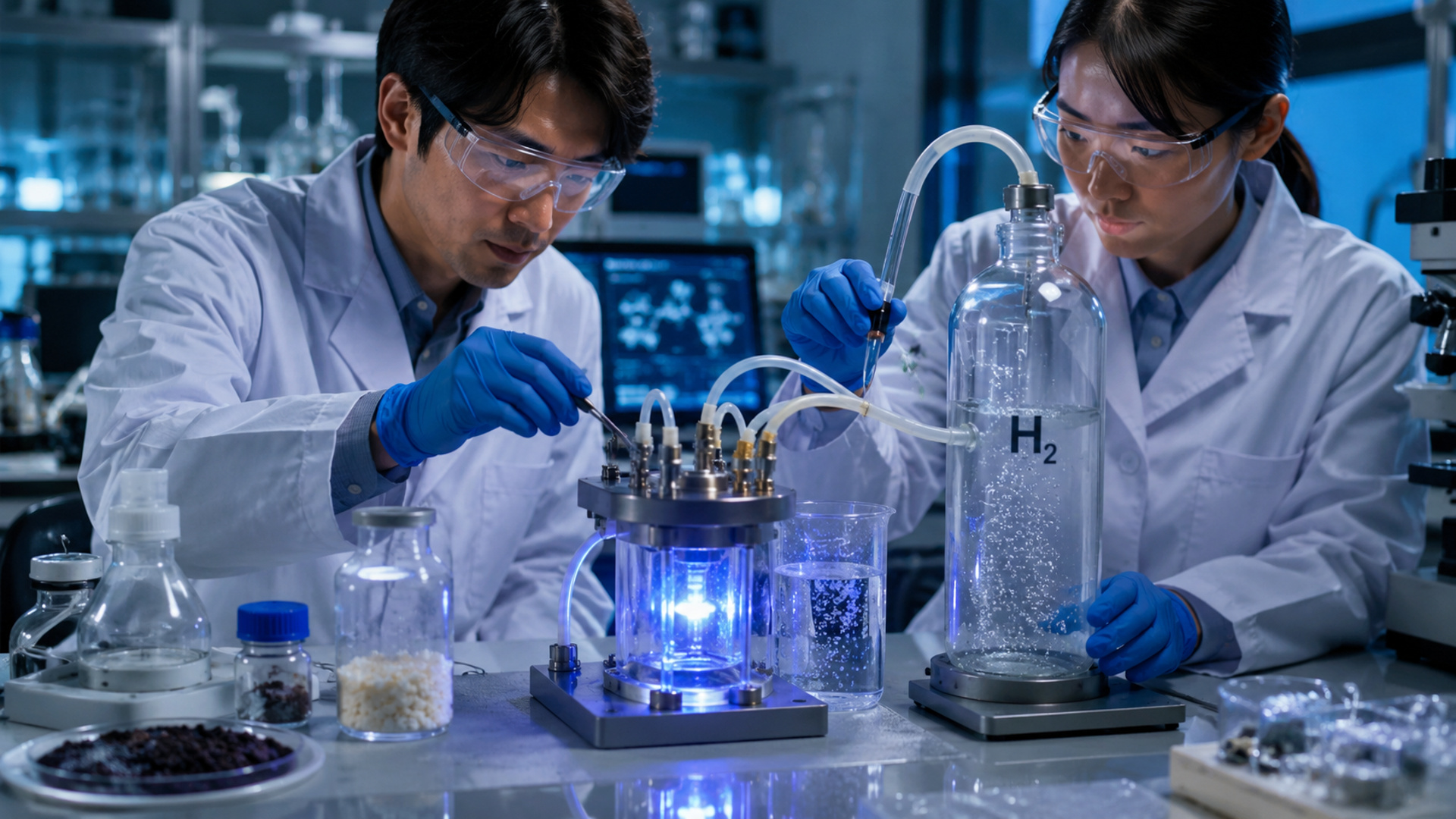
Scientists from Beijing and Birmingham create a cheaper route than current methods
Economic viability has always been one of the main challenges for the expansion of green hydrogen. In this regard, the new model developed by scientists from Beijing and Birmingham presents an important advantage over traditional methods.
By using free residual heat from the factories themselves, the system drastically reduces operational costs. Additionally, the technology eliminates part of the dependence on conventional electrolysis, a process known for high electricity consumption.
Another differentiator is the absence of complex carbon capture and storage systems, frequently used in models related to so-called blue hydrogen.
This combination makes the process more competitive for industries interested in accelerating the energy transition without increasing production costs.

Industrial infrastructure may change with the expansion of green hydrogen
The new technology can also provoke profound changes in the global energy infrastructure. This is because green hydrogen is considered one of the most promising alternatives for decarbonizing industrial sectors that are difficult to electrify.
Heavy trucks, ships, factories, and industrial plants are among the segments with the greatest potential for adopting this sustainable fuel.
According to projections by the International Energy Agency, global hydrogen consumption could exceed 500 million tons by 2050 if international climate goals advance in the coming years.
In this scenario, cheaper and more efficient solutions gain priority within global sustainable energy strategies.
Professor Yulong Ding leads advance related to global energy transition
The project involves the participation of Professor Yulong Ding, a researcher affiliated with the University of Birmingham and recognized for studies focused on energy reuse and clean technologies.
The next step for the team will be to transform laboratory tests into industrial pilot plants. This stage will be essential to validate the commercial application of the system on a large scale.
Experts point out that companies in the steel, cement, and chemical sectors should closely monitor the development of technology, especially in light of increasing environmental demands in different countries.
The trend is that initiatives aimed at energy transition will receive increasingly larger investments over the next decade.
The advancement that can accelerate the global low-carbon economy
The work developed by scientists in Beijing and Birmingham reinforces how technological innovation and sustainable energy can work together in combating climate change.
By transforming wasted industrial heat into clean fuel, the new technique creates a more economically accessible alternative to expand green hydrogen production on a global scale.
If the results are confirmed in industrial applications, the advancement could reduce emissions, modernize production chains, and strengthen the energy transition in sectors considered highly polluting.
More than a scientific discovery, the technology represents an important step towards building an economy less dependent on fossil fuels and more aligned with the environmental goals of the coming decades.
With information from Science Direct