






 Portuguese
  Spanish


Archaeological findings show how ancient societies developed complex techniques in astronomy, engineering, glass, concrete, and excavation, with objects and structures that still mobilize scientific studies and raise questions about uses and origins.
Contemporary technology is often associated with artificial intelligence, humanoid robots, and quantum computers, but archaeological records show that ancient societies also developed complex techniques in construction, calculation, materials, and engineering.
In different periods, these skills resulted in objects and structures that are still studied by researchers, as they present sophisticated functioning or purposes not yet fully clarified.
What they show, according to experts in archaeology, history of technology, and materials science, is that empirical observation, artisanal mastery, and practical experimentation produced relevant technical solutions long before industrialization.
-
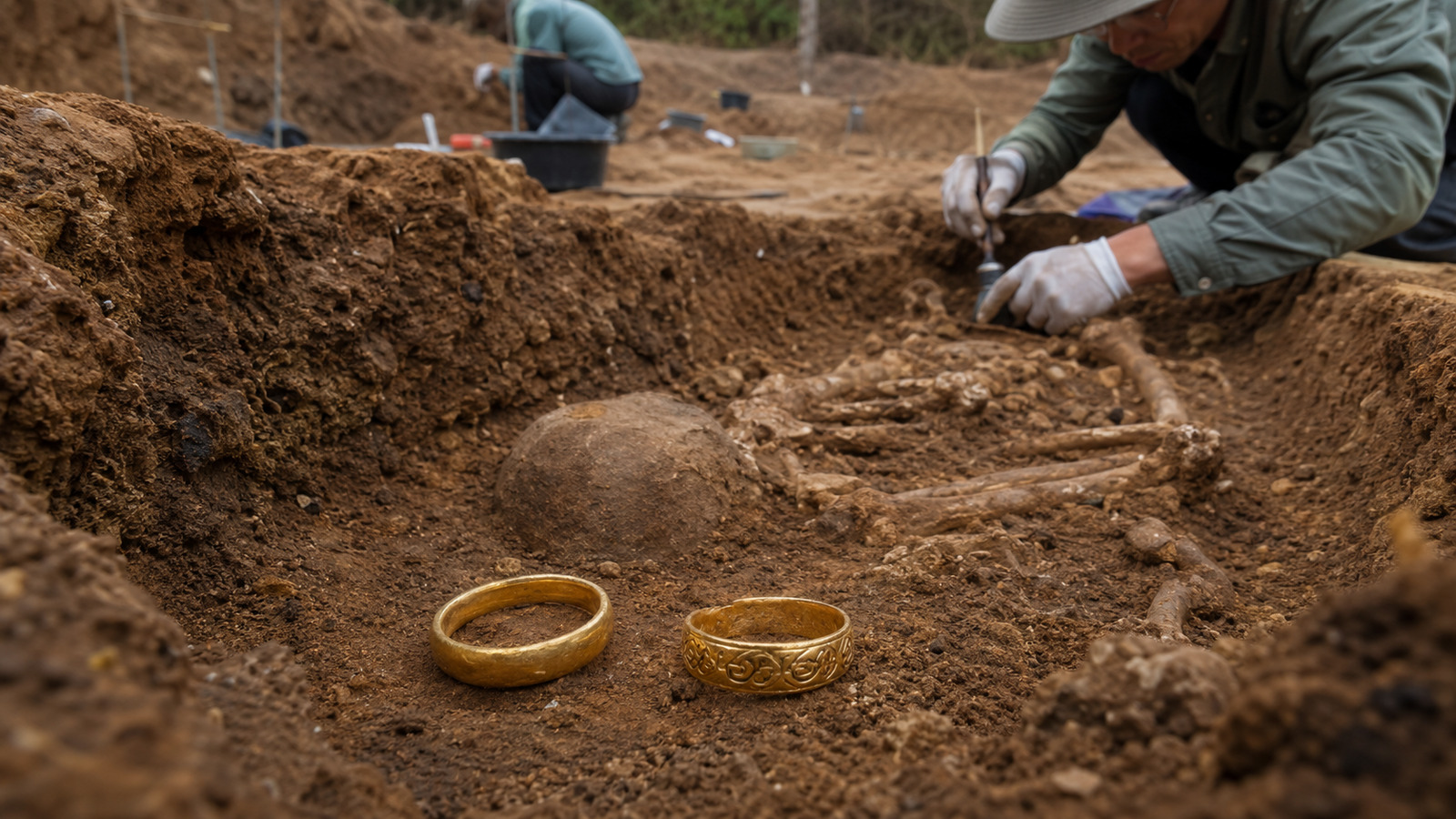
2,000-Year-Old Gold Rings Found with Human Bones in Thailand Reveal Rare Burial and Feature Ancient Indian Inscription

-
Lenovo Unveils Legion Y700 Tablet with RGB Backlighting, 5G, and SIM Card Support

-
World’s First Nuclear Hydrogen Unit Begins Operation: Copper-Chlorine Technology with Initial Capacity of 150 Liters per Hour, Aiming for 3,000 Liters per Hour
-
Mechanics Retrofit Old Fiat Uno with BYD Electric Motor for Silent, Low-Voltage Operation Reaching Nearly 60 km/h in Home Test


In some examples, research has already explained part of the functioning.
In others, documents, complete pieces, or archaeological evidence are missing to confidently state how everything was made and what it was for.
Antikythera Mechanism and Ancient Astronomy
The Antikythera mechanism is among the most cited findings when it comes to ancient technology.
The object was retrieved in 1901 from a shipwreck near the Greek island of Antikythera and, according to Britannica, its manufacture is currently dated to around 100 B.C., with a margin of approximately 30 years.
The device combined bronze gears and dials used to calculate and display astronomical information.
Studies associate the mechanism with the tracking of the Sun and Moon cycles, lunar phases, and eclipse predictions, as well as calendars used in the ancient Greek world.
The complexity of the piece draws researchers’ attention because there is no other known mechanism from the same period with gears articulated at a comparable level.
According to Britannica, mechanical systems of similar sophistication only reappear many centuries later, in astronomical clocks and medieval mechanisms.
The main point still open is not just the functioning of the device, but the trajectory of the knowledge that allowed its construction.
As part of the original structure was lost, researchers work with preserved fragments, X-ray images, inscriptions, and reconstructions to understand the full capabilities of the mechanism.

Roman concrete and structures that spanned centuries
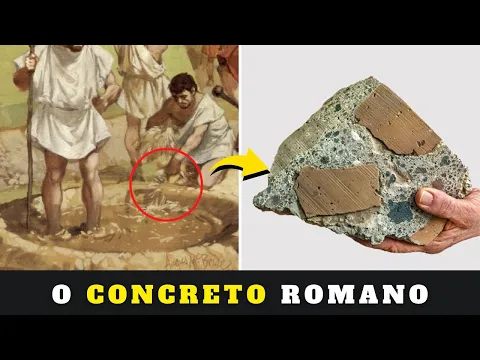
Roman concrete supported aqueducts, ports, temples, amphitheaters, and other structures that remained in use or preserved for long periods.
The durability of this material is studied by materials scientists because some structures have withstood centuries of exposure to water, salt, and climate variations.
MIT research identified calcium-rich fragments in ancient concretes, known as lime clasts.
These fragments, previously interpreted as mixing flaws, have been linked by researchers to a possible self-healing mechanism.
When water penetrates small cracks, some of the lime can dissolve and recrystallize, helping to fill the cracks.
A study published in 2025, based on samples from a preserved construction site in Pompeii, reinforced the hypothesis that Roman builders used the so-called hot mixing.
The process involved quicklime and volcanic ash, with the subsequent addition of water, generating a chemical reaction associated with the formation of lime clasts.
This does not mean that all Roman concrete was the same.
The composition varied according to the region, the availability of volcanic materials, and the function of the structure.
Therefore, current research seeks to understand the chemical and structural principles of the material, rather than treating the technique as a single recipe lost in time.

Baghdad Battery and the debate on ancient electricity
The so-called “Baghdad Battery” is one of the examples that require more caution.
The name refers to artifacts consisting of a ceramic jar, a copper cylinder, and an iron rod, associated with present-day Iraq and archaeological contexts linked to the Parthian or Sassanid periods.
Its original purpose, however, remains without consensus.
The resemblance to a galvanic cell led to the hypothesis that the object could generate a small electric current if filled with acidic liquid.
Modern replicas have managed to produce low voltage in tests, but this result does not prove that the original piece was used as a battery.
Archaeologists and historians point out significant limitations in this interpretation.
Among them are the lack of evidence of wires, electrical connections, series use, or electro-galvanized objects from the same archaeological context.
For this reason, the electrical hypothesis is treated as controversial, not as an established fact.
Other interpretations suggest that the containers could have served ritual purposes, storage of organic materials, or functions not yet identified.
Without direct documentation and with gaps about the original context of the discovery, the safest way to present the object is as an archaeological artifact of uncertain use.

Lycurgus Cup and Roman Dichroic Glass
The Lycurgus Cup, preserved in the British Museum, is a glass object from the late Roman period, dated to the 4th century.
According to the museum, the piece is made of green and red glass, with decoration related to the myth of King Lycurgus and later mounted in gilded silver.
The scientific interest in the cup lies in the optical behavior of the glass.
When illuminated from the front, the piece appears greenish.
When light passes through the material, the tone changes to red.
This phenomenon is described as dichroic, meaning the perceived color varies according to the direction and passage of light.
Studies on the material associate this effect with the presence of gold and silver particles on a nanometric scale dispersed in the glass.
The expression “Roman nanotechnology” appears in research on the piece, but it should be understood as a modern description of the phenomenon, not as proof that Roman artisans mastered current scientific concepts.
The most accepted explanation is that artisanal techniques and experimentation with glass composition allowed achieving the visual effect.
Even so, the piece remains relevant to materials science because it demonstrates technical control over color, transparency, and composition in a period before modern knowledge about nanoparticles.
Longyou Caves and Rock Engineering
The Longyou Caves, in China’s Zhejiang province, were revealed in 1992 after locals drained areas that appeared to be small lakes.
Instead of natural formations, large rock-excavated cavities emerged, with spacious halls, pillars, staircases, drainage, and regular tool marks.
Geological engineering studies describe the structures as artificial caves excavated around 2,000 years ago in Cretaceous-aged argillaceous siltstone.
Research highlights features such as large spans, sloped ceilings, and relative stability over time, aspects that help explain the technical interest in the site.
The analysis of the site also indicates that the builders may have considered the area’s geology when positioning and conducting the excavations.
Clay layers and other rock characteristics would have influenced layout decisions, according to studies published about the site.
Despite this, central information remains without secure confirmation.
There is no consensus on who built the caves, what their original purpose was, or how the work was organized on such a large scale.
The absence of detailed historical records limits conclusions and prevents definitive interpretations.

Ancient Knowledge, Science, and Archaeological Gaps
The five examples show how different societies developed technical solutions based on observation, craftsmanship, and accumulated knowledge.
The Antikythera mechanism combines mathematics, astronomy, and mechanics; Roman concrete involves material chemistry; the Lycurgus Cup combines glass and optical effects; the Longyou Caves indicate excavation planning; while the “Baghdad Battery” remains a controversial case, with no proven function.
The scientific reading of these objects depends on the separation between evidence and speculation.
When there are studies, analyzed materials, and documented archaeological context, it is possible to advance in more consistent explanations.
When records are lacking or the piece is incomplete, the conclusion needs to be limited to what the sources allow us to assert.
The debate remains open on some points, especially when archaeology encounters sophisticated objects but lacks sufficient documentation about their origin and use.


