






 Portuguese
  Spanish
  3 min of reading
  0 comments


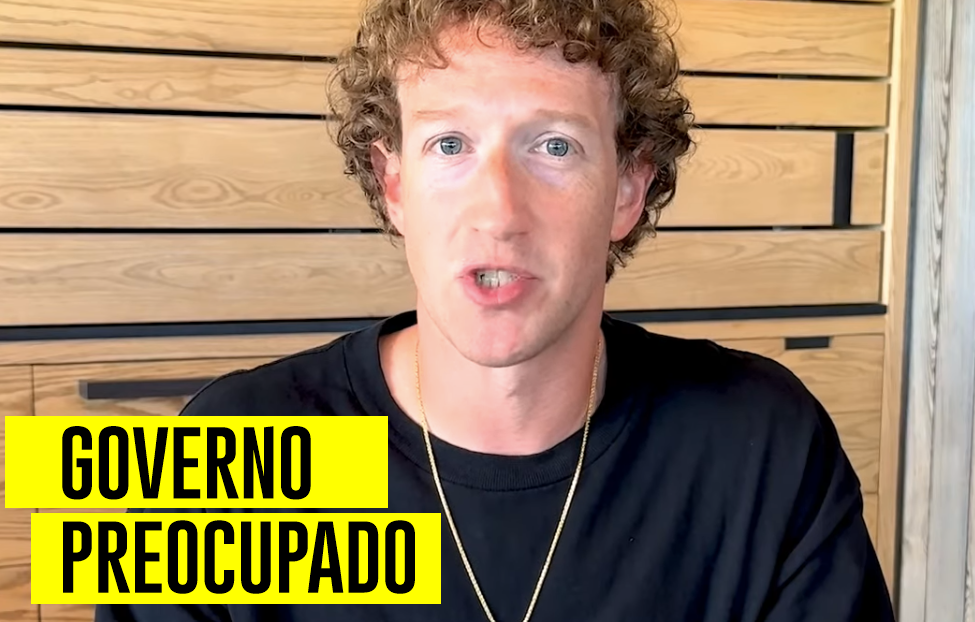
A Recent Decision by Mark Zuckerberg Provoked Outrage in Lula’s Government, Generating Debates About Technology, Privacy, and Global Policies.
The decision by Meta, the company that owns Facebook and Instagram, to abandon the fact-checking system on its platforms provoked immediate reactions in Brazil. In addition to the criticisms from João Brant, the Secretary of Digital Policies of Lula’s Government, the Finance Minister, Fernando Haddad, classified the measure announced by Mark Zuckerberg as “worrisome.”
Meta Changes Moderation Policies
Mark Zuckerberg, CEO of Meta, announced on Tuesday (7) that professional fact-checking agencies will cease to operate on the company’s platforms.
Instead, a community rating system will be adopted, inspired by the model used by X (formerly Twitter). The change will start in the United States and will later be implemented in other countries.
-
Leaving the charger plugged in without a phone consumes energy or is it a myth? Experts call the phenomenon “phantom consumption” and warn that dozens of devices on standby can add up on the bill over the year.

-
It accompanies Earth, but it is not a moon: Chinese probe reaches Kamo’oalewa and begins an unprecedented mission to investigate where the strange asteroid came from, what its internal structure is like, and whether its origin is linked to an ancient collision that launched fragments of the lunar surface into space.
-
Space technology used to search for water on Mars is now hunting for invisible leaks under the streets of São Paulo, using satellites, AI, and chlorine signals to help Sabesp recover up to 6.7 billion liters of water.

-
Japan sends ship to extract mud rich in rare earths at nearly 6,000 meters deep in the Pacific, attempts to lift 350 tons per day from the seabed, and transforms sediments near Minamitori Island into a strategic weapon to reduce dependence on China.



According to Mark Zuckerberg, Meta seeks to simplify its content policies and promote freedom of expression.
He criticized the fact-checking agencies, claiming that they would be “politically biased” and undermine user trust.
The fact-checking policy was introduced by Meta in 2016 with the aim of reducing the spread of misinformation.
Stories identified as false had their reach reduced, and posts received notifications to alert users.
Concern in Lula’s Government
Fernando Haddad, commenting on the decision, expressed concern about the impacts of this change on the spread of fake news. In an interview with GloboNews, the minister stated that freedom of expression cannot be used as justification for the propagation of slander, lies, and defamation.
— Today we had an announcement from an important global communication organization saying that it will remove its fake news filters, somewhat embracing the mentality that freedom of expression includes slander, lies, defamation, and everything else, which worries us — declared Haddad.
João Brant, in turn, emphasized that Meta’s decision favors political groups aligned with the far right and opens the door to greater polarization on social media.
For him, the measure aligns with the interests of the elected President of the United States, Donald Trump, whose administration begins in January 2025.
The Connection with Donald Trump
The change announced by Meta comes at a time of rapprochement between Mark Zuckerberg and Trump. In November 2024, Meta’s CEO attended a dinner with the elected president, stating, according to Fox News, that he wishes to support “the national renewal of America under Trump’s leadership.”
For Secretary João Brant, Meta is repositioning itself politically on the international stage, in tune with the interests of the future US government. He believes that the decision could be a blow to countries seeking to balance rights in the digital environment, such as Brazil, the European Union, and Australia.
Impact on Fact-Checking Agencies
The end of the partnership with fact-checking agencies is expected to have consequences. These companies, which work on identifying misinformation on sensitive topics such as elections and the COVID-19 pandemic, will lose an important channel of operation.
Brant warned that Meta is “financially suffocating” these agencies, which depended on operations conducted within the platforms.
With the change, Mark Zuckerberg argues that Meta is correcting moderation failures, but critics point out that the measure may pave the way for the spread of misinformation.






-

-

2 people reacted to this.