






 Portuguese
  Spanish
  5 min of reading
  0 comments


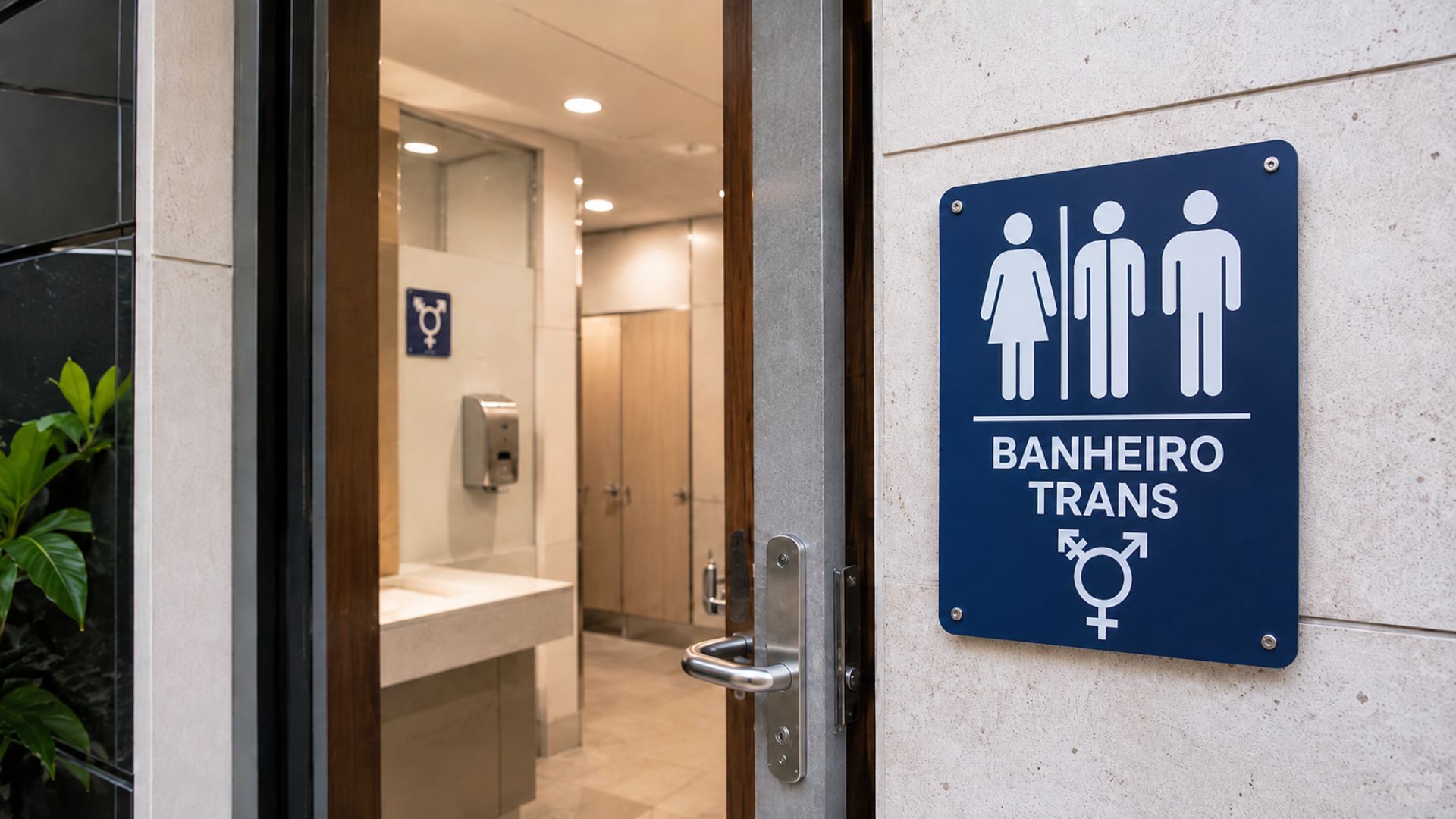
Project approved in Alerj imposes new sanitary structures in high-traffic areas in Rio, foresees fines, risk of interdiction and reignites debate on costs, adaptation period, accessibility and scope of the measure in companies, hospitals, universities, terminals and shopping centers.
The Legislative Assembly of Rio de Janeiro approved the bill that requires the installation of neutral bathrooms and changing rooms in public and private high-traffic areas in the state, including hospitals, universities, transport terminals, shopping centers, cultural spaces, and sports areas.
The proposal, approved in a single discussion this Tuesday (26), received 29 votes in favor, 13 against, and one abstention.
After the vote, the text goes to the acting governor Ricardo Couto for analysis, who may sanction or veto the measure within the legal deadline.
-
The True Story of Beavers Parachuted into Idaho: A Post-WWII Mission Using Planes and Special Crates to Relocate 76 Animals to a Remote U.S. Region

-
Trailblazing Brazilian Mother of Three Becomes First Woman to Drive BYD Electric Truck, Inspiring Her Daughter to Follow Suit

-
6-Year-Old Boy Finds 1,000-Year-Old Viking Sword During School Activity in Norway

-
Mother Who Orchestrated Her Daughter’s Genius Education Enters History After Crime That Still Mystifies Spain


According to the project, the spaces should be intended for use by non-redesignated trans people and non-binary people.
The approved wording also provides for specific signage, including in Braille, as well as accessibility requirements and adaptations to health surveillance standards.
The creation of the structures, however, has sparked debate about costs, adaptation period, and operational impact on establishments required to comply with the rule.
Fecomércio-RJ expressed concern about the measure and advocated for more in-depth technical analysis before it potentially comes into effect.
Neutral bathrooms in RJ should reach high-traffic areas
The proposal covers public and private collective environments with a high flow or permanence of people.
Among the mentioned locations are hospitals, health centers, universities, university centers, convention centers, public transport terminals, auditoriums, cinemas, theaters, sports centers, and public bathrooms in squares and parks.
The text establishes that neutral bathrooms and changing rooms must have a changing table for children up to three years old, a children’s toilet, an adequate sink, and accessibility for people with disabilities or reduced mobility.
There are also access restrictions.
Unaccompanied children will not be allowed to use these spaces, and the project stipulates that binary people should not use bathrooms and changing rooms classified as neutral.

Religious institutions, theological seminaries, and confessional units are exempt from the obligation, according to Alerj’s announcement.
In practice, the requirement may demand renovations, reorganization of internal areas, installation of specific signage, and possible accessibility adaptations.
These points are at the center of the reaction from business entities and parliamentarians questioning the economic feasibility of the measure.
Fine for non-compliance can reach around R$ 5.4 thousand
Non-compliance with the requirements may result in a fine of 1,100 UFIR-RJ, equivalent to about R$ 5.4 thousand, considering the 2026 UFIR-RJ set at R$ 4.9604.
In case of recurrence, the penalty doubles and may be accompanied by a five-day closure of the establishment.
If there is a third recurrence, the project foresees the possibility of closure of the location or suspension of the state registration until the adjustments are made.
The text also directs the funds collected from fines to a state fund linked to social defense and citizenship actions.
In addition to the penalties, the proposal provides for the creation of a specific channel to receive complaints about non-compliance with the norm.
The Public Authority must also adopt preventive actions against discriminatory acts involving the law’s recipients.
The original version of the project established a six-month deadline for remodeling or total or partial replacement of the facilities.
Alerj’s announcement about the approval, however, states a 12-month deadline for already operating establishments to make the adaptations after the law’s publication.
Fecomércio-RJ warns about the cost of works and adaptations
Fecomércio-RJ stated that the obligation of physical adaptations may generate significant operational, structural, and financial impacts for the establishments affected by the proposal.
The entity expressed special concern for micro, small, and medium-sized enterprises.
In a note sent to TEMPO REAL, the federation stated that the changes may require renovations, space adaptations, signage, and adjustments related to accessibility.
For the entity, the project does not present transition mechanisms, incentives, or criteria proportional to the economic reality of the enterprises.
The federation also drew attention to the sanctions provided.
In the entity’s assessment, the penalties need to be analyzed under the criteria of reasonableness and proportionality, especially given the practical and financial difficulties that some establishments may face.
Fecomércio-RJ advocated for greater technical debate with the sectors involved.
According to the entity, the topic requires dialogue to seek legally secure solutions compatible with the operation of companies that would be required to carry out works or reorganize internal spaces.
Line of credit by AgeRio is suggested for companies


To reduce the impact on companies, deputies Bruno Dauaire, from União Brasil, and Anderson Moraes, from PL, proposed the creation of a specific line of credit through the State Development Agency, AgeRio.
The idea is for micro, small, and medium-sized companies to have access to differentiated conditions to finance the structural adjustments required by the project.
The measure, according to the parliamentarians, would serve as financial support in light of the obligation to reform.
“We advocate that the government also take responsibility, creating lines of credit and support mechanisms to enable these adaptations,” the deputies stated.
There is still no definition on the effective creation of this line of credit.
The eventual implementation would depend on the Executive Power and financial, operational, and regulatory criteria to be defined by the state government.
Deputy Dani Balbi contests measure approved by Alerj
Deputy Dani Balbi, from PCdoB, the first trans parliamentarian of Alerj, criticized the proposal and stated that she intends to challenge it legally.
For her, the measure may create segregation in the use of public and private spaces.
The parliamentarian classified the project as incompatible with fundamental rights and stated that the reaction will occur in the political and legal fields.
According to Dani Balbi, trans people circulate daily through schools, workplaces, public services, and private spaces of collective use.
During the processing, parliamentarians presented amendments to alter sections of the project, including changes in the definition of bathrooms, access to spaces, and the allocation of funds collected from fines.
The final version still depends on the final wording and the decision of the acting governor.
The author of the proposal, Deputy Índia Armelau, from PL, argues that the creation of a third bathroom seeks to protect women and children, as well as provide a specific space for non-redesignated trans people and non-binary individuals.
In Alerj, she stated: “I accept trans people, but I also need to be respected as a woman.”
With approval in the plenary, the proposal enters the decisive stage of processing.
If sanctioned, the establishments covered by the law will have to comply with installation, signage, accessibility, and sanitary adequacy requirements, under the risk of fines, temporary interdiction, and suspension of state registration in case of recurrence.






Be the first to react!