






 Portuguese
  Spanish


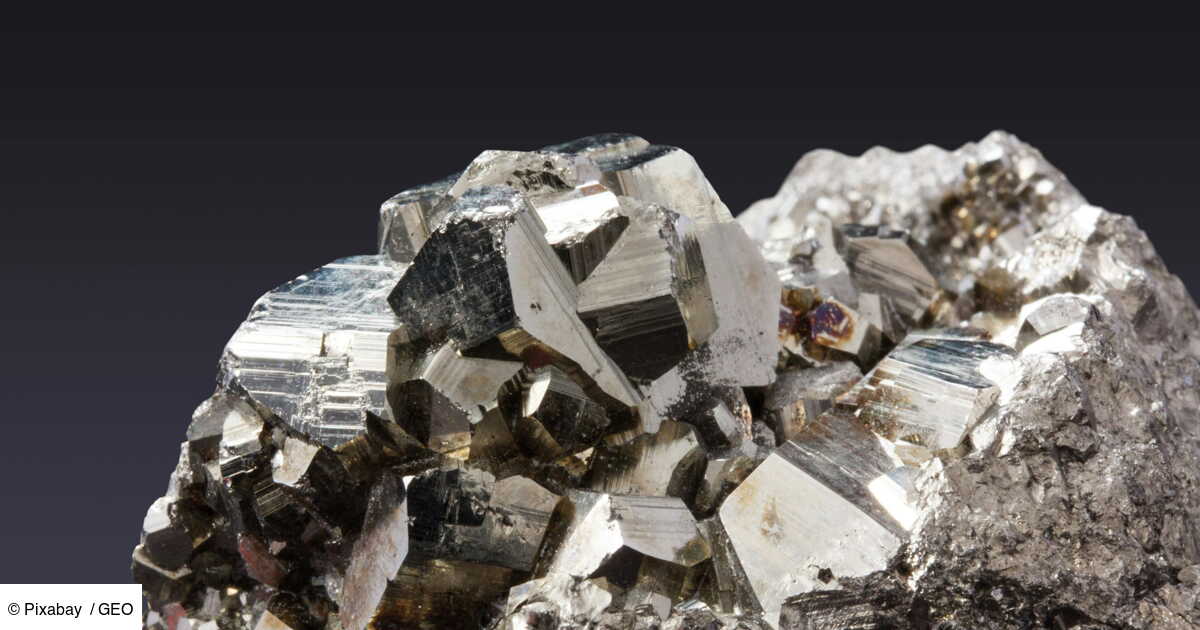


Rare Mineral Found in Nature Demonstrates Superconductivity Without the Need for Extreme Temperatures
American researchers have identified, for the first time, a natural mineral with unconventional superconductor properties, something that until now was only possible in laboratories. The substance, called miassite, was found near the Miass River in Russia and could represent a significant advancement in the search for more efficient and sustainable energy technologies.
The discovery, recently published in the journal Communications Materials, marks a turning point in the physics of materials. This is because superconductivity, or the ability to conduct electricity without energy loss, was seen as an extremely delicate phenomenon, possible only under controlled laboratory conditions. With miassite, this barrier begins to crumble.
What Is Miassite and Why Is Its Structure Special?


Miassite is a mineral composed of rhodium and sulfur (chemical formula: Rh₁₇S₁₅). Although it was already known to geologists, it had never been studied with a focus on its deep electrical properties. What scientists have now discovered is that its highly ordered crystal structure allows for the fluid displacement of electrons without electrical resistance — the hallmark of superconductors.
-
Xiaomi Unveils Smart Glasses in Brazil with 12MP Camera, 4K Video, and AI Features, Challenging Ray-Ban Meta

-
Volkswagen Unveils Bold Strategy to Compete with Chinese Automakers in Brazil, Featuring 5,000 Parts, 76% Localization, and a Surprising Turnaround
-
Three Teens Win Global Prize for Low-Cost AI Microscope Diagnosing Malaria Species in Seconds for Remote Villages
-
Xiaomi Unveils Revolutionary Fridge: Eliminates Odors in 3 Minutes, Sterilizes in 2, Offers 508 Liters in Compact Design, Operates at 31 dB, and Is Smartphone-Controlled.


Even more impressive is the fact that natural miassite exhibits these characteristics without the need to be cooled to temperatures close to absolute zero, as is the case with conventional superconductors. This feature opens up the possibility of use in less extreme environments, which would facilitate its application in everyday devices or in more efficient energy systems.
Superconductors: What Are They and Why Do They Matter?
Superconductivity was discovered in 1911 and has since intrigued scientists for its ability to eliminate electrical losses. When electricity passes through ordinary wires, part of the energy dissipates as heat due to the material’s resistance. Superconductors, on the other hand, transport electric current with total efficiency, without losses.
These materials are essential for the development of technologies such as:
- More efficient power transmission lines;
- Maglev trains;
- Medical imaging equipment, such as MRIs;
- Quantum computers.
However, the need for extreme cooling has always been a barrier to their large-scale application. The search for superconductors operating at higher temperatures (or even at room temperature) is one of the major scientific races of our time.
Unconventional Superconductors: The Next Step in Science
What distinguishes so-called unconventional superconductors is that they do not obey the classical rules of superconductivity. While conventional materials need to form electron pairs (known as Cooper pairs) to allow flow without resistance, unconventional ones exhibit alternative atomic structures that promote this behavior differently.
Miassite fits into this rare category of superconducting mineral, as it has an atomic organization that facilitates electronic transport even without the classical conditions. This represents a new frontier for understanding matter and electrical conduction, as well as opening practical possibilities.
Future Applications and Challenges of Miassite
Despite the excitement surrounding the discovery, the researchers themselves acknowledge that the raw version of miassite — the one extracted directly from nature — contains impurities such as iron, nickel, copper, and platinum. These elements interfere with the ideal superconducting properties, making immediate application of the mineral difficult.
The solution, according to scientists, lies in the development of synthetic materials that mimic the formula of miassite but with controlled purity and optimized property engineering. This will require more laboratory research, structural analyses, and conduction tests under different environmental conditions.
Still, the discovery provides a concrete foundation for the development of a new generation of more accessible and adaptable superconductors. This is a crucial step to make reality projects that today seem futuristic.
A Discovery That Revolutionizes the Energy Sector
If future synthetic versions of miassite prove viable, it will be possible to rethink how we produce, transmit, and use electric energy. Among the main impacts are:
- Significant reduction of losses in electrical networks;
- Lower energy costs for industries and households;
- Increased efficiency in storage and transmission systems;
- Boost to the development of technologies like electric cars and smart urban infrastructure.
Currently, a considerable portion of the energy produced is lost in transportation due to the resistance of materials. Superconductors like miassite could eliminate these losses, resulting in global energy savings.
The Importance of Continuing to Invest in Material Science
The discovery of miassite as a natural superconductor reinforces the importance of multidisciplinary scientific research, involving physics, geology, chemistry, and materials engineering. Furthermore, it highlights that nature still holds valuable technological secrets, just waiting to be uncovered.
Continuous investment in basic science is what makes such advancements possible. What started as a simple analysis of a common mineral has ended up as one of the most important discoveries in recent years in the field of electrical conduction.


