






 Portuguese
  Spanish
  4 min of reading
  0 comments


At Only 3 Million Years Old, The Exoplanet Surprises Scientists and Promises to Revolutionize the Understanding of Planet Formation and Evolution in the Universe.
The Universe never ceases to surprise us, and the latest news comes straight from a study conducted by scientists at the University of North Carolina in the United States. They announced the discovery of a new young planet that has researchers in awe. Named TIDYE-1b, this exoplanet is only 3 million years old. To put it in perspective, it is 1,500 times younger than our beloved Earth, which already boasts 4.5 billion years of history.
This discovery is yet another example of how science continues to unravel the mysteries of the cosmos and paves the way for us to understand how planets form and evolve. Come along to discover more about this breakthrough that promises to revolutionize what we know about the Universe.
How Was The New Planet Discovered?
TIDYE-1b was identified through the transit method, a fascinating technique that allows for the observation of exoplanets by analyzing their interaction with their stars. When a planet passes in front of its star, it temporarily dims the light emitted by it. This small “shadow” is detected by telescopes, revealing the presence of a planet.
-
At 22 years old, a young person from Recife creates an artificial intelligence startup with a team barely over 25, serves giants like Bayer and Ipiranga, earns millions without taking a cent from investors, and transforms a young company into a national AI phenomenon.

-
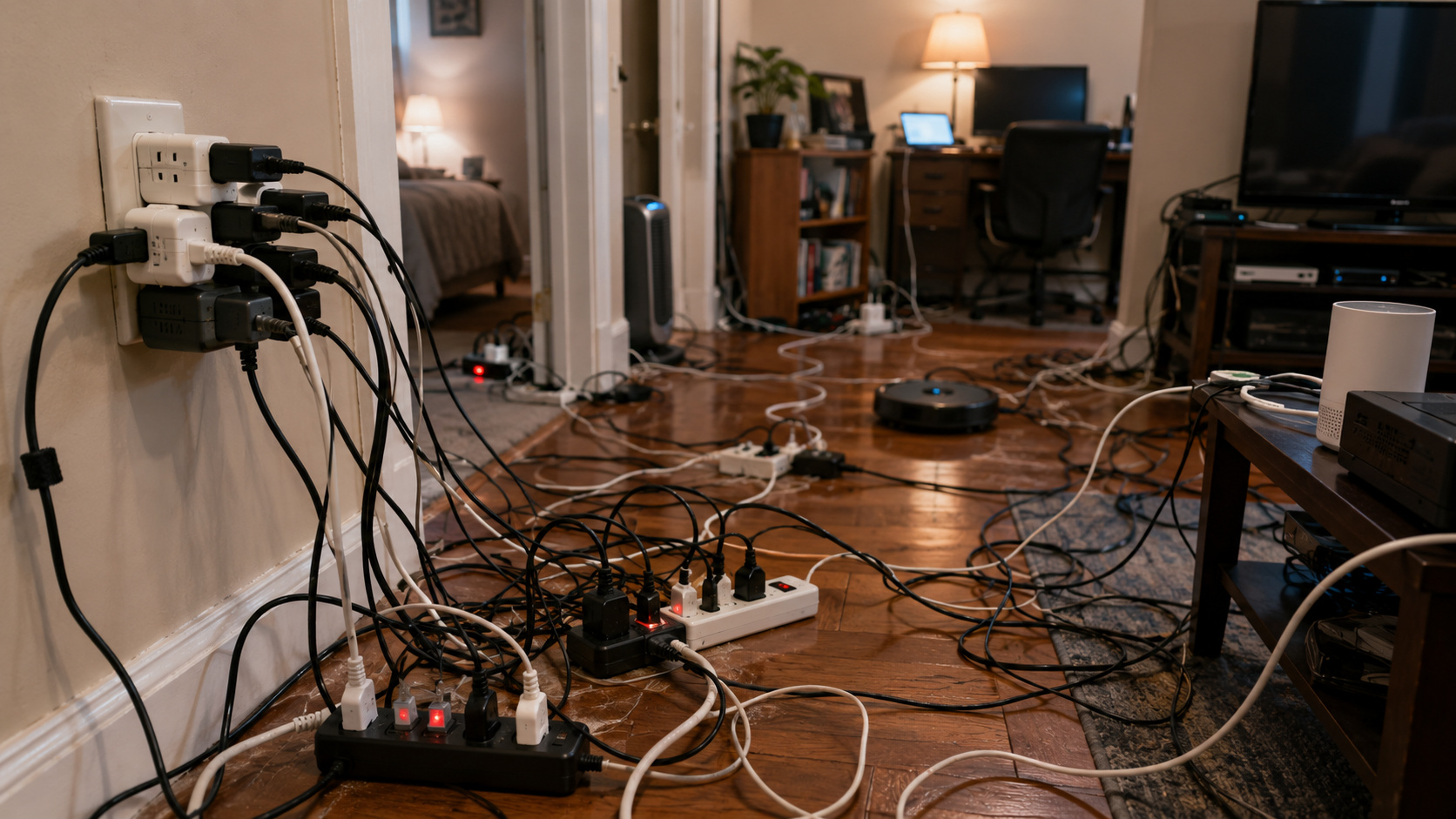
The invisible danger inside the house: plugging too many devices into the same outlet and spreading extensions throughout the rooms can overload the electrical network, silently heat wires, and turn a common habit into one of the leading causes of house fires.

-
Goodbye traditional laundry: Roborock launches washer and dryer with super hydrolysis, microbubbles, 99.99% sterilization, low-temperature drying, automatic detergent, app control, and cycles to remove stains, odors, mites, and bacteria from clothes.

-
It is now possible to generate energy without batteries: new flexible material transforms body heat into electricity and paves the way for more efficient, autonomous, and comfortable wearable devices, with the potential to revolutionize personal electronics in the coming years.



In the case of TIDYE-1b, scientists used the TESS telescope (Transiting Exoplanet Survey Satellite) from NASA to observe the phenomenon. The research was so significant that it was published in the prestigious scientific journal Nature. And rightly so: finding such a young and still visible planet is a remarkable find in the field of science.
Why Is TIDYE-1b So Special?
The discovery of TIDYE-1b has intrigued scientists for several reasons. Typically, young planets are hidden in a gas and dust disk known as a “protoplanetary disk,” which is common in the early stages of planetary formation.
However, TIDYE-1b escaped this pattern. It orbits its star at a different angle than the disk, making it visible to ground-based telescopes. This unique detail contradicts what we know about how planets are born and grow.
Furthermore, TIDYE-1b is very close to its star, taking just nine days to complete a full orbit. This proximity leads scientists to believe that it may become something quite interesting in the future: a “super-Earth” or a “sub-Neptune.” These types of planets do not exist in the Solar System, but they seem to be common in our galaxy.
A Young Planet That Challenges What We Know About Earth and the Universe
Compared to Earth, TIDYE-1b is practically a newborn. While our planet took billions of years to reach its current form, the new young planet is already showing signs that planetary formation processes can occur much more quickly than we imagined.
This discovery also raises important questions about how other planetary systems evolve. Earth, for example, went through many phases to become habitable. Studying a young planet like TIDYE-1b may help us better understand how these processes occur and what factors are necessary for a planet to sustain life.
What Can Science Learn From TIDYE-1b?
The discovery of TIDYE-1b is not just an astronomical curiosity. It has important implications for science. First, it gives us a rare window into observing the early stages of planet formation. This helps scientists refine planetary formation models and better understand how solar systems develop.
Moreover, TIDYE-1b reinforces the idea that planets can form and evolve under conditions very different from those we know in the Solar System. Science is constantly discovering exotic and unique worlds, and every new planet found brings new information about the cosmos.
Another fascinating question is the possibility of TIDYE-1b becoming an example of a super-Earth or sub-Neptune. These types of planets are often found in other parts of the galaxy, but we still don’t have nearby examples to study in detail. Over time, TIDYE-1b may provide us with valuable clues about the characteristics of these worlds.





Be the first to react!