






 Portuguese
  Spanish
  3 min of reading
  0 comments


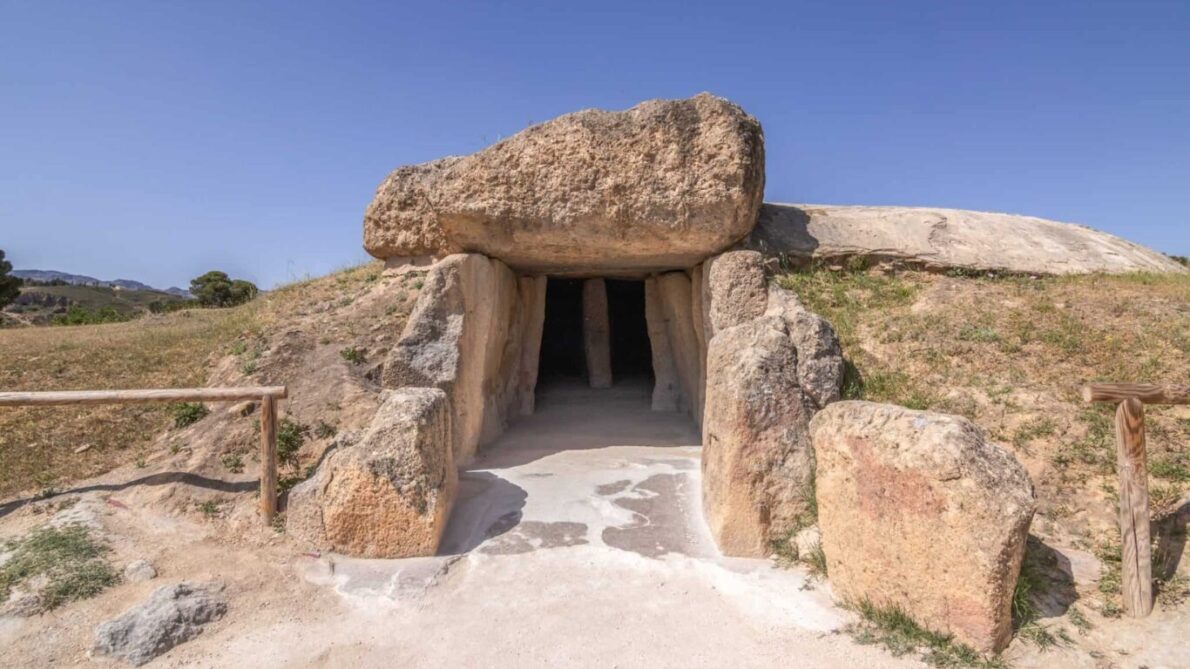
A New Study Revealed That the Menga Cave, an Ancient Monument in Spain, Is One of the Greatest Civil Engineering Feats of the Stone Age: The Discovery Demonstrates That Our Ancestors Had a Much More Advanced Scientific Knowledge Than Previously Thought
The Menga Cave, also known as the Dolmen of Menga, was discovered in 2020 in Antequera, southern Spain. Apparently simple, this gallery-shaped tomb was built around 5,800 years ago and was already impressive due to its grandeur. However, a new study published in the journal Science Advances revealed even more intriguing details about the construction, according to the website olhardigital.
With a structure made up of megaliths – gigantic stones – and a design that involved millimeter precision, the monument surprises even modern specialists. According to the study, no current civil engineer would be able to replicate the work with the same resources and tools available at the time. In other words, the ancient builders not only knew the science of physics and material properties, but they also skillfully applied this knowledge.
Ancient Technology: Much More Than Stone Blocks
One of the most fascinating aspects of this construction is the waterproofing process. “No modern technology here!“, researchers joke. The waterproofing was done with layers of smaller rocks and soil, protecting the structure from the elements and ensuring its preservation to this day. Without this technique, the monument would have collapsed over time.
-
A Brazilian city decided to purchase a piece of the Atlantic Forest with more than 153,000 square meters, and owners of preserved areas will be able to submit proposals to transform the forest into a conservation unit.

-
Brazilian siblings aged 11 and 7 read 240 books in just one year and caught attention on social media: while many children spend hours on screens, they turned their family’s routine into an example of reading, discipline, and curiosity.
-
The legendary oak that, according to the story, hid Robin Hood from the Sheriff of Nottingham, died at the impressive age of 1,200 years in England, and the first chilling sign of its end was that no leaves sprouted on the tree this spring.

-
While the world looks at forests, the UN warns that the Earth is also threatened by the silent degradation of natural grasslands and savannas, ecosystems that cover half of the planet, support billions of people, and can exacerbate water, food, and climate crises.

Scholars also discovered that the stones used came from a quarry located about 850 meters away. This material, extremely porous, required specialized handling to avoid damage. Moreover, the megaliths were positioned in a way that they fit perfectly together, locking into each other, giving the construction impressive stability.
Advanced Physics Without Calculations? You Can Believe It!
Another striking point is the scientific knowledge applied in the construction of the Menga Cave. Even without modern sciences such as mathematics or geometry, ancient architects intuitively understood principles of physics such as center of mass, friction, and ideal incline for ramps. Additionally, the arrangement of the stones maximized their physical properties, revealing a deep understanding of civil engineering.
The dolmen was constructed so that its entrance aligned with the sunrise on the summer solstice, and the sun rays illuminated the back of the main chamber. This detail suggests that the peoples of the time had a strong cultural and religious connection to the Sun, a recurring theme in various megalithic constructions around the world.
The Relationship Between Megalithic Monuments Worldwide
The Menga Cave is not an isolated monument. Research indicates that other megalithic structures scattered around the world, such as in Ireland, Sweden, and Morocco, share impressive similarities in their architecture and relationship with the Sun. This raises questions about whether these ancient cultures, though separated by great distances, had similar beliefs or knowledge.
These megalithic works, including the Menga Cave, demonstrate that our ancestors were much more than mere survivors; they were skilled engineers, scientists, and astronomers in their own time.
The Genius of the Stone Age Peoples
The recent discoveries about the Menga Cave change the way we view the peoples of the Stone Age. The monument, built over 5,000 years ago, reveals a level of civil engineering and scientific knowledge that many would not have imagined existed at that time. This masterpiece of prehistory is proof that, although resources were limited, human ingenuity never has been. And let’s face it, our ancestors knew exactly what they were doing.






Be the first to react!