






 Portuguese
  Spanish


The heatwave affecting all of Europe, while France has turned air conditioning into one of the most explosive topics of political debate in the country.
With temperatures above 40°C, schools closed, hospitals under pressure, and residents seeking ways to escape the heat, parties have begun publicly disputing what the State’s response should be to increasingly extreme summers.
The issue gained momentum because France has a low presence of air conditioning in homes, schools, and public buildings, a result of a combination of historically milder climate, old buildings, environmental concerns, and energy costs.
Now, with the country facing record heat, the question is no longer just technical: is air conditioning a public health necessity or an expensive, polluting, and insufficient solution?
-
New Bridge Between Tocantins and Pará Transforms Daily Commute, Replacing Costly Ferry Crossings in Brazil

-
Brazilian Brothers Invent Hydraulic Claw for Tractors, Enabling the Lifting and Stacking of 400 Rice Bags Daily

-
Innovative Low-Cost Electrical Solution Brings Light to Over 1 Million Brazilians, Starting with 400 Families in Southern Brazil

-
Vacuum-insulated windows set to replace traditional glass by 2026, promising 60-70% reduction in heat loss and improved insulation without full frame replacement.


French right defends mass air conditioning plan
The right-wing party Rassemblement National (RN), linked to Marine Le Pen and Jordan Bardella, has started to advocate for a large national air conditioning plan to tackle heatwaves. The proposal mainly targets schools, hospitals, nursing homes, and public buildings.
The idea was presented as a direct response to the country’s perceived unpreparedness. With overheated classrooms and healthcare units under pressure, the RN tries to sell air conditioning as a simple, visible, and popular measure to protect the population.
The proposal, however, has become the target of criticism. The French newspaper Le Monde pointed out that the RN’s plan is still considered vague, without a clear budget and execution details. Critics also argue that focusing solely on air conditioning ignores deeper causes of the problem, such as urban adaptation, building thermal insulation, tree planting, and emission reduction.
French government on the defensive during the heatwave
The French government has also come under pressure. During the current heatwave, authorities closed thousands of schools, adapted operating hours, and announced emergency measures to try to reduce health risks.
In education, teachers’ unions criticized the holding of national exams amid temperatures close to 40°C. They pointed out a lack of preparation, rooms without adequate insulation, and the absence of cooling in many school buildings.
According to The Guardian, thousands of schools were closed or had reduced hours during the extreme heat episode.
The government announced emergency funding for cooling equipment in schools, but the measure was seen by unions as insufficient given the size of the problem. The crisis made it clear that a significant part of French infrastructure is still not prepared for prolonged heat.
Left and environmentalists advocate alternatives before air conditioning
On the other side of the debate, left-wing sectors and environmentalists criticize the idea of making air conditioning the main response to extreme heat. The argument is that the massive use of appliances increases energy consumption, strains electrical grids, and can reinforce urban heating when installed without planning.
These groups advocate measures such as thermal renovation of buildings, light-colored roofs, natural ventilation, external shading, street tree planting, creation of cool islands, and adaptation of schools and hospitals. For them, air conditioning may be necessary in sensitive places like hospitals and nursing homes but should not replace broader public policies.
The discussion has become a kind of political symbol. On the right, air conditioning appears as a practical and immediate response for the population. On the left and among environmentalists, the fear is that it will be used as an easy solution for a problem that requires long-term urban and climate adaptation.
Extreme heat exposes inequality within France
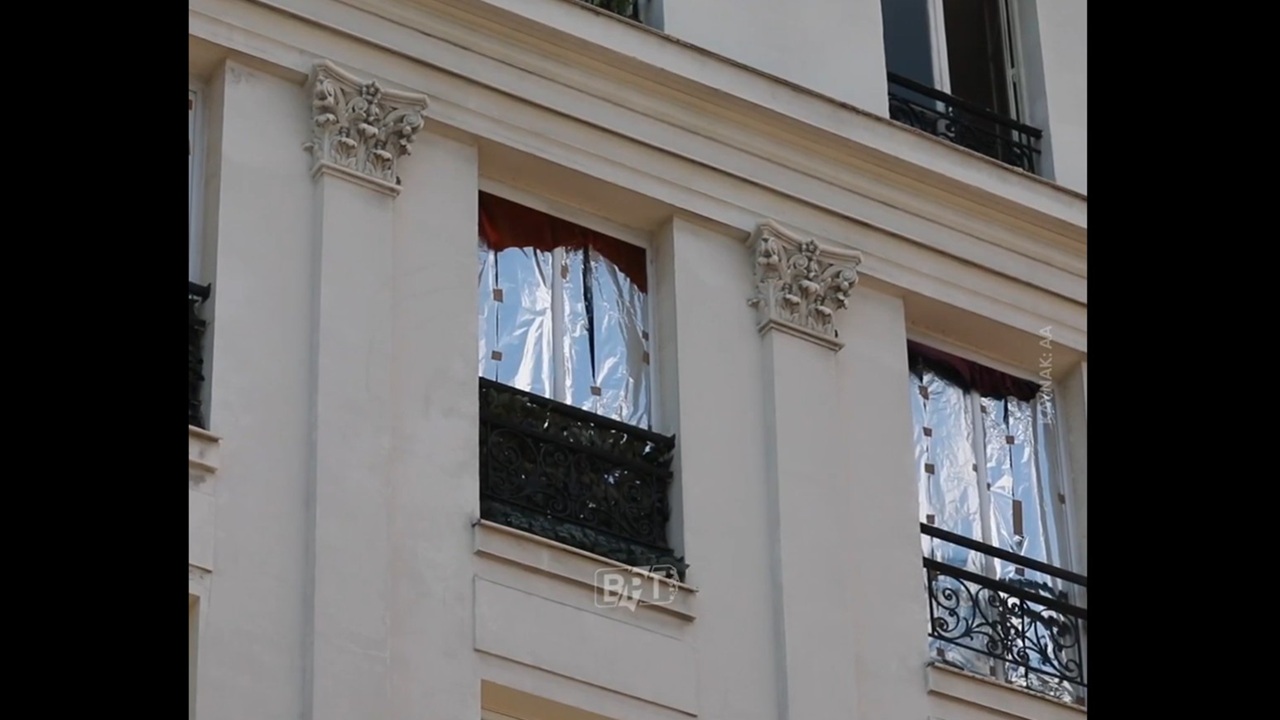
The crisis also laid bare a social issue. Residents of poorly insulated houses, top-floor apartments, neighborhoods with little greenery, and poorer regions suffer more from the heat. In many cases, these families cannot afford to install air conditioning or pay the higher electricity bill.
Recent reports in the European press show that part of the French population lives in homes that function as “heat traps.” This means that the properties accumulate temperature during the day and remain hot at night, making it difficult to sleep and increasing health risks.
The lack of refrigeration, therefore, does not affect everyone in the same way. For low-income families, the elderly, and people with chronic illnesses, extreme heat goes from being uncomfortable to being a direct threat.
Other European countries also experience controversies over air conditioning
France is not alone in this debate. In Spain, the government approved energy-saving measures that dictate that air conditioning in public buildings, shops, cinemas, theaters, stations, and airports should not be set below 27°C. The decision generated political resistance, especially in Madrid, where regional president Isabel Díaz Ayuso criticized the measure and stated that she would not comply with the rule.
In Italy, the government adopted the so-called “Operation Thermostat,” limiting air conditioning in schools, post offices, and other public buildings. The temperature could not be set below 25°C, as part of a strategy to save energy and reduce dependence on Russian gas after the war in Ukraine.
In the United Kingdom, the debate is different but also controversial. The country has low use of air conditioning in homes, and many houses were built to retain heat in the winter.
With more intense heatwaves, there is growing pressure to adapt schools, hospitals, and homes. In London, urban and environmental regulations on the installation of devices have also come under scrutiny during extreme heat.
Air conditioning has become a topic of health, energy, and elections
The French case shows that air conditioning has ceased to be just a household appliance and has entered the center of European climate policy. Amid record temperatures, the population demands quick responses. At the same time, governments try to balance public health, energy costs, emissions, and old infrastructure.
In practice, France faces a dilemma that is likely to be repeated in other European countries: installing more air conditioning can save lives during heatwaves, but doing so without planning can increase energy consumption and worsen environmental problems.
With the advance of climate extremes, the debate is likely to grow. What was once seen by many Europeans as a luxury or foreign habit is beginning to be treated as a necessity in schools, hospitals, nursing homes, and vulnerable housing. The political struggle in France shows that, in the new European climate, staying cool has also become an electoral dispute.
With information from Euronews, Le Monde andSpanish government.


