






 Portuguese
  Spanish


The new bridge between Xambioá, in Tocantins, and São Geraldo do Araguaia, in Pará, transforms a crossing that previously depended on a ferry into a direct connection, reducing wait times, increasing predictability, and changing the routine of those traveling through the region.
The bridge between Xambioá, in Tocantins, and São Geraldo do Araguaia, in Pará, was inaugurated on November 18, 2025, and ended a long-standing dependency on the Araguaia River: the ferry crossing.
According to Agência Brasil, the structure connects two states at a strategic point of the BR-153 and replaces a transport that could cost more than R$ 300 per trip. The reported investment was R$ 232.3 million, with R$ 28.8 million from the New PAC.
What seems like just an engineering project reveals something bigger: a bridge capable of changing the routine of residents, truck drivers, producers, and companies that depended on a more expensive, slower, and less predictable crossing to continue their journey between Tocantins and Pará.
-
Despite Extreme Heat, Politicians Reject Air Conditioning to Protect the Environment

-
Brazilian Brothers Invent Hydraulic Claw for Tractors, Enabling the Lifting and Stacking of 400 Rice Bags Daily

-
Innovative Low-Cost Electrical Solution Brings Light to Over 1 Million Brazilians, Starting with 400 Families in Southern Brazil

-
Vacuum-insulated windows set to replace traditional glass by 2026, promising 60-70% reduction in heat loss and improved insulation without full frame replacement.


Bridge connects two states where the ferry once dictated the pace of the journey
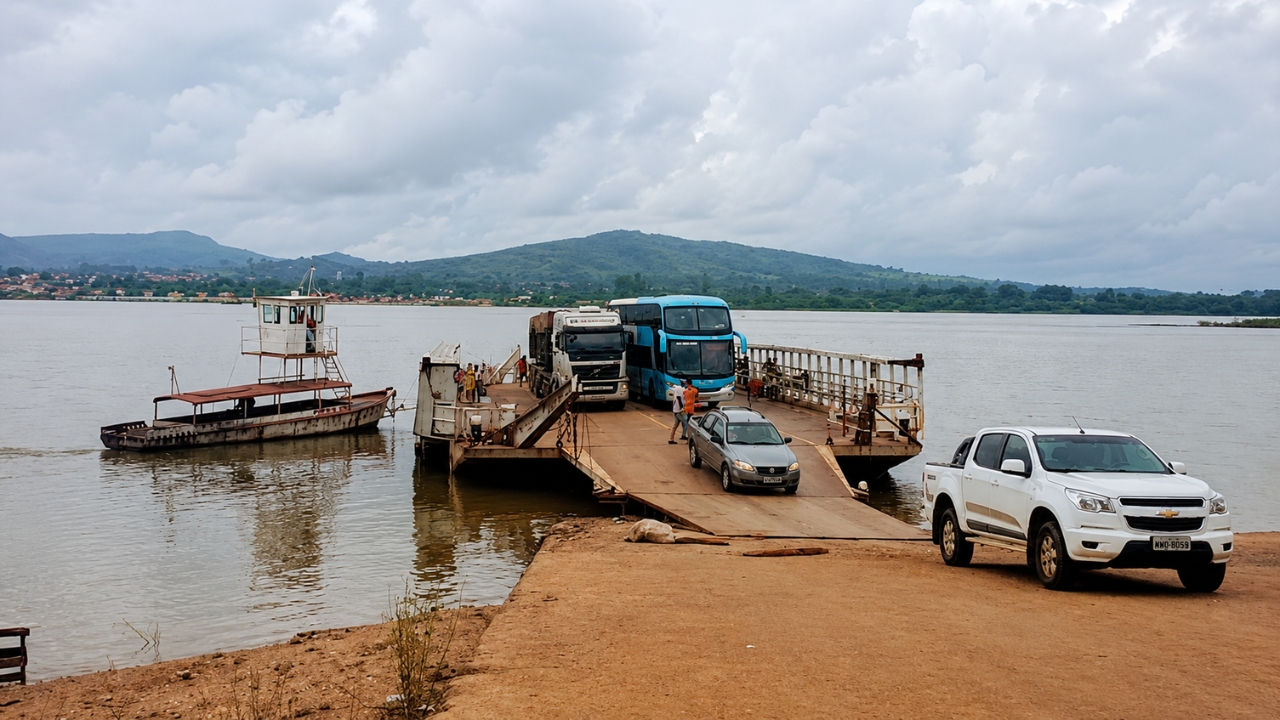
For years, those needing to cross the Araguaia between Xambioá and São Geraldo do Araguaia depended on the ferry. The crossing was part of the local routine but also represented cost, wait, and limitation for those using the BR-153 as a transport corridor.
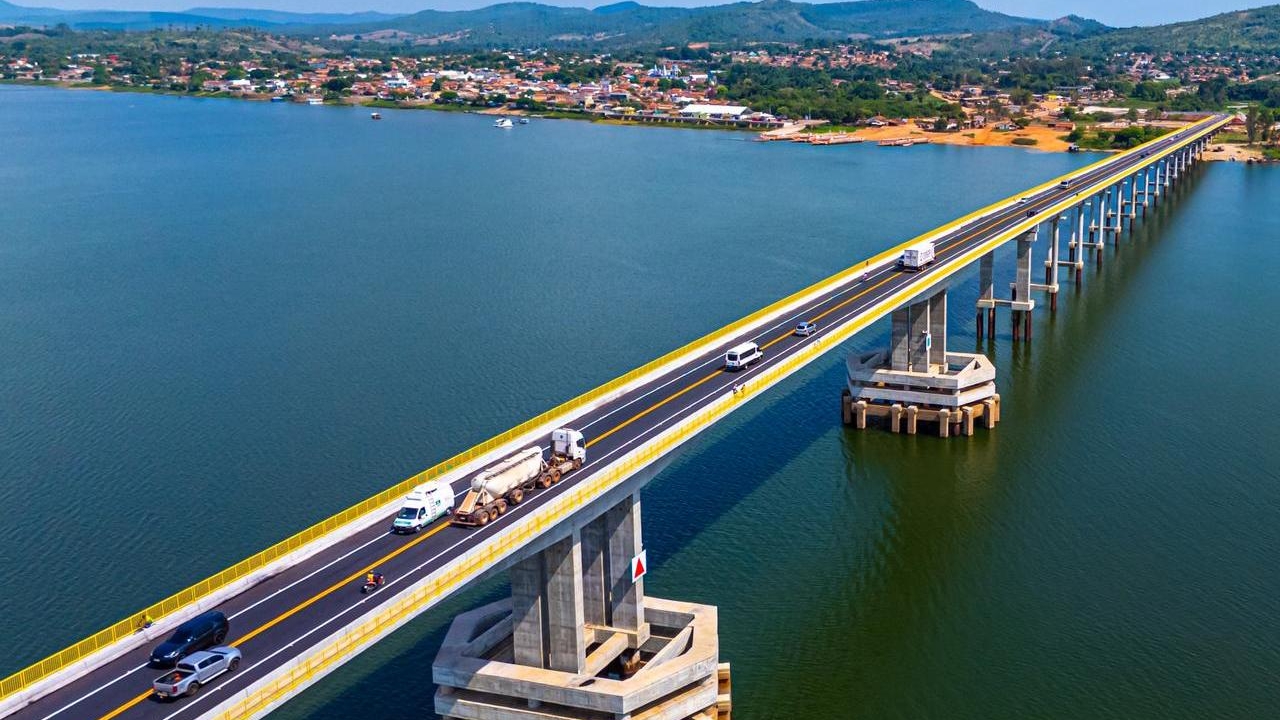
Agência Brasil reported that the new bridge is 2,010 meters long and replaces the crossing made by ferries. Meanwhile, the Ministry of Transport highlighted that the project strengthens the logistics of the North of the country and should facilitate the flow of agricultural and industrial production in the region.
In practice, the change is simple to understand. Where there was once a natural interruption in the path, with vehicles waiting to cross the river, there is now a direct road connection between the two sides.
This detail changes the travel time, the predictability of transport, and the cost for those needing to travel through the region. For truck drivers and producers, each stop either avoids or imposes losses. For residents, the bridge represents faster and more consistent access.
Project of R$ 232.3 million targets a strategic point of the BR-153
The BR-153 is one of the most important road axes in the country. In the stretch between Tocantins and Pará, the bridge over the Araguaia functions as a physical connection between regions that depend on freight transport, local circulation, and access to services.
According to the Ministry of Transport, the infrastructure received R$ 232.3 million in investments. Of this total, R$ 28.8 million came from the New PAC. The federal government also reported that the structure is expected to enhance safety and strengthen the BR-153 transport corridor.
The DNIT, National Department of Transport Infrastructure, regarded the bridge as a milestone of integration between Tocantins and Pará. In an update on the accesses, the agency reported that the first stage, the main structure of the bridge, was already completed, while the second phase involved embankments and connection to the existing roadway.
This point helps explain why a completed bridge did not automatically mean open traffic. Without the proper accesses, the structure would not fulfill its complete function. It was necessary to connect the work to the actual path of the vehicles.
The detail of the 2 km requires careful explanation
One of the strongest data points of the work also requires precision. Agência Brasil and the Ministry of Transport described the new structure as being 2,010 meters long. Meanwhile, the DNIT detailed that the accesses to the bridge would total 2,010 meters, with 310 meters on the Pará side and 1,700 meters on the Tocantins side.
Therefore, the safest way to explain to the reader is to say that the new connection between Tocantins and Pará involves a structure of more than 2 km in the entirety of the work and the accesses, connecting the BR-153 over the Araguaia river.
This care avoids confusion without reducing the impact of the delivery. The central fact remains the same: the crossing that previously depended on a ferry is now replaced by a permanent road connection, in a sensitive stretch for the North of the country.
The bridge also carries a long history of obstacles
The work was not born ready nor did it proceed without problems. The Federal Court of Accounts pointed out, in 2013, pending issues in the project of the bridge over the Araguaia river, on the BR-153, between Xambioá and São Geraldo do Araguaia.
According to the TCU, a R$ 226 million bid had been annulled in 2011 due to overpricing and other issues, with a potential damage of R$ 73.7 million. The agency also indicated failures related to quotations, price composition, and the need for corrections in the executive project.
This history helps transform the bridge into a story larger than its inauguration. It represents not just concrete over the river. It also represents the cost of delays, revisions, obstacles, and decisions that, for years, kept residents and cargo dependent on the ferry.
Checks by Reuters and AFP Checamos also helped organize the public chronology of the work. Reuters reported that the bridge had not been closed by the Lula government in 2024, as circulated on social media, since traffic had not even been released while the accesses were not completed.
AFP Checamos showed that the construction of the Xambioá Bridge became a recurring target of political dispute and misinformation. The safe point is that the project went through different governments, had a contract signed in 2017, works started in 2020, and was inaugurated in 2025.
End of the ferry changes more than a crossing
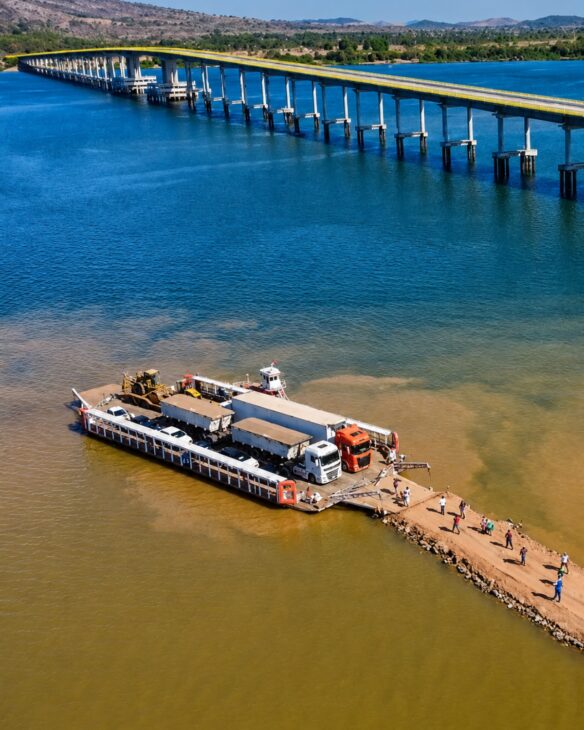
The impact of the bridge appears precisely in what previously seemed normal. Paying a high price to cross a river, depending on schedule, queue, and ferry operation was part of the routine for those traveling between Tocantins and Pará.
With the bridge, BR-153 gains continuity at a strategic point. This tends to reduce bottlenecks, improve regional circulation, and provide more predictability to the transport of people and goods.
The second phase still includes public lighting, as informed by Agência Brasil, with bidding scheduled for the first half of 2026. DNIT also mentioned complementary works, such as marginal roads in the two municipalities and a bypass on the Tocantins side, to improve flow and safety.
The bridge between Xambioá and São Geraldo do Araguaia goes beyond the image of a large structure over the river. It shows how a crossing considered common can hide an expensive, old, and strategic bottleneck. When a ferry ceases to be the only way out, it not only changes the path. It changes how a region connects to its own future.


