Portuguese
  Spanish


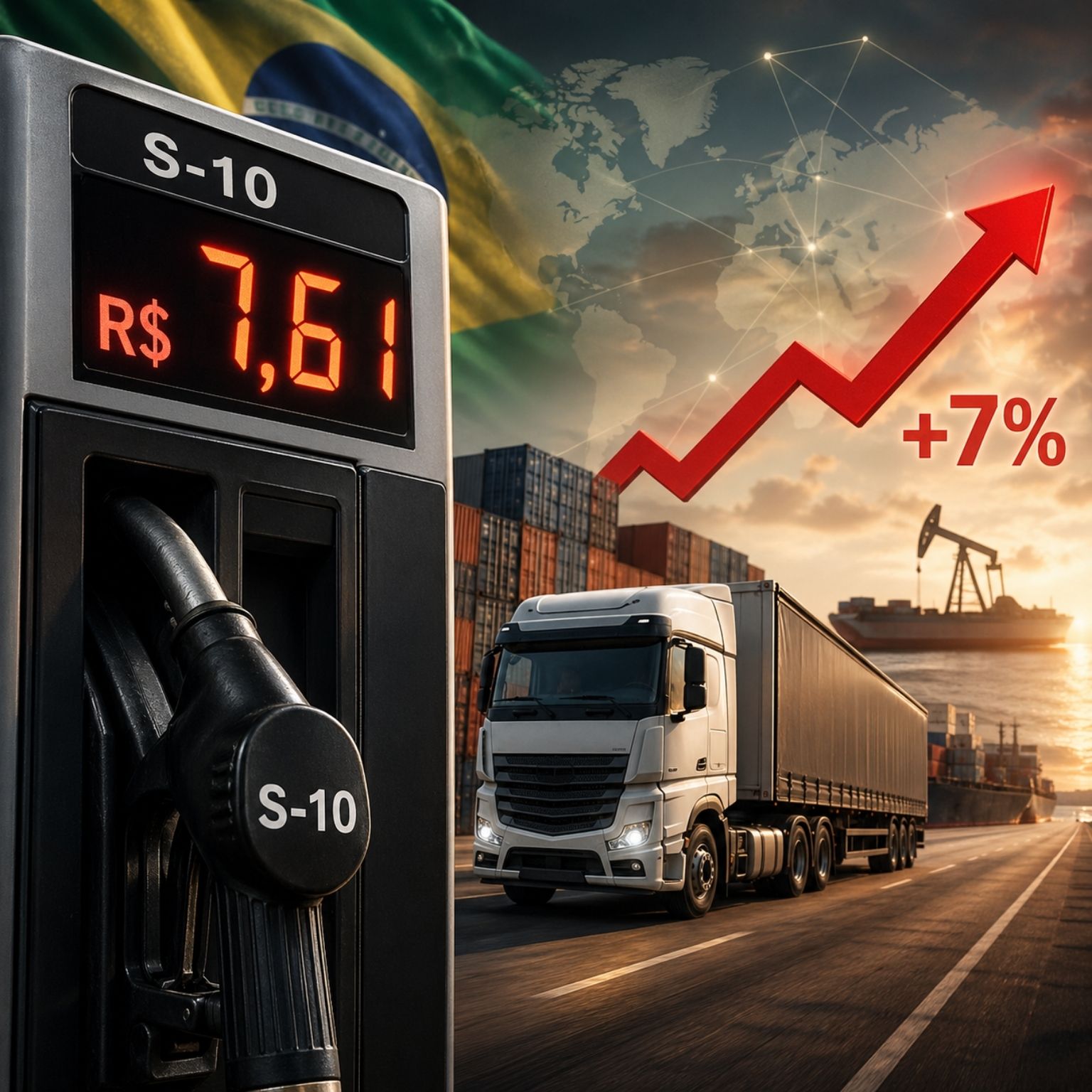

Diesel S-10 rises to R$ 7.61 in April in Brazil and increases pressure on freight, transport, logistics, and imports amid the conflict in the Middle East.
Diesel S-10 became more expensive at gas stations across Brazil in April, reaching an average price of R$ 7.61 per liter, according to data from the Edenred Ticket Log Price Index released this Thursday, April 30. Compared to March, the increase exceeded 7%, putting the fuel back in the spotlight for its direct impact on transportation, freight, and the circulation of goods in the country.
The movement involves distributors, refineries, Petrobras, importers, and the entire national supply chain, at a time when the market is still feeling the effects of the conflict in the Middle East that began in February 2026. The increase is noteworthy because Brazil imports about 25% of its diesel demand, which increases the country’s exposure to external shocks and amplifies the practical impact of the fuel on the real economy.
The numbers that explain the surge in diesel S-10
The main data from the survey shows that diesel S-10 rose more than 7% in April compared to March, reaching a national average of R$ 7.61 per liter. The adjustment placed the fuel among the biggest pressure points of the month in the energy and mobility sector.
-
As Brazil Expands Social Welfare, Survey Reveals 40% Blame Poverty on Laziness, While 58% Cite Lack of Opportunities

-
China Tightens Control on Antimony, Driving Prices from $22,000 to Nearly $40,000 per Ton as U.S. Rushes to Bolster Strategic Reserves

-
BlackRock Freezes $1 Billion in Brazilian Renewable Energy, Impacting 1.5 GW of Planned Projects and Highlighting Investor Concerns Over Infrastructure Bottlenecks Cutting Up to 25% of Solar and Wind Generation
-
Labor Shortage: Despite Record Average Salary, 90% of Brazilian Bar and Restaurant Owners Struggle to Hire Key Roles Like Sushi Chefs and Head Cooks


Regular diesel also increased during the same period, with a rise of 6.42%, to R$ 7.46 per liter. Other fuels had smaller increases: gasoline rose 3.45%, to an average of R$ 6.90, while hydrated ethanol increased 0.62%, to R$ 4.86. In practice, this means that diesel S-10 experienced a stronger price increase than the other monitored fuels.
Why diesel S-10 became more expensive in April

According to Edenred Ticket Log, April was marked by significant pressure on diesel prices, in a supply and demand scenario strained by the conflict in the Middle East. This environment heightened the market’s sensitivity to external risks and kept diesel S-10 under strong pressure throughout the month.
The Brazilian diesel sector has been facing this scenario since the beginning of the war between the United States and Israel against Iran, as the country relies on imports to supply a significant part of its domestic consumption. When there is international instability in a strategic region for oil, the impact tends to quickly reflect in the cost of fuel sold at gas stations.
The role of imports and Petrobras in the pressure on prices
External dependency helps explain why diesel S-10 reacts so intensely to international crises. As Brazil imports about 25% of its demand, any imbalance in global supply or geopolitical uncertainty can translate into increases for carriers, companies, and consumers.
Petrobras also plays a role in this equation because, in addition to being the largest local producer, it is responsible for part of the imports. The last diesel price adjustment announced by the state-owned company to distributors occurred in mid-March, and this context added to the international pressure environment, reinforcing the price increase observed in April.
What this practically changes for freight, transport, and consumer prices
When diesel S-10 rises, the effect is not limited to gas station pumps. As the fuel is essential for road transport and national logistics, the increase tends to pressure operational costs at different stages of the economy.
This means a direct impact on freight, distribution, and cargo movement throughout the country. In a market where a large part of products depends on truck transport, the increase in diesel S-10 prices can spread to final prices and increase pressure on companies and consumers.
The government has already reacted to try to contain the increase
In response to the escalation caused by the conflict in the Persian Gulf, the government launched a subsidy program, among other measures, aiming to limit the price increase. The attempt is to reduce part of the pressure generated by the international scenario on the domestic fuel market.
Even so, the April data shows that S-10 diesel continued to rise at the pumps. This reinforces how external shocks and import dependency can hinder a quicker containment of prices, especially for a fuel so sensitive to economic activity.
What national data reveals about the advance of S-10 diesel
The IPTL survey showed that all regions of the country recorded an increase in the average price of diesel in April. This data indicates that the pressure was not localized and broadly affected the national market.
Within this scenario, the Northeast showed the highest percentage increases compared to March, while the North had the highest average prices. Even without detailing values by region, the national picture shows that the rise in S-10 diesel spread widely across the country.
Why this increase is drawing so much attention now
Diesel is the most traded fuel in the country, which means any stronger price increase quickly gains national dimension. When S-10 diesel rises above 7% in just one month and surpasses the variation of gasoline and ethanol, the impact ceases to be sectoral and starts to influence the operating cost of the entire economy.
Moreover, the combination of international conflict, import dependency, refinery adjustments, and supply and demand pressure creates a scenario that concerns transporters, companies, and families. Therefore, the increase observed in April goes beyond a simple adjustment and helps explain why the fuel has returned to the center of the economic debate.
Have you noticed any effects of this S-10 diesel increase on freight, transportation, or day-to-day prices?