






 Portuguese
  Spanish
  5 min of reading
  0 comments


Hong Kong inaugurated the United Court, the first fully completed transitional housing project in the city, with 1,800 units erected in just 12 months using 2,076 prefabricated modules by CIMC in China. Traditional public housing construction in Hong Kong takes an average of 4.1 years. The modules left the factory with 90% of the work already completed, including independent kitchen, bathroom, and living room, and the complex has a projected lifespan of 50 years.
Hong Kong was facing one of the worst housing crises in the world, with families living in subdivisions of 5.3 square meters and waiting lists of almost six years for public housing. The response came in the form of prefabricated modules: 2,076 three-dimensional blocks produced at the CIMC factory in Guangdong, China, transported by sea and land to Yuen Long and stacked into four-story buildings in the Tung Tau neighborhood. The result was the United Court, a housing complex with 1,800 units inaugurated in June 2022 after just 12 months of construction, compared to the 4.1 years that traditional public housing construction takes on average in the city.
The project is a partnership between the Hong Kong government, the developer Sun Hung Kai Properties, and the Hong Kong Sheng Kung Hui Welfare Council, a welfare organization that operates the complex. CIMC Modular Building Systems provided the prefabricated modules with 90% of the construction and finishing work already completed at the factory. The 2,076 modules were produced in just 96 days, 30 days ahead of schedule, and transported to the construction site for quick assembly. United Court received the Gold Award from the DFA Design for Asia Awards and serves about 5,000 residents from low-income families.
What are prefabricated modules and how do they arrive at the site

Each prefabricated module is a three-dimensional steel block that leaves the factory as an almost ready-to-use housing unit. Inside, the kitchen, bathroom, living room, electrical system with LED lighting, air conditioning, ventilation, and appliances are already installed. The technique is called MiC, short for Modular Integrated Construction, and allows more than 90% of the work to be done in the controlled factory environment before transportation to the site.
-
India assembles two giant tunnel boring machines weighing over 3,000 tons to dig the country’s first underwater railway tunnel, with 7 km under Thane Creek and high-speed train tracks running up to 114 meters deep.

-
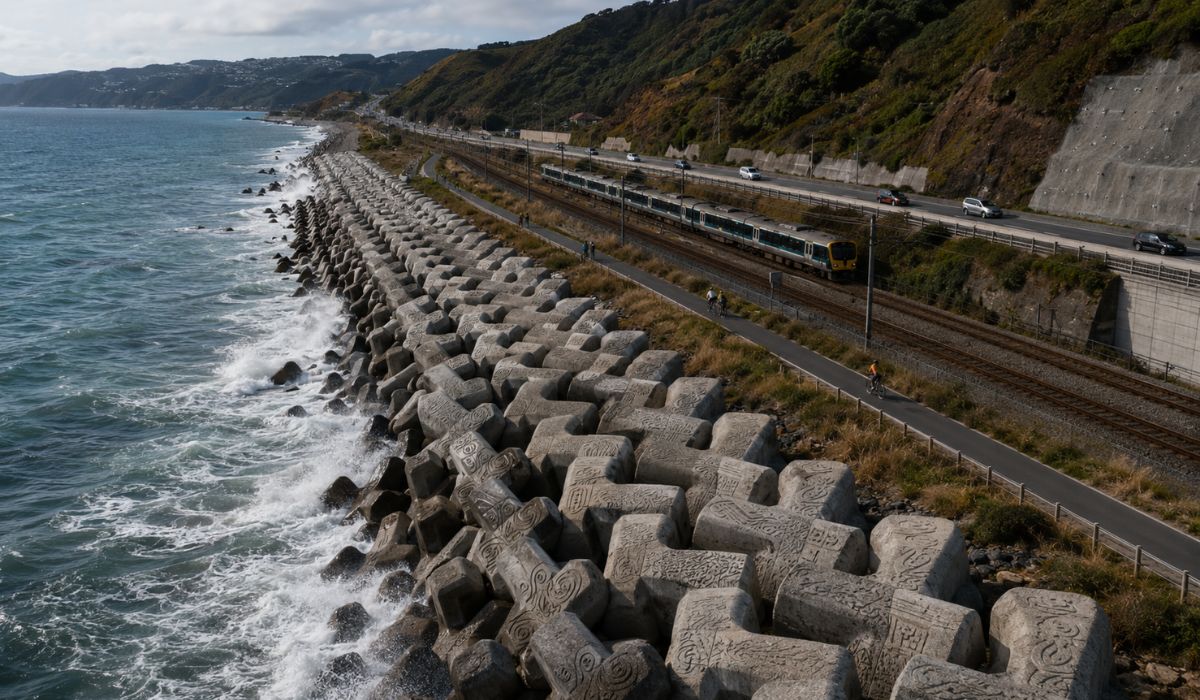
New Zealand aligns nearly 7,000 X-shaped concrete blocks like puzzle pieces to protect railway, highway, and cycle path against waves, erosion, and earthquakes on one of Wellington’s most sensitive coasts.
-
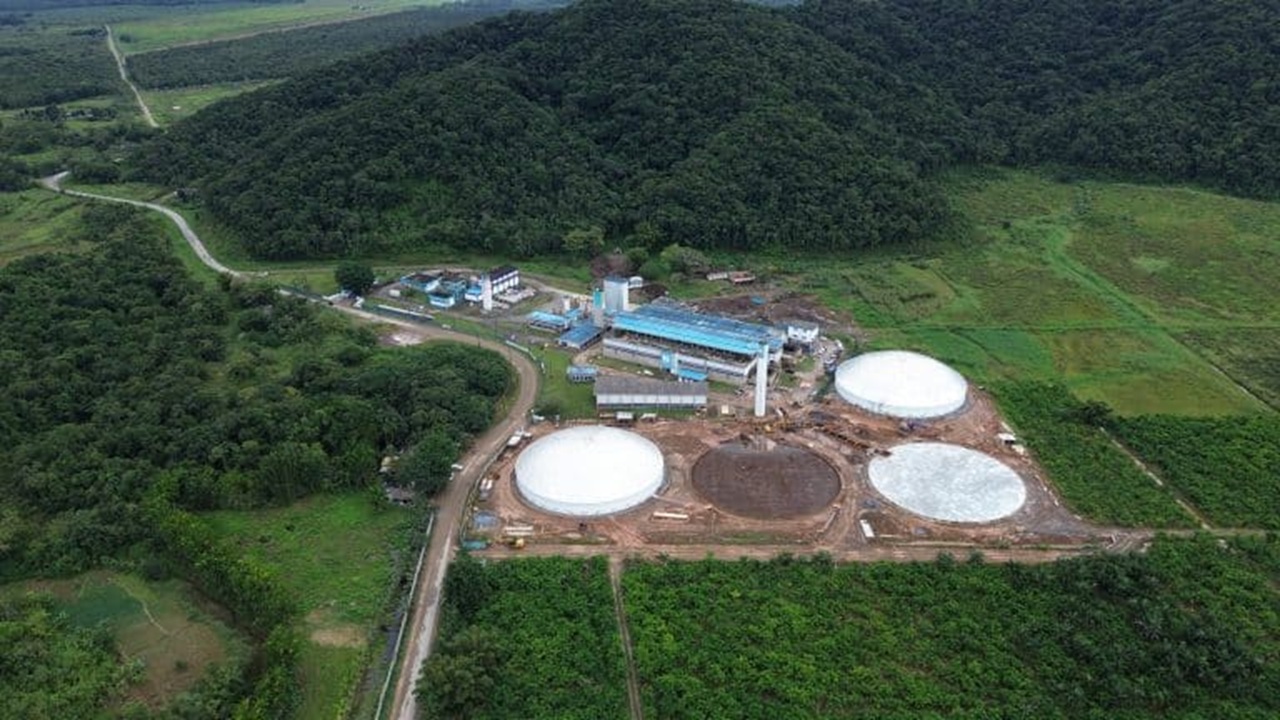
Baixada Santista receives water reservoirs worth R$ 84.6 million in Itanhaém with 20 million liters to reinforce the supply for 1.2 million residents in five cities.

-
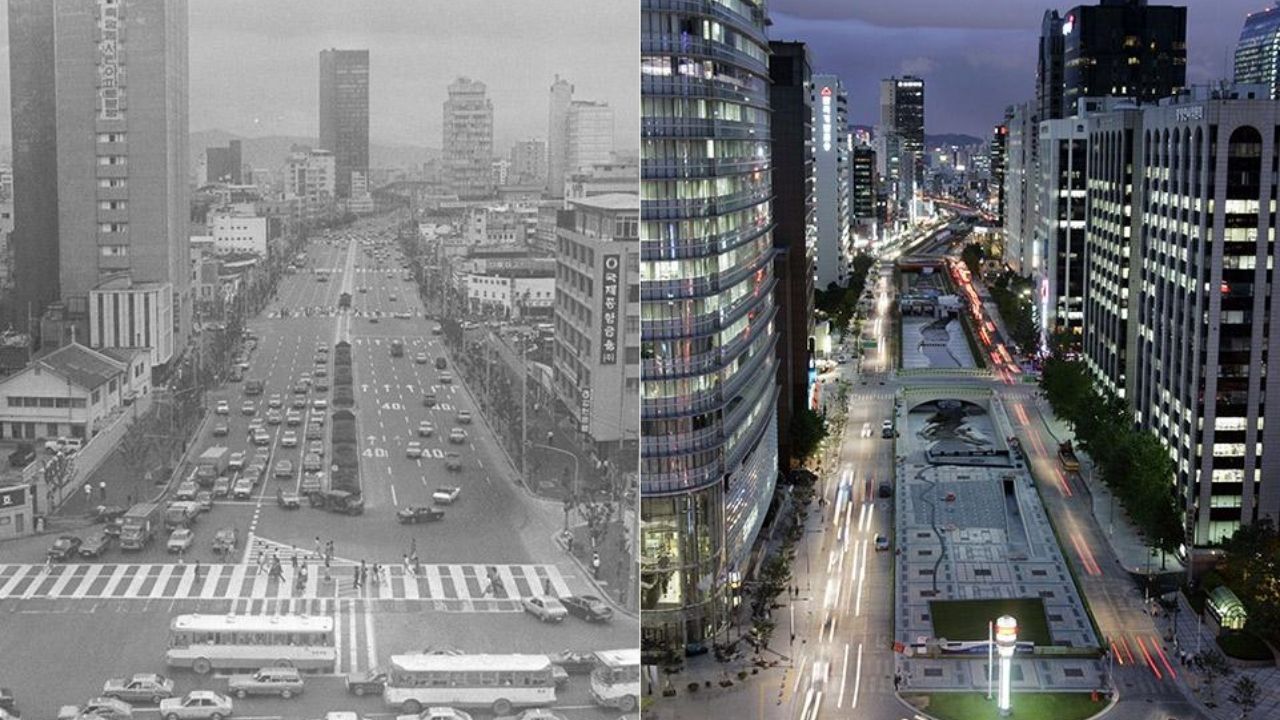
A river buried under a highway became an urban park in Seoul after a multimillion-dollar project at Cheonggyecheon, attracting 64,000 visitors per day, increasing biodiversity by 639%, and showing why cities are replacing concrete with water and green areas.

On the construction site, the prefabricated modules are hoisted by cranes and stacked in sequence, connected by interlinked bridges that create an integrated community. United Court has four floors and uses 24 different colors on the facades, creating a vibrant look that contrasts with the monotony of traditional housing complexes. Each unit has independent living room, bathroom, and kitchen, designed to offer dignity to families who previously lived in 5.3 square meter spaces.
From 5.3 square meters to 18: what changes for the residents

The housing crisis in Hong Kong has alarming numbers. Thousands of families lived in subdivided units with an average usable area of 5.3 square meters, spaces where cooking, sleeping, and living happen in the same tiny room. At United Court, the average usable area of the units is approximately 18 square meters, more than triple the previous space, with separation between kitchen, bathroom, and living areas.

The project offers units for different family configurations: individual, double, for three people, for four or five people, and units adapted for people with disabilities. In addition to the residences, the complex includes a community services building, convenience stores, shared kitchens, an outdoor children’s playground, and community gardens. For families who lived in extremely cramped conditions, the change represents not only more space but access to infrastructure that was previously nonexistent.
The speed that changed the public housing calculation
The most impactful data from United Court is the construction time. While traditional public housing in Hong Kong takes an average of 4.1 years to complete, the prefabricated modules of United Court allowed for the completion of 1,800 units in 12 months. This means that modular construction delivered in one year what the conventional method would take more than four years to produce.
The speed did not compromise durability. The prefabricated modules were designed with a lifespan of 50 years, comparable to conventional concrete buildings. Additionally, the entire system was conceived according to the DFMA principle, which stands for “design for manufacturing and assembly,” meaning the modules can be dismantled, transported, and reassembled in another location. The Hong Kong government already plans to relocate United Court to a new site after five years, reusing the same prefabricated modules in another project.
The scale that CIMC achieved in Hong Kong
United Court was not an isolated case. Following the success of the project in Yuen Long, CIMC Modular Building Systems constructed five more transitional housing complexes in Hong Kong, totaling about 3,600 units in two years. The projects benefit more than 10,000 families and over 15,000 residents from underprivileged communities, distributed across different districts of the city.
CIMC’s factory in Xinhui, Jiangmen, is the base of this entire operation. With 1 million square meters of area, 4,000 employees, and the capacity to produce 8,000 prefabricated modules per year, the plant can simultaneously serve projects in Hong Kong, Africa, Australia, and Europe. The model demonstrated that it is possible to industrialize civil construction and treat housing as a manufactured product, not as an artisanal construction site.
What United Court teaches about housing in the world
The Hong Kong project raises an uncomfortable question for governments facing housing deficits: if it is possible to build 1,800 homes in 12 months with factory-produced prefabricated modules, why does traditional construction still dominate? The answer involves resistance from the construction industry, regulations that do not accommodate modular systems, and the mistaken perception that prefabricated housing is synonymous with low quality.
United Court proves the opposite: each unit has a 50-year lifespan, complete finishing, air conditioning, and an equipped kitchen. The final cost is lower than traditional housing, and the delivery time is incomparably shorter. For countries like Brazil, which carry a housing deficit of millions of units, industrialized modular construction offers a path that combines speed, scale, and quality without relying on slow construction sites subject to weather conditions.
Do you think Brazil should adopt prefabricated modules to build affordable housing on a large scale, or is traditional construction still the best option? What impresses you most about United Court: the 12 months of construction, the 50-year lifespan, or the fact that the entire complex can be dismantled and reassembled elsewhere? Tell us in the comments.




Be the first to react!