






 Portuguese
  Spanish
  7 min of reading
  1 comment


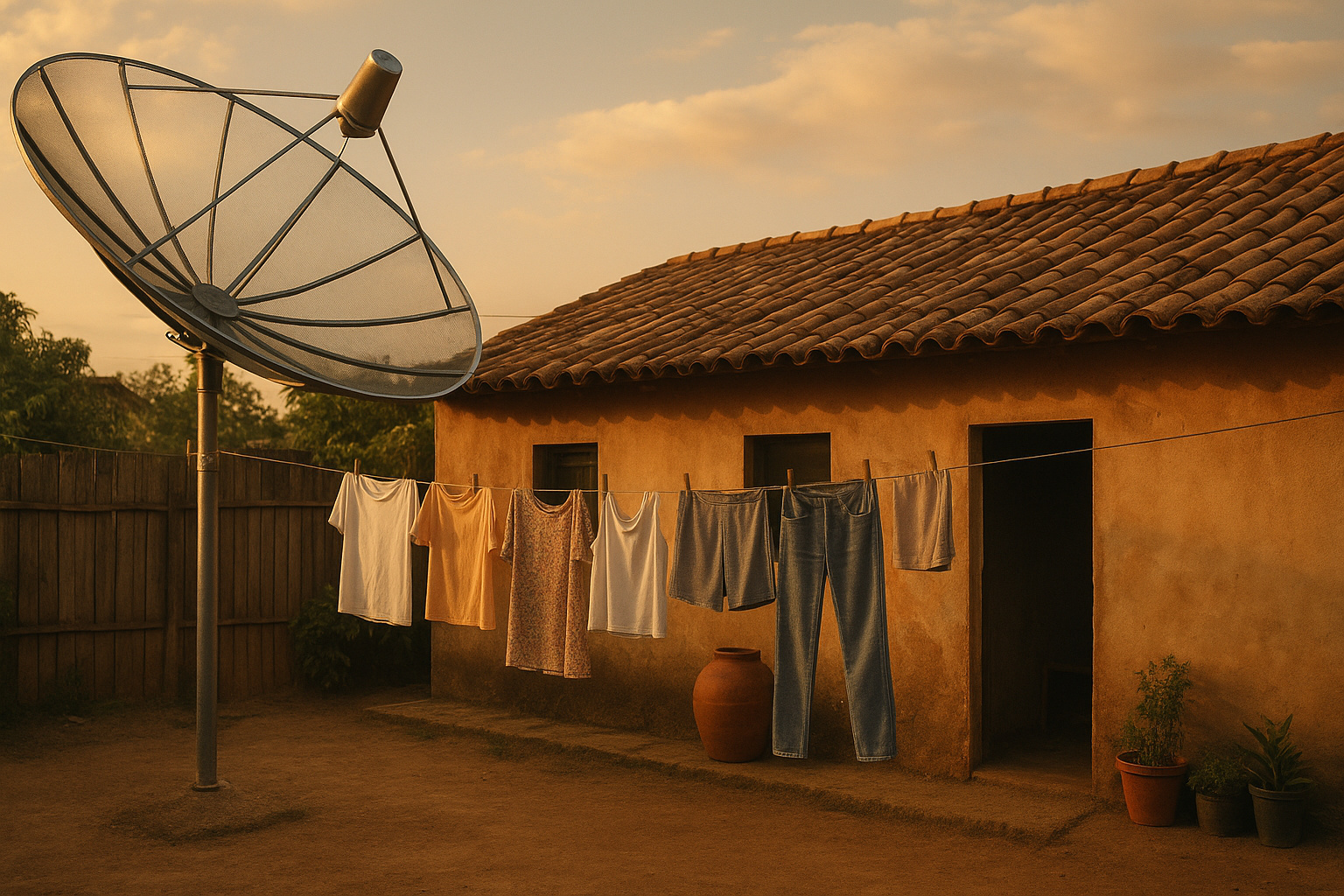


The Unexpected Rise Of The Parabolic Antennas And The Cultural Impact That Transformed Brazilian TV For Decades, Connecting Remote Cities, Breaking Technological Boundaries And Influencing Even International Space Research
Parabolic antennas profoundly marked the history of communication in Brazil. During the 1990s and 2000s, they became symbols of status, modernity, and even popular imagination, fueling curious legends about communication with extraterrestrials. However, the true story of these aluminum giants is much more complex: it involves scientific experiments started in the 19th century, technological wars between broadcasters, legal disputes, and even NASA’s involvement in developing space equipment that forever changed the way Brazilians watched television. According to historical research reported in specialized sources, the rise and fall of these antennas accompanied profound transformations in the country and the world.
The Birth Of Parabolic Technology: Experimental Science, Radio Waves, And The First Connection To The Future
It all began in 1887 when German physicist Heinrich Hertz, referred to in the original text as “Heck Harz,” conducted experiments to prove the existence of radio waves. Using a parabolic reflector to direct and concentrate extremely weak signals, Hertz unknowingly created the fundamental concept of the parabolic antenna. The parabolic shape allowed dispersed signals to be accumulated at a single point, something that decades later would enable satellite communication — a revolution that no one anticipated while observing those rudimentary experiments.
For much of the 20th century, parabolic antennas were exclusive to laboratories, military bases, and even NASA. In 1962, with the launch of the Telstar satellite, the first TV transmission via satellite crossed the Atlantic. To do this, a gigantic 58-meter-diameter parabolic antenna was built, capable of receiving signals that would forever change global communication. This achievement marked the beginning of an era in which television could cross borders, inaugurating a path that years later would also reach the backyards of millions of Brazilians.
-
A thrift store that started with children’s clothes and a loan from grandma turned into a network worth R$ 300 million per year: Peça Rara grew to 130 stores, sold 4 million items, and transformed used items into a national circular economy business.

-
The German fund created to compensate victims of Nazi forced labor paid billions, but the responsible parties themselves admit that the money did not come close to compensating 26 million people.

-
Why do so many people avoid calls and prefer to resolve everything through messaging?

-
Tired of seeing people living on the streets for years, after 12 years of trying, Des Moines approved micro-houses ranging from 18 to 36 m² with affordable rent: Joppa Village promises to become a model of social housing for the homeless population.




In 1975, the first domestic parabolic antennas appeared in the United States, initiating a true craze. While traditional antennas struggled with poor images, ghosting on screens, and constant pixilation, the parabolic offered clear images, crystal-clear sound, and access to channels from around the world. Gradually, families and curious individuals began improvising installations, adapting metal reflectors to capture international signals and explore unprecedented content in the pre-internet era.
The Arrival In Brazil: Broadcasters, National Satellites, And The Revolution Caused By BrasilSAT
In Brazil, the first parabolic antennas appeared around 1983, restricted to luxury hotels and large companies seeking to provide TV signals to regions where terrestrial towers could not reach. Long-distance communication was a chronic challenge in a continental country, and thus the arrival of parabolics represented much more than simple entertainment — it was infrastructure.
The great turning point happened in 1985 with the launch of the first Brazilian satellite, BrasilSAT, developed by Embratel. The event stopped the country and was broadcast live on TV. The system, composed of two satellites — one active and one reserve — had the capacity to retransmit up to 24 television programs or 12,000 telephone calls, becoming a fundamental piece for the expansion of national communication.
With BrasilSAT in orbit, broadcasters such as Globo, SBT, and Manchete began distributing their signals via satellite, allowing distant cities, rural areas, and remote locations to finally access national programming. It was the beginning of a historic transformation: parabolic TV ceased to be a luxury item and began to become — for millions of Brazilians — a basic communication necessity.
The Boom In The 80s And 90s: Status, Pop Culture, Globalization, And The Explosion Of Parabolics On Brazilian Roofs
When the technology finally became popular, the cultural impact was immediate. The companies Texsat and MATV do Brasil — which would later become Century — pioneered the national production of antennas and receivers. As the 1990s approached, there were approximately 15,000 parabolics in operation in Brazil, a still modest number but growing rapidly. According to data published in reports at the time, the audience of these antennas was already approaching 50,000 viewers, while in the United States, that number exceeded 10 million users.
The parabolic offered an unprecedented advantage: it allowed users to receive live signals from broadcasters, regardless of city or state. Thus, local programs that were not broadcast nationally could be watched anywhere in the country. It was a silent revolution, connecting urban consumers and residents of rural regions who had never had access to good-quality television.
During the 1990s, having a parabolic antenna in the yard — often taking up half the property — became an absolute symbol of status. Commercials advertised financing from banks, luxury buildings boasted “parabolic antenna” as a differentiator, and even international celebrities like Michael Jackson used homes equipped with parabolics when visiting Brazil.
Furthermore, the parabolic provided something rare: free access to national transmissions and a wide variety of international channels, from news to shows, movies, and sporting events that, in theory, should be paid for. Satellite globalization was established.
Myths, Legends, Controversies, And NASA’s Entry Into The History Of Parabolics
With the popularization of antennas, myths and exaggerations also emerged. Many believed that the parabolic attracted lightning, caused cancer, or allowed contact with extraterrestrials. Children grew up swearing it was possible to talk to ETs by pointing the antenna at the sky. These stories spread as quickly as the very TV signals — but they had a real origin.
The NASA did indeed use large parabolics to search for extraterrestrial signals. In the 1990s, a gigantic 43-meter-diameter antenna installed in Virginia began to be used exclusively for this type of research. France, the Soviet Union, and Japan also collaborated with giant antennas for the same project. This information was reported by international newspapers at the time and rekindled popular imagination.
In Brazil, independent researchers even used 9-meter parabolics to try to capture possible alien signals for almost a year — without success. But the fame remained, and the antennas became tourist attractions in various regions.
However, while the public enjoyed theories and discoveries, another war was about to begin: the dispute between open parabolics and pay TV.
The Technological War: Legal Battles, Blocked Events, And The Battle Against Sky And DirectTV
In the second half of the 1990s, the subscription TV sector exploded. Companies like Sky and DirecTV began to dominate the market, and major international program suppliers began to restrict access of open parabolics to exclusive content.
The conflict intensified when:
- Texsat launched its own paid service to compete with Sky and DirecTV.
- HBO blocked the signal and sued Texsat in 1999, bringing the case to court.
- Globo was forced to encode live broadcasts, such as the fight between Mike Tyson vs. Buster Mathis Jr., preventing open parabolics from broadcasting the event.
The free model was beginning to be threatened by the closed model. Still, millions of families kept their antennas, trusting the promise of “TV forever” without a monthly fee.
From Modernization To Decline: Digital, 5G, And The Shutdown Of An Era
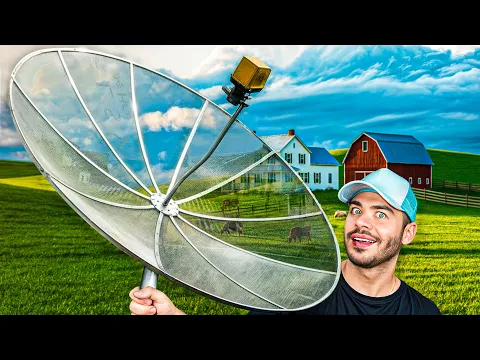

With the arrival of the 2000s, parabolics evolved. Receivers became digital, dishes shrank in size, and images began to be displayed in HD. The parabolic remained strong, even with the expansion of cable TV and, later, streaming.
However, the final blow came with the arrival of 5G telephony. The new frequencies used by carriers directly interfered with the C band, the range used by analog parabolics. To avoid problems, Anatel mandated the mandatory migration of TV signals to the Ku band, which meant that old parabolics would be deactivated.
In December, as reported by Anatel itself and communications from national broadcasters, traditional “big” equipment would stop working. Broadcasters such as Globo, SBT, Band, Record, and RedeTV had already ceased their analog transmissions the previous year. It was officially the end of an era of over 40 years.
Families then began to replace old parabolics with new, smaller, and modern digital antennas. Despite high definition, these antennas suffer more from climatic interference — a point at which the old parabolics were still superior.
Today, many of the old antennas remain in backyards, almost as decorative objects. The legacy, however, remains alive — especially through Century, which continues to produce converters and digital receivers. Meanwhile, Texsat, which once played a key role in technological and legal battles, accumulated millions in debt, lost crucial contracts, and eventually went bankrupt in 2008, with its facilities auctioned off without buyers.
The Cultural Legacy Of The Parabolic And The Link That Connected Brazil To The World
In the end, the history of parabolic antennas symbolizes the intersection of culture and technology. Before the internet, they were the link that connected Brazil to the world, bringing entertainment, information, and curiosity to millions of people. As recalled in reports and documentaries, the parabolic shaped entire generations.
And today, as you pass down a dirt road and see a small house with a gigantic antenna pointing to the sky, it’s impossible not to feel nostalgia. That is not scrap. It is history — pure history — a landmark of when the sky was literally Brazil’s source of entertainment.
And you? What is your story with parabolic antennas? Were they present in your family’s house, your grandparents’, or your neighbors’?




O nome do fabricante de antenas e receptores é TECSAT e não TECSAT como está nesta matéria.