






 Portuguese
  Spanish
  5 min of reading
  0 comments


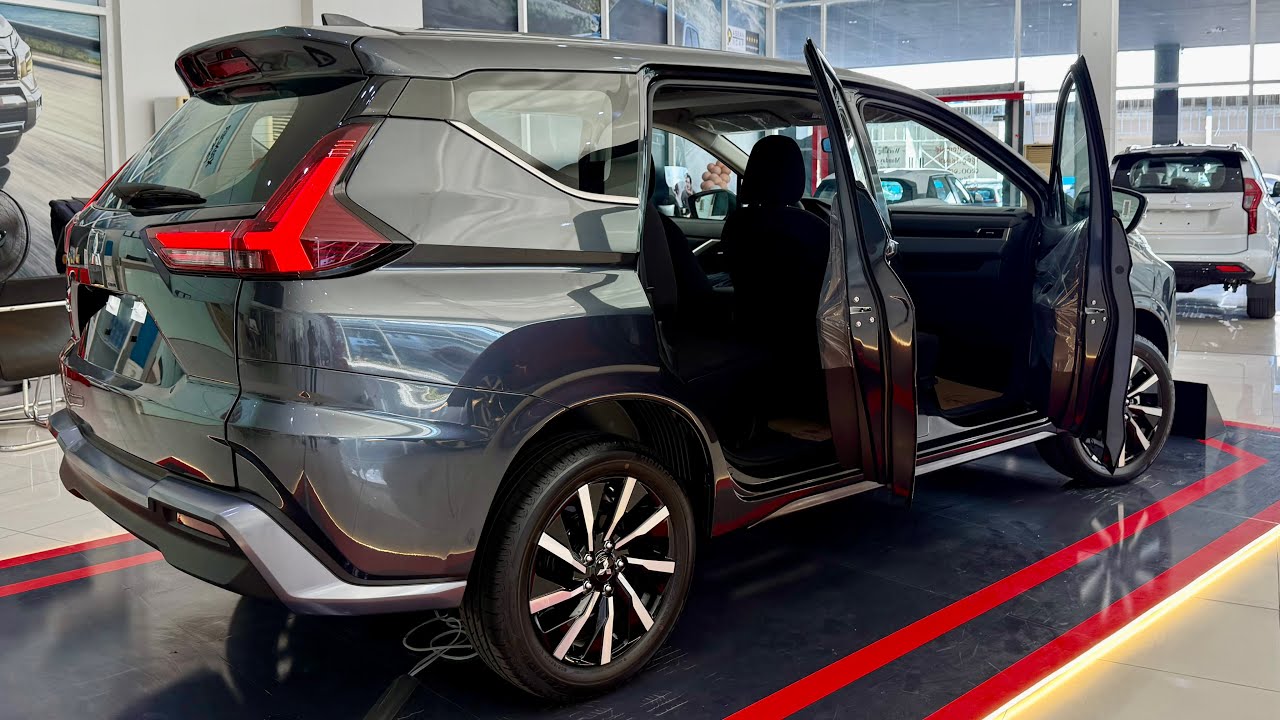
Mitsubishi Xpander costs around R$ 77,000 in Indonesia, carries 7 people, has a 1.5 engine, CVT transmission, and 220 mm ground clearance.
While Brazil has pushed families towards increasingly expensive SUVs, Indonesia still buys a type of car almost extinct here: the tall, spacious, simple minivan designed to carry seven people without costing the price of a large utility vehicle. The strongest example is the Mitsubishi Xpander, an MPV with SUV looks, three rows of seats, a 1.5 engine, manual or CVT transmission, and 220 mm ground clearance.
In Indonesia, the Xpander starts at Rp 270.1 million and goes up to Rp 342.8 million. At the reference rate of 1 Indonesian rupiah to about R$ 0.000284, this amounts to approximately R$ 77,000 to R$ 97,000 in direct conversion, without Brazilian taxes, freight, importation, homologation, or national margin.
Mitsubishi Xpander uses the formula of a tall minivan with SUV looks to carry seven people
The Xpander does not try to be a pure SUV. It is, technically, a seven-seater family MPV, but with taller proportions, an aggressive front, and ground clearance higher than many adventure hatches.
-
The YouTuber Mark McCann bought a Bugatti Veyron for almost $1.2 million, but discovered that the supercar’s gearbox is so damaged that even Bugatti itself won’t accept to repair it, and the repair could cost a fortune.

-
Thinking about buying a used HB20? See why the 2015 model is still a crowd favorite, with cheap parts, easy-to-fix mechanics, a strong engine, and quick sales.

-
Suzuki Fronx emerges as the “compact coupe SUV” that Brazil doesn’t have: priced around R$ 37,000 in a tax-free conversion, the model has a hybrid version, 1.0 turbo engine, bold design, and the price of a popular car in India.

-
Not every car with a battery is truly electric; some hybrids never run solely on electric power, and since 2025, ABVE stopped counting mild hybrids as electrified, and these differences change everything when buying.

The body measures 4,595 mm in length, 1,750 mm in width, 1,750 mm in height, and 2,775 mm in wheelbase. It is larger than many compact SUVs sold in Brazil but maintains a contained width for urban use.
The proposal is clear: to deliver a family cabin, a realistic third row for everyday use, and an elevated driving position without entering the price range of medium or large SUVs.
1.5 MIVEC engine delivers 104 hp, 141 Nm, and prioritizes family use over sporty performance
The mechanical set uses a 1.5 MIVEC gasoline engine, with four cylinders and 1,499 cm³. The power reported for the Ultimate CVT version is 104 hp at 6,000 rpm, with torque of 141 Nm at 4,000 rpm.
The transmission can be a 5-speed manual or CVT, depending on the version. In the case of the Ultimate CVT, the transmission is continuously variable, aimed at smoothness and economy in urban use.


It is not a set of aggressive performance. The focus is on operational cost, predictable maintenance, and enough strength to transport family, luggage, and handle rough roads in emerging markets.
220 mm ground clearance transforms the minivan into a more rational alternative than many compact SUVs
One of the strongest numbers of the Xpander is the ground clearance. Mitsubishi reported, at the launch of the new generation in Indonesia, 220 mm for CVT versions and 225 mm for manual versions, except in certain trims.
This data is essential because it explains the model’s appeal in Southeast Asia. In flooded streets, high speed bumps, ditches, and broken roads, the Xpander offers ground clearance that many traditional family cars do not provide.
In Brazil, this ground clearance would be a strong argument. The national market values an adventurous look, but often sells compact SUVs with less interior space and much higher prices.
Seven-seat cabin targets large families, daily transport, and intense urban use
The internal configuration is seven seats, with three rows of seats. The second row functions as the main axis of comfort, while the third expands the capacity for children, teenagers, or adults on shorter trips.

The advantage of the MPV format is in space utilization. As the roof is high and the wheelbase exceeds 2.7 meters, the Xpander can better distribute passengers and luggage than many compact SUVs with a more slanted design.
Mitsubishi also works the model with a focus on family life: multiple storage compartments, air conditioning for the rear cabin, easy access to the rows, and foldable seats to alternate between cargo and passengers.
Indonesian versions show compact car price with family vehicle package
In Indonesia, the Xpander line appears in various versions, with a starting price of Rp 270.1 million in the manual GLS configuration and top of the line at Rp 342.8 million in the Ultimate CVT.
Converting at the approximate rate of R$ 0.000284 per Indonesian rupiah, the range is equivalent to about R$ 77,000 to R$ 97,000. The calculation is straightforward: 270,100,000 × 0.000284 = R$ 76,708; 342,800,000 × 0.000284 = R$ 97,355.
This value cannot be read as a sales price in Brazil. It does not include import tax, IPI, ICMS, PIS/Cofins, transportation, homologation, parts network, warranty, or Brazilian commercial margin.
Safety evolved with 6 airbags, stability control, and hill start assist
The 2026 Xpander line received an important safety boost in Asian markets, with the adoption of 6 airbags in updated versions, as well as ABS brakes, EBD, stability control, and hill start assist in equipped configurations.

The package may also include a rearview camera, sensors, automatic speed locking, and ISOFIX anchorage for child seats, depending on the version and market.
This is an important point because affordable minivans were often criticized for limited safety. In the latest Xpander, Mitsubishi tries to bring the safety package closer to the standard required in modern family cars.
Mitsubishi Xpander occupies a space in Southeast Asia that Brazil has practically abandoned
The Xpander makes sense in countries like Indonesia, the Philippines, Thailand, and Vietnam because these markets still buy functional family cars. Consumers look for seven seats, robustness, economy, and feasible pricing.
In Brazil, this type of product has lost space to SUVs. The Chevrolet Spin has become one of the few direct survivors, while larger options quickly move to ranges well above R$ 150,000 or R$ 200,000.

That’s why the Xpander draws attention. It shows a different Mitsubishi from the one Brazilians know, less focused on expensive pickups and SUVs, and more geared towards a simple, high, and rational family car.
Technical Specifications of the Mitsubishi Xpander Ultimate CVT Sold in Indonesia
- Model: Mitsubishi Xpander Ultimate CVT
- Market: Indonesia
- Category: 7-seater family MPV
- Engine: 1.5 MIVEC, 4 cylinders, gasoline
- Displacement: 1,499 cm³
- Power: 104 hp at 6,000 rpm
- Torque: 141 Nm at 4,000 rpm
- Transmission: CVT
- Manual option: 5 speeds in specific versions
- Drive: front-wheel
- Length: 4,595 mm
- Width: 1,750 mm
- Height: 1,750 mm
- Wheelbase: 2,775 mm
- Ground clearance: 220 mm in CVT versions
- Ground clearance in manual versions: up to 225 mm, depending on trim
- Capacity: 7 occupants
- Doors: 5
- Fuel tank: 45 liters
- Fuel: gasoline
- Price in Indonesia: from Rp 270.1 million to Rp 342.8 million
- Approximate direct conversion: from R$ 77 thousand to R$ 97 thousand
- Safety items: 6 airbags in updated versions, ABS, EBD, stability control, hill start assist, and ISOFIX, depending on version
The Mitsubishi Xpander shows that there is still global space for a family car without luxury pretensions: seven seats, a simple engine, high ground clearance, and compact pricing. The question is why Brazil, which so desperately needs this type of car, has almost no options like this.








Be the first to react!