






 Portuguese
  Spanish


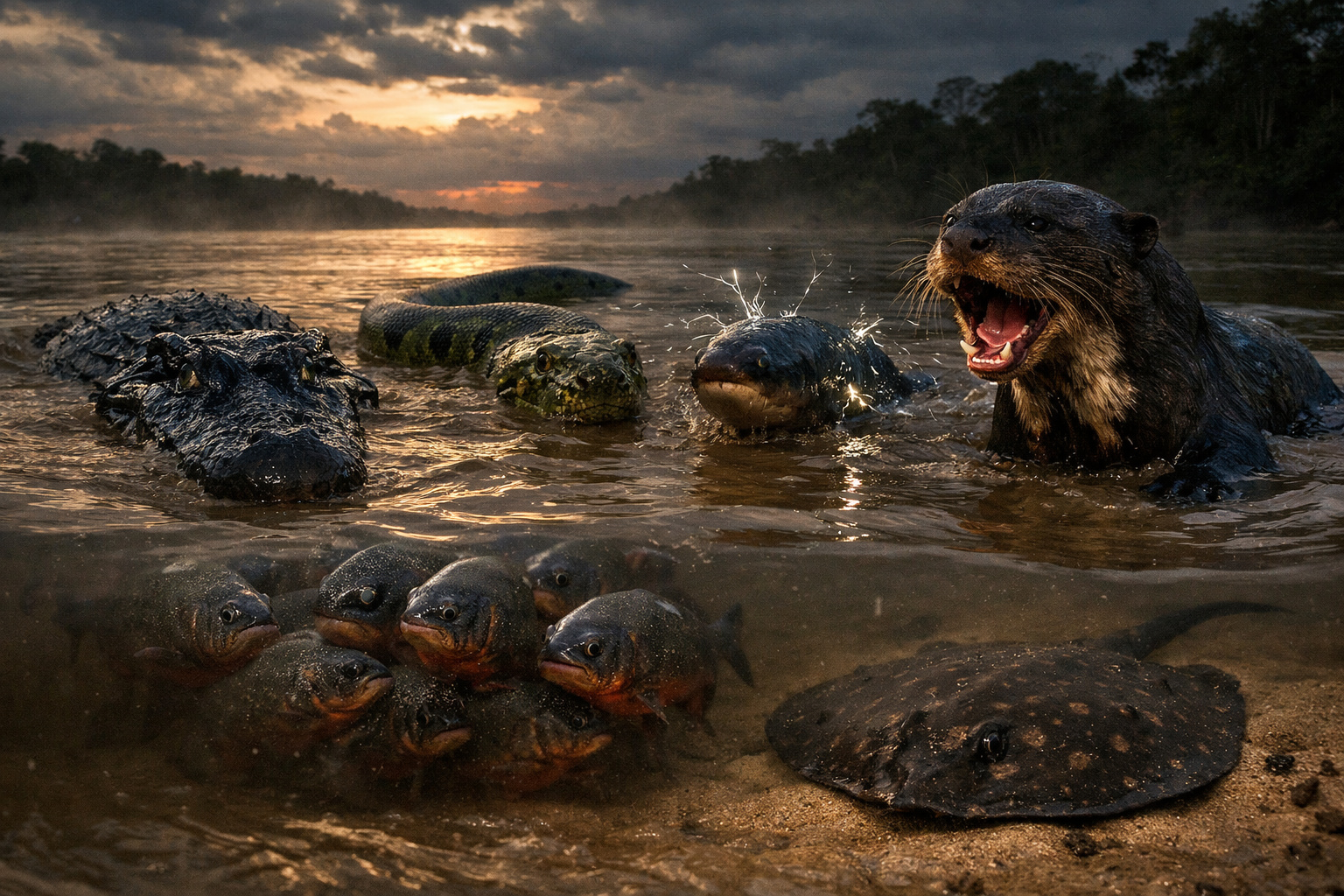
The Amazon River Houses Extreme Predators That Combine Strength, Poison, Electricity, and Rare Hunting Strategies, Making Its Waters One of the Most Dangerous Natural Environments on the Planet
The Amazon River, considered the largest watershed in the world, impresses not only with its water volume, biodiversity, or territorial extension. Beneath its murky surface lies a true survival field, where some of the deadliest creatures on the planet compete for space, food, and territory. From giant predators to species armed with poisons, electric shocks, and deadly spines, the Amazon ecosystem harbors animals capable of turning any encounter into an extreme risk.
This information has been released through scientific and documentary content widely explored by specialized portals in wildlife and Amazonian biology, as well as records from research institutes and accounts from riverside populations that coexist daily with these species. Throughout this article, you will learn about six of the most deadly monsters of the Amazon River, understanding why they sit at the top of the food chain and why they inspire fear even among their natural predators.
Giant Otter: Strength in Numbers at the Top of the Food Chain

At first glance, the giant otter, known as ariranha, may seem harmless, but this appearance is deceiving. Considered the largest otter in the world, the species can exceed 1.80 meters in length, with unconfirmed reports mentioning individuals over 2.40 meters. Highly territorial, the giant otter lives in family groups that can reach up to 20 individuals, enhancing their attack power.
-
Man Who Lost Vision Due to Lack of Roads Invests Fortune in Building 59 km Route, Ending 1,300 Years of Isolation in Brazilian Village and Boosting Tourism and Jobs

-
São Paulo Invests Millions in Massive Reservoirs to End Decades of Water Shortages, Providing Relief to Residents

-
Luxury Mansion in Rio with Views of Christ the Redeemer Listed for $25 Million
-
How Underwater Bridge Foundations Support Thousands of Tons Without Sinking: The Engineering Techniques Behind River and Sea Constructions



Moreover, their bite strength is impressive: around 615 PSI, enough to take down large fish, snakes, crustaceans, and even face off against larger predators. Unlike many solitary animals, these otters hunt in groups, surrounding and mutilating their prey. Although attacks on humans are rare, there have been records of serious injuries to people who encroached on their territories, reinforcing the giant otter’s status as one of the most feared predators in the Amazon.
Black Caiman: The True King of Amazon Waters

If there is an indisputable sovereign in the Amazon River, it goes by the name of black caiman. This colossus can grow up to 5 meters in length and weigh around 450 kilograms, making it one of the largest crocodilians on the planet. Its presence commands respect, even from large felines, such as jaguars, that avoid areas dominated by this predator.
According to records of attacks documented over the last few decades, there have been more than 80 documented cases of black caiman attacks on humans, many of them fatal. Most victims are unaware of their approach, as the black caiman is a stealthy hunter, specialized in nocturnal ambushes. Its bite is powerful enough to shatter a turtle’s shell, solidifying its reputation as the absolute terror of Amazon waters.
Green Anaconda: The Largest Snake in the World by Weight and Length

Among snakes, none inspires as much fear as the green anaconda. With an average weight of up to 250 kilograms and a length that can reach 9 meters, it is considered the largest snake in the world by body mass. Unlike venomous snakes, the anaconda is a constrictor, meaning it kills its prey through suffocation.
Its diet includes capybaras, deer, wild pigs, birds, turtles, and even caimans. The attack is silent and precise: the anaconda coils around the victim, progressively tightening until it stops circulation and breathing. Afterward, it swallows the prey whole, being able to go for weeks or even months without feeding again. Its adaptation to aquatic life, with eyes and nostrils positioned on top of its head, makes this snake an almost invisible hunter.
Electric Eel: 800 Volts Hidden in the Mud

Few animals evoke as much fear as the electric eel, a predator capable of generating shocks of up to 800 volts, enough energy to kill an adult or take down a horse. Despite its name, it is not a true eel, but a relative of fish like carp and catfish.
With an average length of 2.5 meters and weight of up to 20 kilograms, the electric eel uses three distinct organs to generate electricity. While two produce lethal shocks for attack and defense, the third emits weak pulses used as a biological radar for navigation and communication. Even after death, these animals can continue releasing shocks for hours, making handling them extremely dangerous.
Red Piranha: Small Bodies, Destruction in Numbers

The red piranha, famous for its sharp teeth and aggressive behavior, has built an almost mythical reputation over the years. Although its size is modest, its bite force is surprising, capable of piercing metal hooks. They often live in schools of up to 1,000 individuals, creating true feeding frenzies.
Contrary to popular belief, piranhas are omnivorous and feed on insects, seeds, and plants. However, the presence of blood in the water triggers extremely aggressive behavior. Equipped with sensors capable of detecting minimal amounts of blood, these creatures can reduce prey to bones in just a few minutes.
Freshwater Stingray: The Animal That Harms Humans Most in the Amazon

Closing the list is the freshwater stingray, considered responsible for the highest number of serious injuries to humans in the Amazon River. Unlike other predators, it does not attack to feed but reacts violently when it feels threatened. Its venomous spine can tear tissue and release protein-based toxins that cause intense pain, necrosis, and temporary paralysis.
These rays can reach up to 45 centimeters in width, with a tail that can be up to 30 centimeters. The spines are continuously renewed, allowing some rays to carry two active spines at the same time. Accidents usually occur when people accidentally step on them in shallow waters, making these animals a silent and constant danger.
And for you, which other animal from the Amazon River deserves to be on this list of deadly predators — and why? Would you have the courage to encounter it up close?


-

-

-

-

8 people reacted to this.