






 Portuguese
  Spanish
  3 min of reading
  0 comments


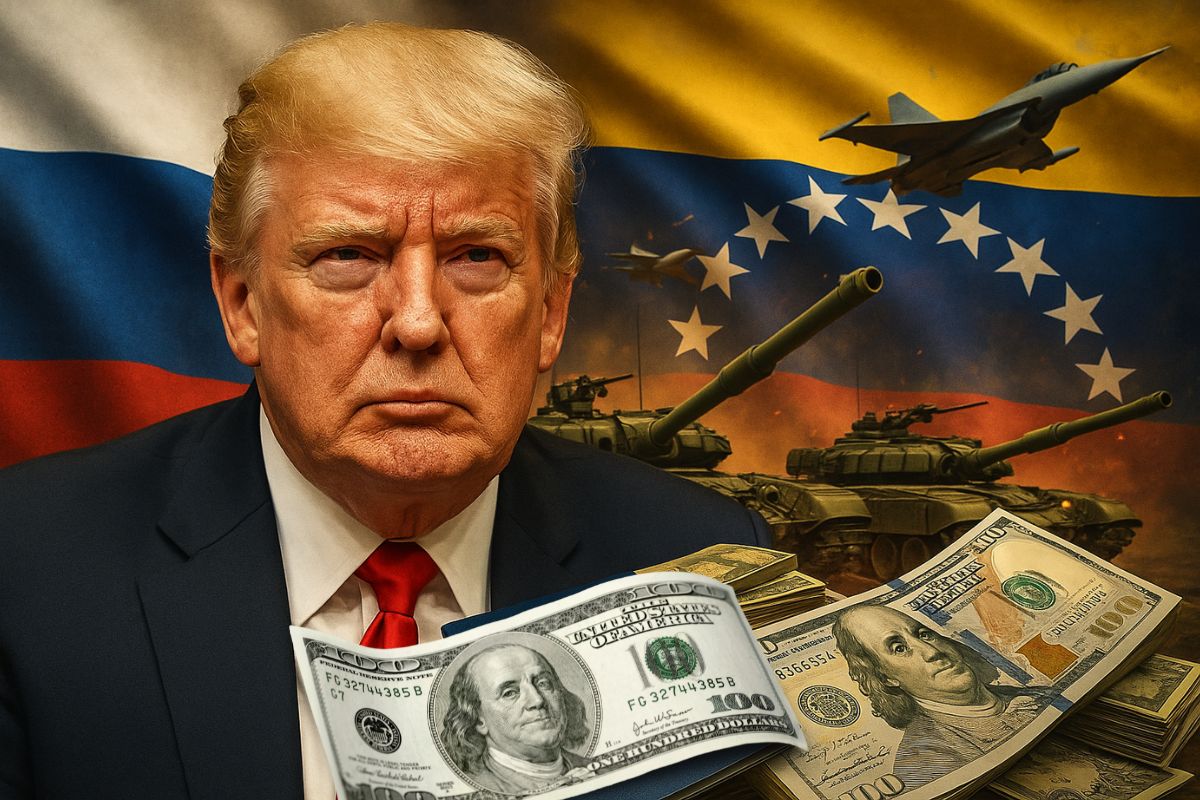
Trump Announces New Round of Sanctions Against Russia and Suggests Possible Attack on Cartels in Venezuela During Speech to the Press in Washington on September 7, 2025.
On Sunday, September 7, 2025, the President of the United States, Donald Trump confirmed he is ready to launch a second phase of sanctions against Russia, in a brief speech at the White House. The remarks came before his trip to New York, where he would attend the final of the US Open tournament.
According to Times Brasil, the statement reinforces the escalation of tensions between Washington and Moscow.
Although he did not detail which sectors of the Russian economy or which authorities would be affected, Trump made it clear that new measures are being prepared.
-
Brazilian Joins Homeownership Consortium, Faces Decade of Dual Payments Totaling $141,000, Surpassing Traditional Mortgage

-
Land Rover to Halt Production in July, Putting 371 Jobs at Risk, as Chinese Automaker Negotiates to Convert Factory to 100,000 Vehicles Annually by 2027

-
Mexican Pest Threatens U.S. Cattle Herds at Historic Lows, Potentially Boosting Brazilian Beef Exports as Burger Prices Soar

-
Brazilian Freight Bill Progresses in Congress with $5,000 Minimum Wage, 70% Advance Payment, and Fines Up to $1 Million, as Agriculture and Industry Warn of Rising Costs and Legal Uncertainty


At the same time, the president also suggested the possibility of military action against drug cartels in Venezuela, connecting foreign policy debates to internal security agendas in the United States.
Second Phase of Sanctions Against Russia
The confirmation that there will be a second phase of sanctions against Russia represents yet another chapter in the strategic dispute between the two countries.
Previous sanctions have already targeted the energy, finance, and defense sectors, and analysts believe the new package may further increase the economic isolation of Moscow.
Trump chose not to disclose specific targets, raising expectations about the extent of the measure.
The goal, according to observers, is to pressure Russia on sensitive geopolitical issues, such as the conflict in Eastern Europe and its relationships with Middle Eastern countries.
Experts point out that the decision is likely to provoke an immediate response from the Russian government, increasing instability in global energy markets.
Possible Attack on Cartels in Venezuela
During the press conference, Trump was questioned by journalists about operations against drug cartels operating in Venezuela. His response was short but suggestive: “Well, you will find out”.
The statement was interpreted as a message that the White House is considering extending the fight against drug trafficking beyond its borders, directly targeting criminal organizations operating in Venezuelan territory.
This possibility raises diplomatic concerns, as any foreign military action in the region could generate friction over national sovereignty and regional security.
Domestic Security Speech in the U.S.
In the same speech, Trump also addressed domestic security, once again citing the city of Chicago as an example of high crime rates.
According to him, combating urban violence needs to be a priority, without it being viewed as an “internal war”.
The president emphasized that “cleaning up our cities” is a matter of common sense, reinforcing his rhetoric of toughness against violent crime.
This strategy of mixing external issues like sanctions against Russia and Venezuela with urban violence in the U.S. shows Trump’s attempt to align his foreign policy with the internal narrative of security and order, something recurrent in his administration.
Geopolitical and Domestic Impacts
The announcement of a second phase of sanctions against Russia tends to increase international tensions, with direct effects on the global energy market and on the relationship between Washington and European allies.
Meanwhile, the suggestion of attacks on cartels in Venezuela reignites the debate on foreign intervention in Latin America, a region historically sensitive to the United States.
Domestically, Trump’s rhetoric strengthens his image as a leader willing to act decisively both internationally and on internal crime issues.
For experts, the strategy aims to convey strength and maintain focus on his electoral base.
Trump’s confirmation of the second phase of sanctions against Russia and his comments on possible actions in Venezuela demonstrate how foreign policy and internal security are interconnected in his administration.
The speech reflects a posture of toughness, but also opens space for questioning the economic and diplomatic impacts of such measures.
And you, do you believe this firm stance strengthens the U.S. in the global landscape or creates new risks of instability?
Leave your opinion in the comments — we want to hear from those closely following the effects of these decisions.





-

-

-

-

-

17 people reacted to this.