






 Portuguese
  Spanish





New Supreme Court Decision Changed the Interpretation of Job Security for Employees with Occupational Diseases, Such as Lumbar Pain, Waiving Previous Requirements and Opening Space for Reinstatement or Compensation Requests Even After Dismissal.
Starting in April 2025, workers with lumbar pain and other occupational diseases now have a clearer path to ensure 12 months of job security, even if they have not received benefit B-91, have not been away for more than 15 days, and there is no CAT issued.
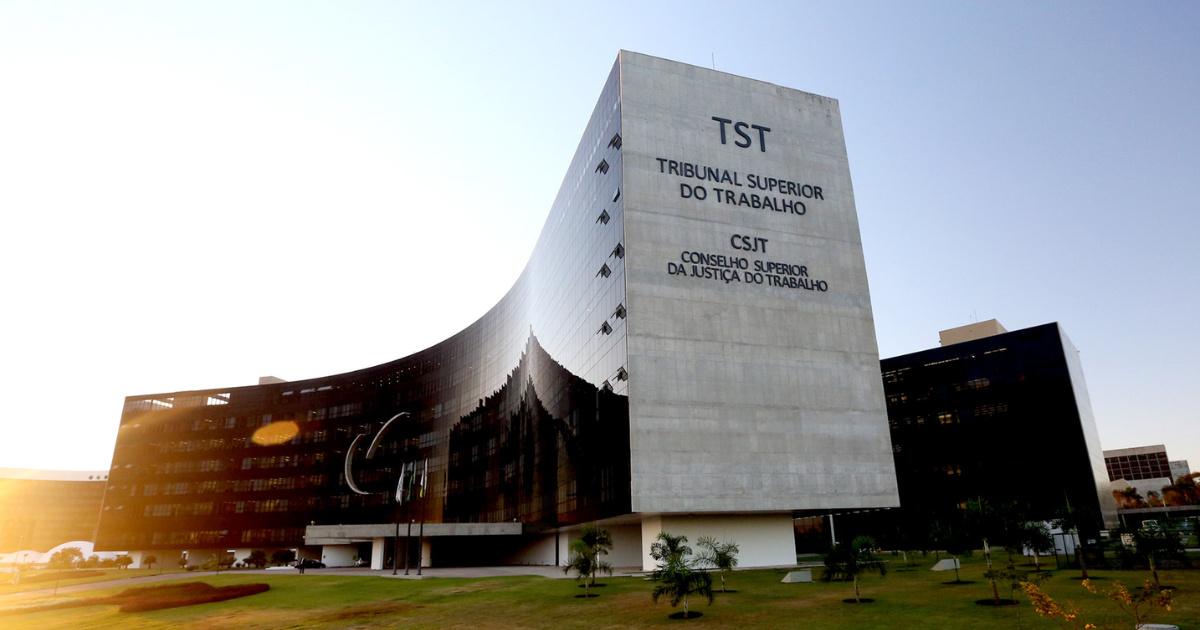
The Superior Labor Court (TST) established a precedent in a repetitive judgment that recognizes the right whenever there is a causal or contributory link between the disease and the activities performed, even if this link is established after dismissal.
The definition was set in Theme 125, in case RR-0020465-17.2022.5.04.0521, and binds the lower instances of Labor Justice.
-
Court Upholds Just Cause Dismissal of Employee for Posting Social Media Videos During Work Hours

-
Dismissing a retired worker or one eligible for retirement constitutes ageism and creates a duty to compensate: a unanimous decision by the TRT mandates reinstatement to employment, payment of back wages, and upholds compensation of R$ 15,000 for discrimination.

-
Work less and produce more? Nobel Prize in Economics explains why shorter workdays can increase productivity

-
Unions are growing again in Brazil after more than a decade, but they face an urgent challenge to win back digital workers and maintain relevance.




What Changed with the TST Thesis
The TST explicitly answered the question that still divided the TRTs: to ensure job security under Article 118 of Law 8.213/1991, is it necessary to have long absence and receive B-91?
The established thesis states that it is not.
In the words of the court itself, “it is not necessary to have been absent for more than 15 days or to receive accident sickness benefits,” as long as the link between the occupational disease and work is recognized after the end of the employment relationship.
The guidance settles the interpretation of Súmula 378, which already admitted job security when a professional disease was diagnosed after dismissal, and eliminates the cumulative requirement of absence and social security benefits.
CAT: Obligation Remains, Barrier Does Not
The Communication of Work Accident (CAT) remains mandatory and must be made by the first business day after the occurrence or diagnosis, with immediate notification in case of death.
Noncompliance subjects the employer to a social security fine, as provided in Article 22 of Law 8.213/1991, imposed by Social Security.
Additionally, the CLT (Article 169) imposes the duty to notify professional diseases, even when there is only suspicion, following the instructions of the Ministry of Labor.
In practice, however, the absence of a CAT no longer prevents the employee from proving the causal link and claiming job security, as long as they gather medical documentation and other evidence.
Recent cases show that neglecting to issue a CAT can be costly.
In April 2025, the 15th Chamber of the TRT of the 2nd Region condemned a maintenance and cleaning company to R$ 300 thousand in collective moral damages for repeated omissions in reporting accidents and occupational diseases, as well as failures in prevention programs.
The decision also imposed obligations to act, with adjustments in PGR, PCMSO, and ergonomics (NR-17).


NTEP: The Presumption That Favors the Employee
Another point that facilitates proving the link is the Technical Epidemiological Causal Link (NTEP).
When the INSS finds a statistical correlation between the ICD of the disease and the CNAE of the company, a relative presumption of occupational nature is established.
This recognition, although it can be dismissed by contrary evidence, reinforces the link and usually shifts the burden to the employer to demonstrate that the disease is not related to work.
The basis is in Article 21-A of Law 8.213/1991 and in the jurisprudence of the TST, which treats the NTEP as a juris tantum presumption — valid until proven otherwise.
How to Claim Job Security in Practice
Those who discover or have confirmed lumbar pain after dismissal are not out of the protection radar.
The first step is to document the health condition with current medical reports and tests.
Next, it is worth organizing evidence from the work environment: task records, photographs of positions with forced posture, reports from colleagues, and ergonomic reports pointing out risks.
Although the CAT may not have been issued, this evidentiary set, combined with any NTEP indication in the INSS expert examination, supports the legal request.
It is common for the worker to approach the INSS to request a disability benefit.
The outcome — whether granted or not — generates medical-administrative material that helps demonstrate the link.
In judicial proceedings, it is possible to request reinstatement to the job, when feasible, or compensatory damages corresponding to the 12 months of job security, including impacts on the 13th salary and vacation.
The deadline to file the lawsuit follows the labor prescription: up to two years after dismissal, considering the general prescription rules of the CLT and the Constitution.
Compensation When There Is No Return to the Position
Reinstatement is not always possible or desired.
In this case, the courts usually set compensation equivalent to the stability period, calculated on the salary — including averages of overtime and allowances that integrate compensation — and added to the legal impacts.
Depending on the case, there may also be requests for moral damages and pension when experts attest to a permanent reduction in work capacity.
The assessment of values varies depending on severity, clinical history, and the company’s conduct, without a unique table in legislation.
Greater Pressure for Prevention and Records
The new TST thesis increases the cost of omission.
Companies in commerce, logistics, health, and industry, where lumbar pain and RSI/WRMD are common, are likely to review PGR, PCMSO, and ergonomics routines.
It is not enough to simply implement programs; it is necessary to maintain consistent records of risks, training, and control measures.
In addition to preventing illnesses, technical documentation helps to refute the NTEP when the clinical picture is not related to work.
HR and occupational health managers play a central role. Investing in effective ergonomic assessments, job adjustments, breaks, and rotations reduces litigation.
On the social security side, the timeliness of the CAT and the faithful report of the generating fact prevent distortions that later feed judicial disputes.


