





 Portuguese
  English
  Spanish
  5 min of reading
  0 comments


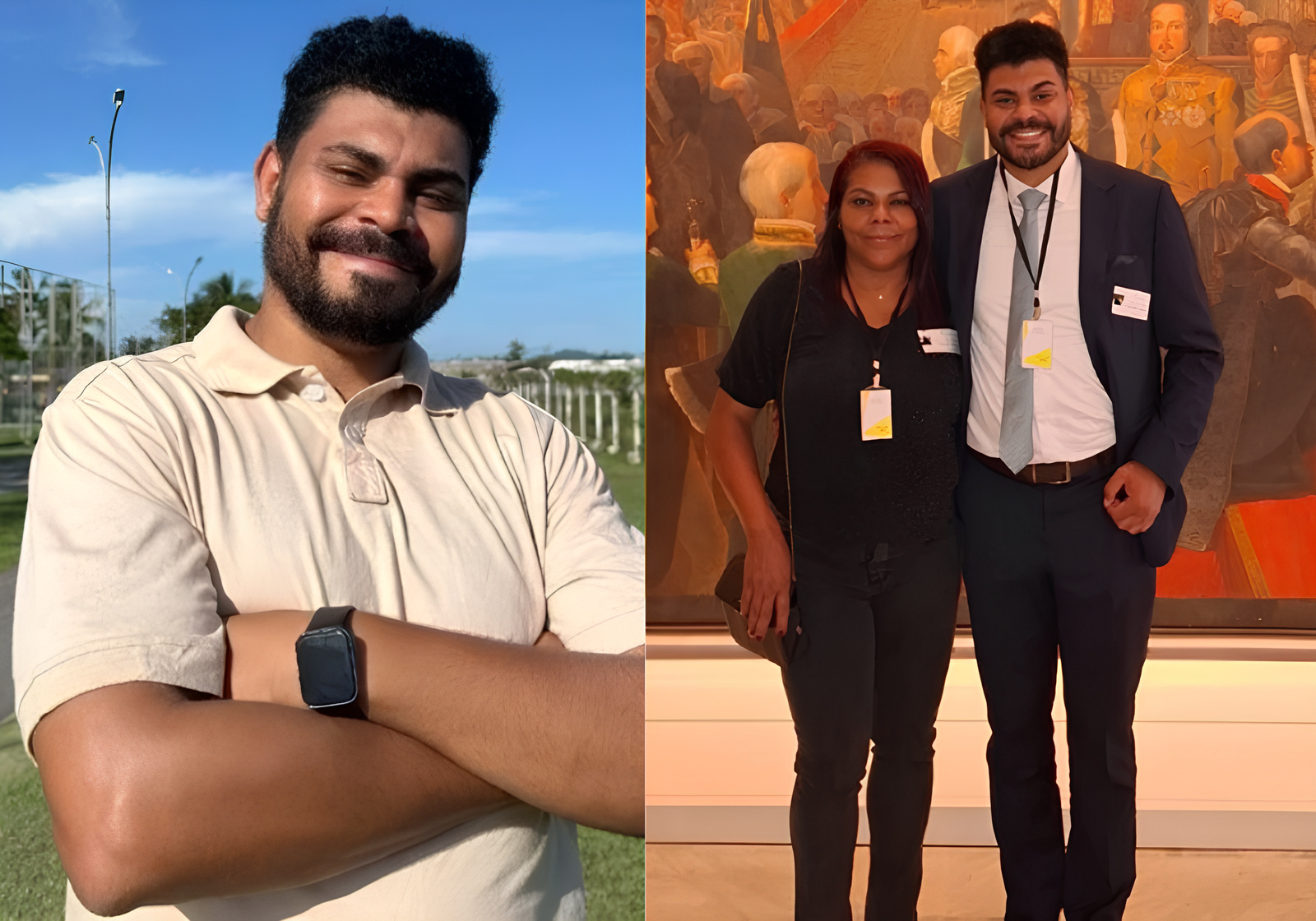
Ex-waiter son of a housekeeper becomes a diplomat at 31 after a journey with Prouni, intense study, and overcoming challenges to reach Itamaraty.
In January 2026, the Brazilian Douglas Rocha Almeida, then 31 years old, took office as a diplomat at the Ministry of Foreign Affairs after being approved in one of the toughest exams in the country, the Rio Branco Institute. Born in the Federal District and raised in Luziânia, Goiás, the son of a housekeeper and a bricklayer, he built a path marked by early work, studying in public schools, and accessing university through public policies like Prouni. The story was documented by official bodies such as the federal government and reported by national media.
The achievement represents not only approval in an elite career of the Brazilian public service but also the consolidation of a journey that began far from diplomatic corridors. Douglas worked as a waiter from the age of 15 to 27, balancing long work hours with studies, often without financial stability.
Academic training with a full scholarship and progressive educational advancement
Douglas’s educational journey had a decisive turning point with his approval for a full scholarship from the University for All Program (Prouni). Through this public policy, he enrolled in the International Relations course at the Catholic University of Brasília.
-
Children from the 1980s and 1990s who spent hours playing in the street until dark naturally developed spatial intelligence, which today has become the subject of expensive courses, cognitive training, and modern methods of child and adult learning.

-
Without bombs, without electricity, and without drilling the ground, villages in southwestern Morocco have discovered how to extract water directly from the air using only polymer nets, wind, and the humidity of the Atlantic amidst the advancing desert.

-
Son of a Brazilian, a 20-year-old young man defies extreme pressure, wins the world rodeo championship, and takes home a million-dollar prize of nearly R$ 5 million.
-
The largest freshwater aquarium in the world is in Brazil, impressing with 5 million liters, 380 species, and will host a national congress that brings together specialists in biodiversity, animal conservation, and unprecedented research with more than 100 species bred in captivity.




Douglas himself states that Prouni was “a turning point” in his life, allowing access to higher education and creating opportunities that were previously out of reach.
After graduation, he expanded his academic training. He studied Spanish Language at the University of Brasília and later completed a master’s degree in International Security and Defense at the Superior War School, with support from CAPES.
This progression demonstrates a consistent pattern of educational advancement, moving from a limited background to achieving high levels of qualification.
Working from an early age and the reality of low income
Douglas’s story begins in a context of economic vulnerability. His mother, a housekeeper, and his father, a bricklayer, supported the family with limited resources.
From a young age, he needed to work to supplement the family income. He worked as a toy monitor and later as a waiter at events and restaurants.
The period as a waiter extended for over a decade, from 15 to 27 years old, often already balancing work with graduation and advanced studies.
Furthermore, the family benefited from social programs such as Bolsa Família, and Douglas himself resorted to emergency assistance during the pandemic.
Intensive preparation for one of the most difficult competitions in Brazil
Entry into the diplomatic career requires approval in the Admission Exam for the Diplomatic Career (CACD), considered one of the most demanding in the country.
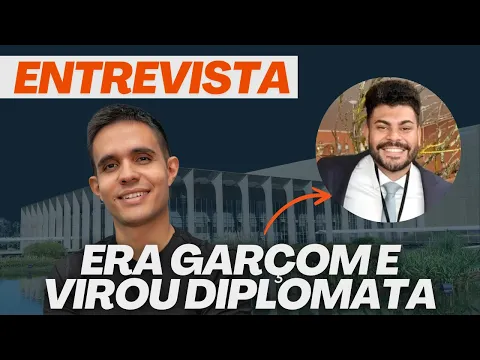
Douglas faced a long and rigorous preparation. According to official reports, he studied up to 12 effective hours a day, which could represent up to 16 total hours dedicated to studying during certain periods.
The selection process involves thousands of candidates competing for few spots. In one of the editions, about 9,000 applicants competed for only 50 spots, highlighting the level of competitiveness in the career.
Entry into Itamaraty represents ascent to one of the most prestigious careers in the country
The diplomatic career in Brazil is structured within the Ministry of Foreign Affairs, known as Itamaraty, and is considered one of the most prestigious in the public service.
Entry occurs exclusively through a public competition and involves specific training at the Rio Branco Institute.
Approval places Douglas in one of the most selective and qualified positions in the Brazilian public administration, responsible for representing the country in international negotiations, embassies, and multilateral organizations.
Emotion at the inauguration and direct impact on the family
The inauguration ceremony was marked by a strong emotional charge. According to Douglas himself, his mother cried during the event, recognizing the weight of the achievement after years of effort.
He emphasizes that the moment symbolizes the end of a cycle of difficulties and the beginning of a new phase of stability and professional fulfillment.
Additionally, Douglas expressed the desire to help his family financially, especially his mother, so she can leave her job as a housekeeper.
The achievement transcends the individual scope and transforms into a concrete change in the family structure, creating new life perspectives.
Influence of public policies on the trajectory
One of the most relevant points in the story is the role of public policies. Douglas had access to different programs throughout his life, including Bolsa Família, Prouni, and scholarships for postgraduate studies.

These instruments were fundamental in enabling his education and allowing him to dedicate himself to studies at decisive moments. The diplomat himself acknowledges that these policies were decisive for his trajectory, highlighting that access to opportunities is not uniform for everyone.
Personal overcoming and significant events throughout the trajectory
Douglas’s journey was also marked by difficult events. One of the most impactful moments was the loss of his sister in 2017, an episode that influenced his decision to pursue a diplomatic career.
From that period, he intensified his dedication to studies and began to structure more clearly the objective of entering the Itamaraty.
Douglas’s story brings together recurring elements in educational ascent trajectories in Brazil: humble origins, early work, access to public policies, and prolonged dedication to studies.
It highlights how education can serve as a mechanism for social mobility, even in adverse contexts. At the same time, the case also exposes the difficulty of accessing these opportunities and the need for structured policies to broaden this type of trajectory.
Do you believe that stories like Douglas’s show that access to education and elite careers is expanding in Brazil or are they still exceptions within an unequal system?
The trajectory that leads from informal work to the Itamaraty draws attention for its symbolic strength, but it also raises a central question about how many Brazilians are still outside this path due to lack of access to the same opportunities.







Be the first to react!