






 7 min of reading
  0 comments


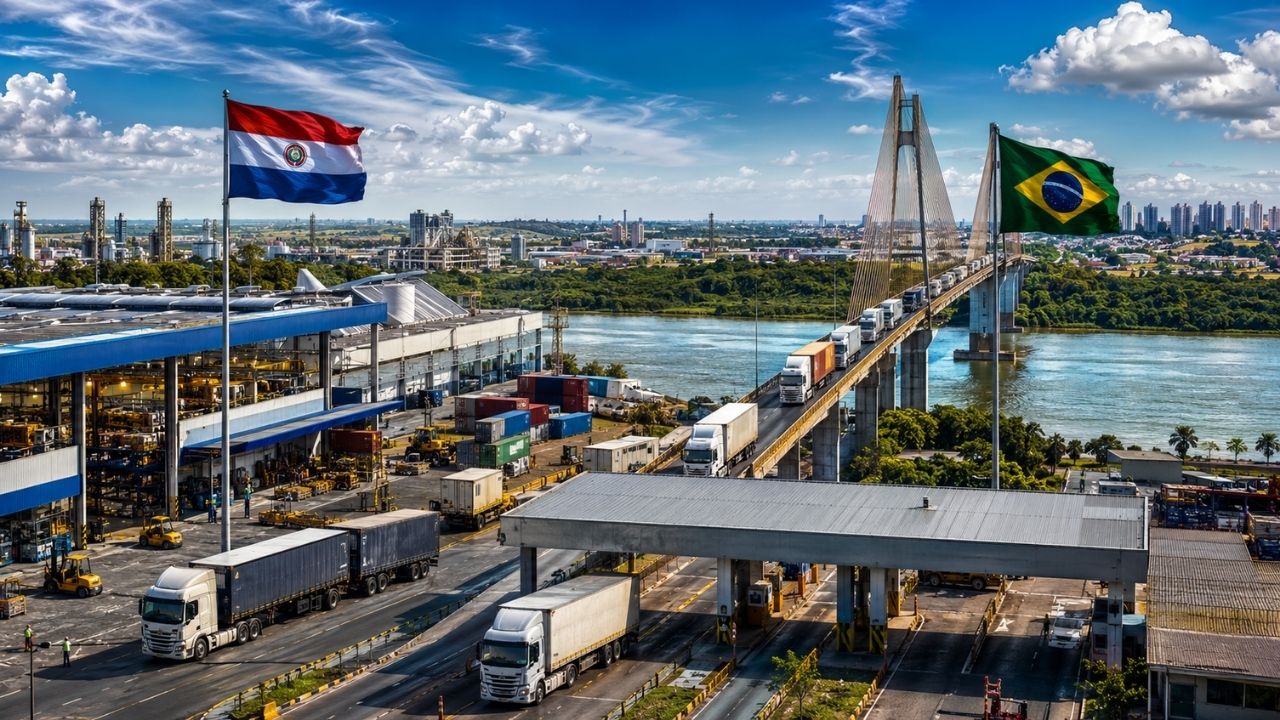
More than 230 Brazilian companies have already moved part of their production to Paraguay under the maquila regime, which combines a tax burden of around 12%, cheaper energy, and reduced charges. As the country is part of Mercosur, a large part of the production returns to Brazil without import tax, sparking a debate on regional industrial competitiveness.
Paraguay has become a destination for more than 230 Brazilian companies that have transferred part of their production to the neighboring country in search of lower taxes, reduced labor costs, cheaper energy, and access to the Brazilian market through Mercosur. This movement occurs under the maquila regime, created to attract export-oriented industries.
The cost difference is the most striking point. In the presented model, the tax and labor charge is around 12% in Paraguay, compared to about 80% in Brazil. This combination has led national companies to produce abroad and sell back to the Brazilian market without import tax.
Paraguay uses maquila to attract Brazilian companies
The maquila regime is a model created by the Paraguayan government to attract industries interested in producing in the country and exporting. In practice, companies set up part of their operations in Paraguay, take advantage of lower costs, and direct production to other markets.
-
Brazilian Joins Homeownership Consortium, Faces Decade of Dual Payments Totaling $141,000, Surpassing Traditional Mortgage

-
Land Rover to Halt Production in July, Putting 371 Jobs at Risk, as Chinese Automaker Negotiates to Convert Factory to 100,000 Vehicles Annually by 2027

-
Mexican Pest Threatens U.S. Cattle Herds at Historic Lows, Potentially Boosting Brazilian Beef Exports as Burger Prices Soar

-
Brazilian Freight Bill Progresses in Congress with $5,000 Minimum Wage, 70% Advance Payment, and Fines Up to $1 Million, as Agriculture and Industry Warn of Rising Costs and Legal Uncertainty


Brazil appears as the central destination for this production. As Paraguay and Brazil are part of Mercosur, products manufactured in the neighboring country can enter the Brazilian market without import tax, provided they meet the bloc’s rules.
This arrangement creates a strategic situation for Brazilian companies. They can reduce part of the production costs, maintain geographical proximity to the Brazilian consumer, and operate within a regional trade agreement.
The result is a kind of industrial reorganization at the economic border. Instead of just importing from distant countries, Brazilian companies start using Paraguay as a nearby production platform integrated into the national market itself.
More than 230 companies have already moved production to the neighboring country
The data cited by the Paraguayan government and the Chamber of Brazilian Entrepreneurs in Paraguay indicate that more than 230 Brazilian companies have already transferred part of their production to the country.
These companies represent about 70% of the industries installed in Paraguay under the maquila regime. The Brazilian influence in the model shows that the Paraguayan strategy heavily depends on capital, brands, and demand from Brazil.
The number also reveals that this is not an isolated movement. The move of Brazilian companies to Paraguay has become an industrial trend related to cost, taxation, charges, and competitiveness.
Among the companies mentioned are Lupo, Carsten, JBS, Kid, M. Dias Branco, and Grupo Dass, responsible for manufacturing products linked to brands like Nike and Adidas.
Load close to 12% weighs on companies’ decision
The main attraction is the difference in load on production. In the mentioned regime, taxes and labor charges are around 12% in Paraguay, while the comparative presented for Brazil reaches about 80%.
This difference changes the competitiveness equation. In industrial sectors pressured by margin, labor, energy, and logistics, a significant reduction in charges can determine where a company decides to expand or relocate production.
Besides the lower load, Paraguay offers cheaper energy and credit with lower interest rates. These factors complete the attraction package and help explain why Brazilian companies are looking to the neighboring country.
The topic also exposes a recurring discomfort in the Brazilian business debate: when producing abroad nearby seems more advantageous than expanding operations within the country itself.
Lower labor charges are part of the package


The cost of labor is another important component. In Paraguay, there is no FGTS and the weekly working hours are 48 hours, according to the presented data.
These rules help reduce the operational cost for companies, but also raise debate about differences between labor models. For entrepreneurs, the argument is competitiveness; for critics, the issue may involve social protection and job quality.
The comparison with Brazil appears precisely at this point. The country has a heavier labor structure, with charges, obligations, and costs that impact the payroll.
In Paraguay, the proposal is to attract production and generate jobs through a simpler and less burdensome environment. The challenge is to balance industrial growth, workers’ rights, and public revenue.
Production returns to Brazil without import tax
The majority of these companies’ production is destined for the Brazilian market itself. This is the point that makes the movement more sensitive.
Companies leave Brazil to produce in Paraguay but continue selling to Brazilian consumers. Since Paraguay is part of Mercosur, products can return without import tax, creating an advantage within the regional bloc itself.
For companies, the model reduces costs and maintains access to the largest market in the region. For Brazil, the issue is more complex: the country continues consuming, but part of the production, jobs, and industrial investments migrate abroad.
This phenomenon pressures the debate on national competitiveness. If the internal cost is much higher, companies tend to seek alternatives where capital can reproduce with fewer barriers.
Paraguay generates jobs with Brazilian companies
The presence of Brazilian companies in the maquila regime also has a direct effect on Paraguayan employment. The cited data points to about 25,000 jobs linked to these industries.
For Paraguay, the model is a way to attract production, create jobs, and increase economic activity. The country uses lower taxes as a tool for industrial development.
This strategy resembles experiences of countries that positioned themselves as export platforms, attracting foreign companies to produce locally and sell to other markets.
In Paraguay’s case, proximity to Brazil makes the arrangement even more attractive. Regional logistics, Mercosur agreements, and lower operational costs form a combination difficult to ignore for part of the industry.
Brazil loses competitiveness in cost comparison
The movement of Brazilian companies to Paraguay raises a direct question: why is producing abroad more attractive than producing within Brazil?
The answer involves tax burden, labor charges, energy, credit, and regulatory security. When the cost of producing internally rises too much, the company seeks the place where it can compete better.
This does not mean that the entire Brazilian industry will migrate. But it shows that more cost-sensitive sectors may reassess their operations, especially when they can maintain access to the national market via Mercosur.
The risk for Brazil is witnessing part of the production chain move to neighboring countries, while consumption remains within Brazilian borders.
Mercosur becomes a central piece of the strategy
Mercosur is one of the elements that make the model viable. Without the regional agreement, selling back to Brazil could involve barriers and import costs that could reduce the advantage.
With the bloc, Paraguay becomes a production platform integrated into the Brazilian market. The trade rule, created to bring economies closer, is also used as a strategy for reducing business costs.
This dynamic is neither illegal nor unexpected within economic blocs. Companies tend to seek the country with the best combination of cost, access, energy, labor, and stability.
The problem arises when the difference between the production environments becomes too large. In this case, the regional bloc can accelerate the migration of investments to the more competitive country.
Debate goes beyond low tax
The move of Brazilian companies to Paraguay cannot be explained solely by lower taxes. The package includes energy, credit, charges, labor rules, logistical proximity, and access to the Brazilian market.
It is the sum of these factors that makes the neighboring country competitive. Reducing everything to a single point oversimplifies a business decision that involves total cost, predictability, and scale.
At the same time, the movement reinforces a message for Brazil: companies respond to incentives. When the local environment weighs too heavily on production, capital seeks more efficient alternatives.
The debate, therefore, is not just about Paraguay. It is about the Brazilian model of production, taxation, labor, and industrial competitiveness.
Paraguay becomes an uncomfortable mirror for Brazil
The advance of Brazilian companies in Paraguay shows how cost differences can reshape the regional industry. More than 230 companies have already moved part of their production to the neighboring country, attracted by a load close to 12%, cheaper energy, and access to Brazil through Mercosur.
For Paraguay, the strategy generates jobs and strengthens its industrial base. For Brazil, the movement acts as a warning about the burden of taxes, charges, and costs that make it difficult to compete within its own territory.
The central question is to know until when Brazilian companies will prefer to produce abroad to sell back to the domestic market. If the trend grows, the debate on tax reform, business environment, and labor costs tends to become even more urgent.
And you, do you think Paraguay is just taking better advantage of its rules to attract companies, or is Brazil pushing its own industry out with costs that are too high? Share your opinion.





Be the first to react!