






 Portuguese
  Spanish


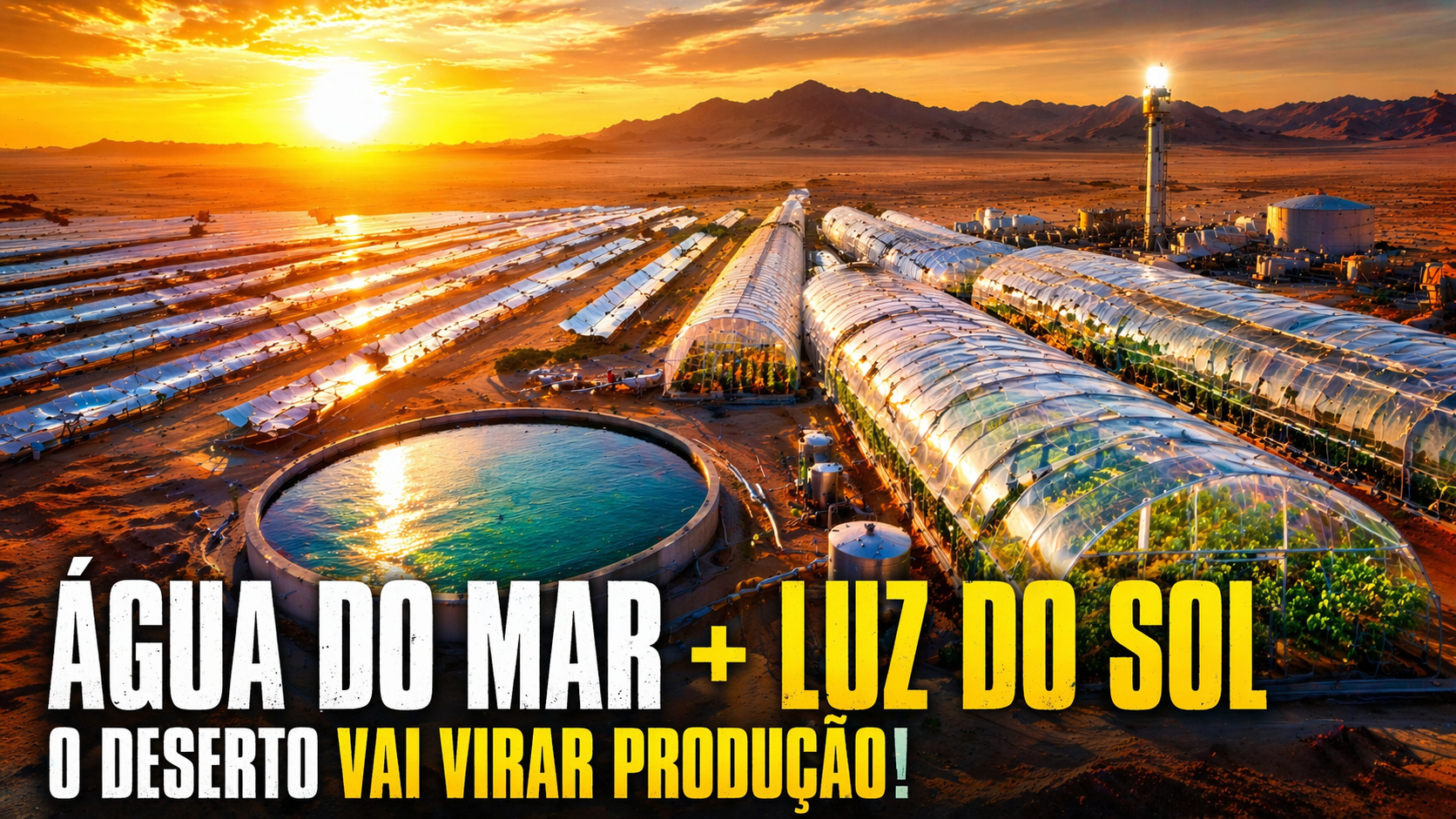

Projects in the Sahara Desert use solar energy and dry air to produce drinking water and food, creating new opportunities in extremely dry regions
The Sahara Desert, known for its high temperatures and lack of water, is beginning to undergo a surprising transformation. Technologies that utilize intense sunlight and dry air are already able to produce water and create conditions for growing food.
This advancement has a direct impact on the lives of thousands of people. In addition to generating drinking water, the systems reduce the need to extract water from ancient aquifers, which take thousands of years to form.
Saltwater greenhouses create fresh water and reduce heat in the desert
The saltwater greenhouses are one of the main solutions used in this transformation. They work in a simple way. Hot air enters the structure, passes over wet surfaces, and absorbs water vapor.
-
Billionaire says the most valuable skill will help overcome job elimination caused by AI, following Bill Gates’ fears

-
A Dutchman created a ‘box’ that makes trees grow in the desert almost without water and without irrigation: the invention has already brought seedlings to dozens of countries and achieves up to 90% survival where common planting did not exceed 10%.

-
Abandoned warehouse hid a giant collection of rare computers, with over 2,000 artifacts from the 1930s to the 1980s.
-
Scientists warn that melting ice is triggering an alarming chemical transformation in preserved areas, and the first signs are already concerning researchers worldwide.




After that, this air encounters cooler parts inside the greenhouse. At this moment, the vapor turns into droplets, generating fresh water that can be used for irrigation.
Another important effect is the reduction of internal temperature. In some cases, the environment inside the greenhouse can be up to 15 °C cooler than the outside, which facilitates plant cultivation.
Technology uses sensors to control climate and save energy
To further improve functionality, the systems are equipped with sensors that monitor temperature, humidity, and solar light. This information helps to automatically adjust the operation.

This control prevents waste and ensures efficient energy use. The result is a system that maintains a balance between water production and food cultivation.
There is also the reuse of the leftover saltwater from the process. This makes the operation more sustainable and reduces environmental impacts.
Water capture from dry air is already a reality in the Sahara
Even in very dry regions, the air contains small amounts of moisture. Modern technologies can capture this vapor and transform it into water.
The process occurs when the air is cooled to the point where the vapor turns into liquid. This technique allows for water production even in environments with low humidity.
Some systems use solar energy to operate. Others use special materials that absorb water from the air. There are also surfaces inspired by nature that help in the formation of droplets.
Solar plants turn seawater into drinking water
In addition to greenhouses, there are plants that use concentrated solar energy to transform seawater into fresh water.
These systems use mirrors to concentrate sunlight and generate intense heat. This heat evaporates the water, separating the salt. Then, the vapor is cooled and turns back into liquid.
The result is the production of drinking water on a large scale, which can supply communities and agricultural activities.
The report was published by Chauar Terras, a Brazilian portal specialized in sustainability and environmental innovation, which follows technology projects and the use of natural resources.
Integration of technologies mimics the natural water cycle
The most advanced projects combine several of these solutions into a single system. The idea is to reproduce the natural water cycle in a controlled manner.

Water evaporates with the heat of the sun, turns into vapor, and then condenses in cooler areas. This process generates water that can be used and stored.
This integration reduces losses and improves efficiency. It also allows for precise measurement of the amount of water produced in relation to the energy used.
Chauar Terras, a Brazilian portal specialized in sustainability and environmental innovation, highlighted that this integrated model could expand to other regions with similar climates.
Technology can change the future of water and food production
The increase in the global population pressures the demand for water and food. Solutions that use solar energy, dry air, and seawater are becoming increasingly important.

The Sahara becomes an example of how areas considered unproductive can undergo transformation. Projects already show that it is possible to produce food without depleting natural resources.
The trend is for the growth of these technologies in the coming years. As a result, arid regions may become new areas for agricultural production and water generation.
The transformation of the desert shows that innovation can create real solutions to old problems.
Do you believe that this technology can transform other dry regions of the world into productive areas? Leave your opinion in the comments and share with those interested in innovation and sustainability.





