Portuguese
  Spanish


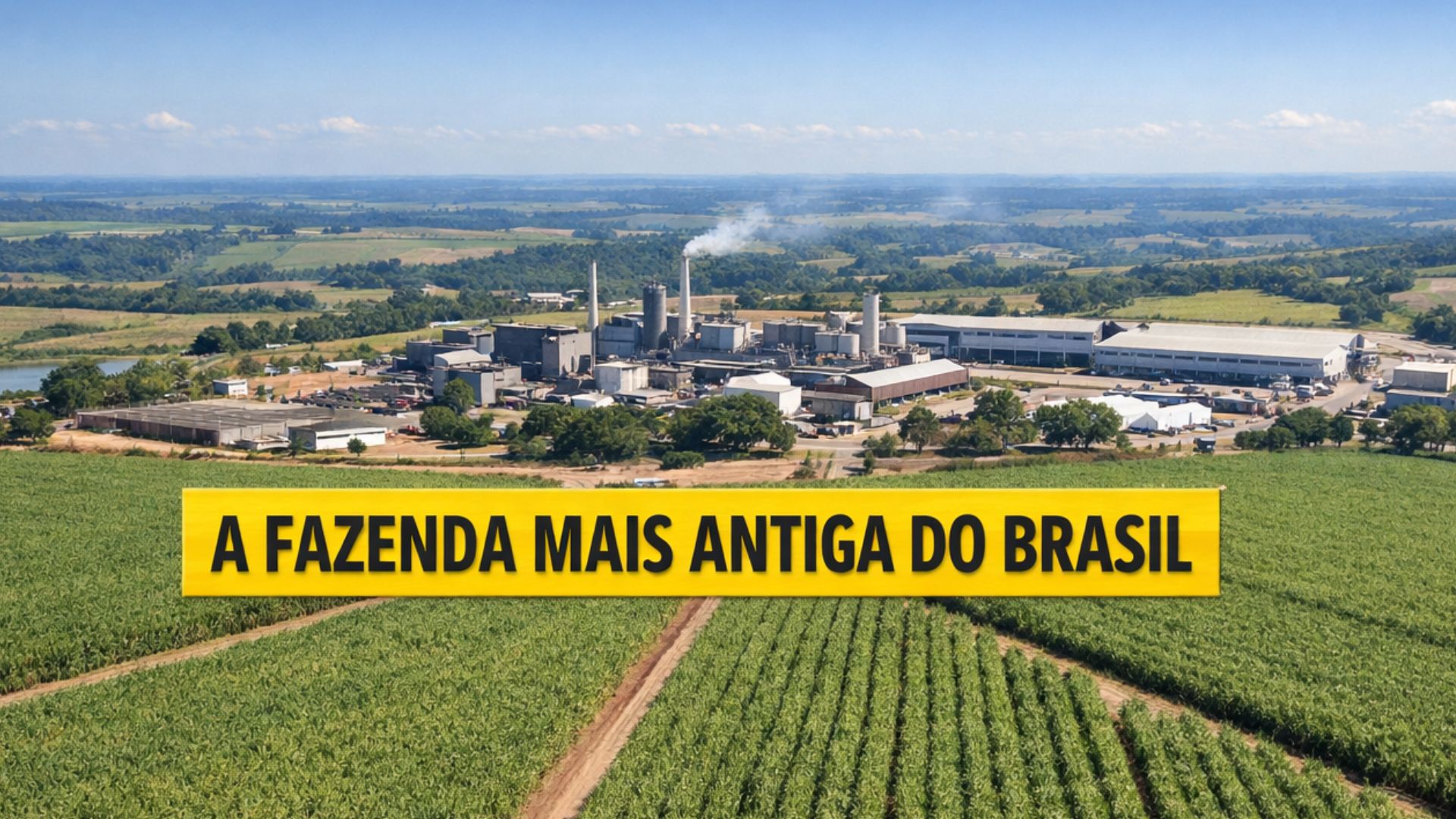


Farm Founded in 1729 Continues to Operate, Surviving Nearly Three Centuries Under the Same Family’s Control and Gathering Numbers That Place the Petribu Plant as the Oldest Still Operating in Brazil, Combining Historical Tradition and Industrial Technology in the Heart of the Northeast.
Founded in 1729, the Petribu Plant, located in the Zona da Mata Norte of Pernambuco, has maintained continuous operation for nearly three centuries and is recognized as the oldest rural property in the country still in operation.
Throughout this period, the farm has gone through economic cycles, profound technological changes, and transformations in the agricultural production model, without interrupting its activities.
While other historical properties have been turned into museums, cultural parks, or archaeological sites, Petribu has preserved its productive vocation and established itself as a reference for longevity in Brazilian agribusiness.
-
From Selling Cleaning Products in Vans to Over 300 Franchises: Entrepreneur Targets $30 Million by Expanding into Professional Cleaning Services and Laundries

-
China Constructs 5.1 km Undersea Highway in Dalian Bay, Reducing Travel Time from 1 Hour to 5 Minutes

-
Massive Transporters Otto and Lore Move ALMA Radio Telescope in Chile’s Atacama Desert
-
Singapore Turns Incinerated Waste Ash into Construction “Sand” in Ambitious Project to Revolutionize Megacity Waste Management


The case stands out not only for its age but also for its ability to adapt to different historical contexts, maintaining economic and social relevance in the field.
Historical Origins of the Oldest Farm in Brazil

The foundation of the Petribu Plant dates back to the colonial period when sugar mills spread across the Northeast’s Zona da Mata.
Since then, the property has remained under the control of the same family, passing through generations without administrative or productive breaks.
This factor is cited as one of the main differentiators of the farm, responsible for ensuring strategic continuity over nearly 300 years.
Unlike other historical mills that have disappeared or ceased operations, Petribu has maintained active production, following the transformations in the sugar-energy sector.
Over time, the old mill evolved into a modern plant, successively incorporating new technologies and management methods.
Scale, Jobs, and Production in Expressive Numbers
Currently, the Petribu Plant operates over a total area of 30,000 hectares.
Of this total, approximately 18,500 hectares are exclusively dedicated to sugarcane cultivation.

The production structure includes approximately 400 machines, including harvesters, tractors, and trucks, reflecting the high level of mechanization of the operation.
During the harvest season, the plant generates around 5,300 direct jobs, playing a significant role in the regional economy.
In the industrial park, the crushing capacity reaches approximately 8,500 tons of cane per day.
These numbers place Petribu among the most efficient plants in the Northeast, combining productive scale and a long historical trajectory.
Family Management and Continuous Technological Adaptation
One of the most remarkable aspects of Petribu’s history is the uninterrupted family management.
The property has remained under the control of the Cavalcanti Petribu family since its foundation, with succession between generations preserving the direction of the business.
This continuity has allowed for long-term decisions and gradual investments in modernization.
Throughout the 20th century, the plant underwent mechanization processes that reduced dependence on animal traction and increased industrial efficiency.
More recently, the operation incorporated technologies associated with Industry 4.0, with automation, process monitoring, and intensive data use.
Even with nearly three centuries of history, Petribu does not operate as a museum piece but as a company integrated into contemporary agribusiness.
Comparison With Other Historical Farms in Brazil

Brazil is home to rural structures older than Petribu, but which no longer engage in productive activities.
Examples include 16th-century mills preserved as archaeological sites and former colonial headquarters transformed into cultural parks.
In these cases, relevance is linked to historical memory and tourism, not to the generation of agricultural wealth.
Under the criterion of continuous production, however, the Petribu Plant stands out as the oldest farm in Brazil still in operation.
This condition reinforces its symbolic role as a link between the birth of national agribusiness and 21st-century industrial agriculture.
The continued operation of Petribu demonstrates that tradition and innovation can coexist in Brazilian agriculture.
With nearly 300 years of history and numbers comparable to large modern operations, the farm continues to serve as a rare example of productive longevity.
What other agribusiness ventures in Brazil have managed to survive for so many centuries while maintaining production, jobs, and economic relevance?