Portuguese
  Spanish


3D printed houses at Wolf Ranch were completed in 2025 in Texas, with 100 residences, Vulcan robot, Lavacrete, and solar roofs.
The construction of an entire neighborhood with 3D printed houses is no longer just a technological demonstration in Texas. The Wolf Ranch project, completed in 2025, delivered 100 residences built with the support of large-scale robots, consolidating one of the most advanced experiences of residential automation in the world.
The community was developed by the robotics startup ICON in partnership with the construction company Lennar. The result brought 3D printing to a residential scale, with houses structured by layers of cementitious material and completed with the participation of human teams in the complementary stages of the work.
The project also showed that technology does not completely eliminate traditional construction. At Wolf Ranch, automation took over the formation of the walls, while professionals remained responsible for roofs, windows, electrical installations, plumbing, and other essential systems of the homes.
-
Helsinki Residents Receive Water That Travels 120 Kilometers Through a Hidden Rock Tunnel from a Lake Before Treatment

-
Brazil’s Sertão Region Nears Completion of Latin America’s Longest Artificial River, Transforming Water Access in Drought-Prone Ceará

-
Pre-mixed stabilized mortar set to revolutionize construction in 2026: extends usability to 36 or 72 hours, boosts productivity, and minimizes waste in building projects.

-
Mexico Sinks Giant Fabric Tubes Filled with Sand off Yucatán Coast to Create Invisible Barrier and Restore Hurricane-Damaged Beaches



3D printed houses completed in 2025 validated neighborhood scale
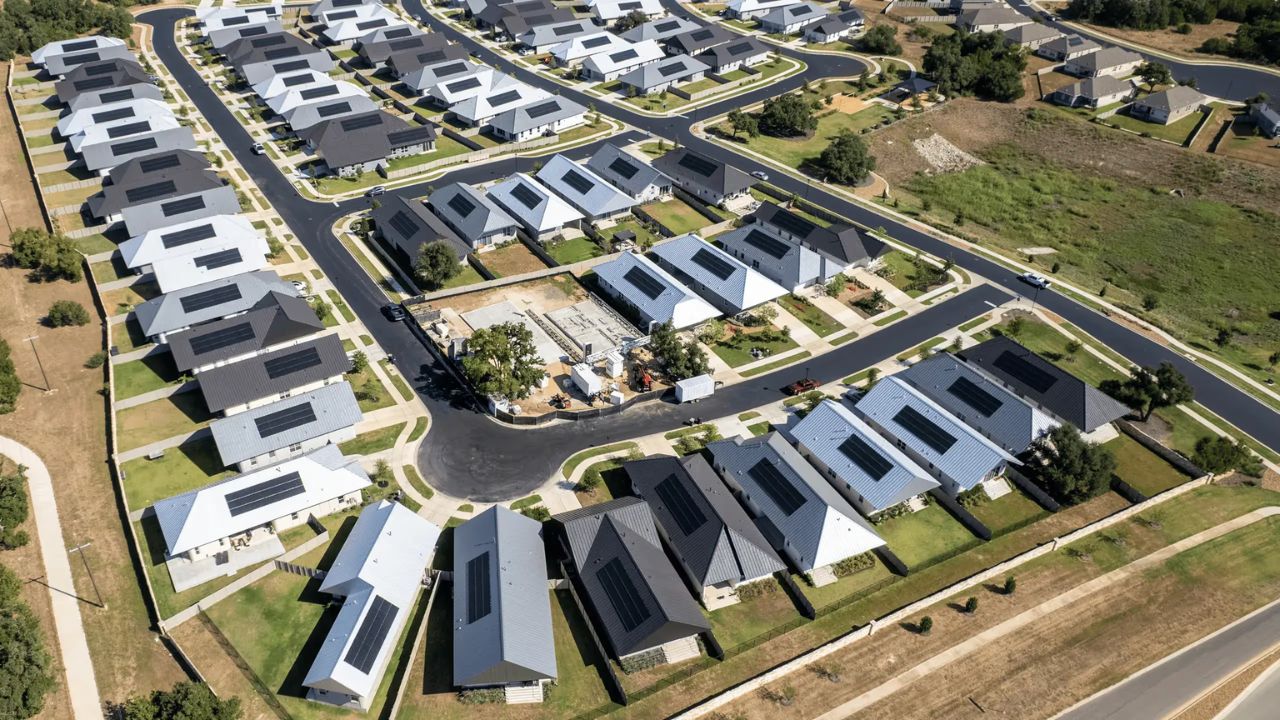
The main milestone of Wolf Ranch is in the scale. Instead of a single house for testing, the project delivered a complete residential community, with 100 units built from a robotized process coordinated by software.
This completion in 2025 made the neighborhood a reference for the debate on housing deficit and construction speed. 3D printing began to be presented as an alternative capable of accelerating the structural phase without relying on the same volume of manual labor used in conventional masonry.
The experience also helped to take the technology out of the experimental field. By applying the method to a set of residences, ICON and Lennar demonstrated that robots can operate on large-scale sites, maintaining human participation in the stages that require installation, finishing, and integration of the house systems.
Automation changes the role of workers on-site
The shortage of skilled labor in the United States appears as one of the factors that drove the use of 3D printing in residential construction. At Wolf Ranch, the robot did not replace the entire team but shifted part of the work to more technical roles.
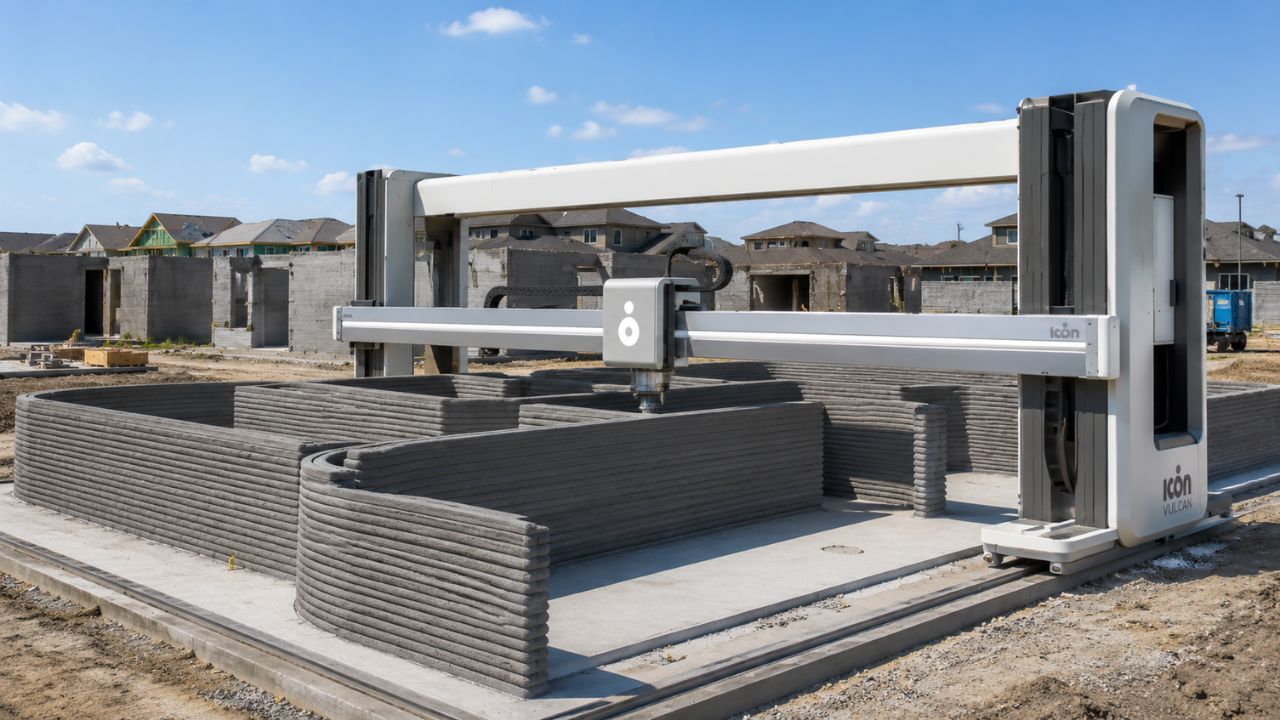
Bricklayers and operators began working with software calibration, material pump control, and monitoring the printing of structures. The logic of the construction site changed: less manual repetition in wall formation and more operation of machines, sensors, and digital systems.
After printing the “shell” of the houses, human labor remained indispensable. Metal roofs, frames, electrical networks, plumbing, and other components were installed by professionals, keeping the economic chain of construction active even with the use of robotics.
3D printed houses reduce waste in the structural stage
The technique used in the project deposits material only at the points defined by the architectural program. Thus, the structure is built layer by layer, without requiring the same use of bricks, molds, and laying stages present in conventional methods.
This control reduces leftovers on the site and decreases the generation of debris during wall formation. The system’s precision also avoids the transport of large volumes of masonry materials, which cuts part of the emissions associated with the logistics of the construction.
In the case of Wolf Ranch, the material applied was Lavacrete, a cementitious mixture used by the ICON system. It allowed for the creation of strong walls with architectural shapes that would be more expensive or time-consuming through manual techniques.
Solar roofs and ribbed walls help in the performance of the houses
The residences at Wolf Ranch stand out not only for their construction method. The project also adopted metal roofs with embedded solar panels, forming a planned village to generate more energy than it consumes during the summer.
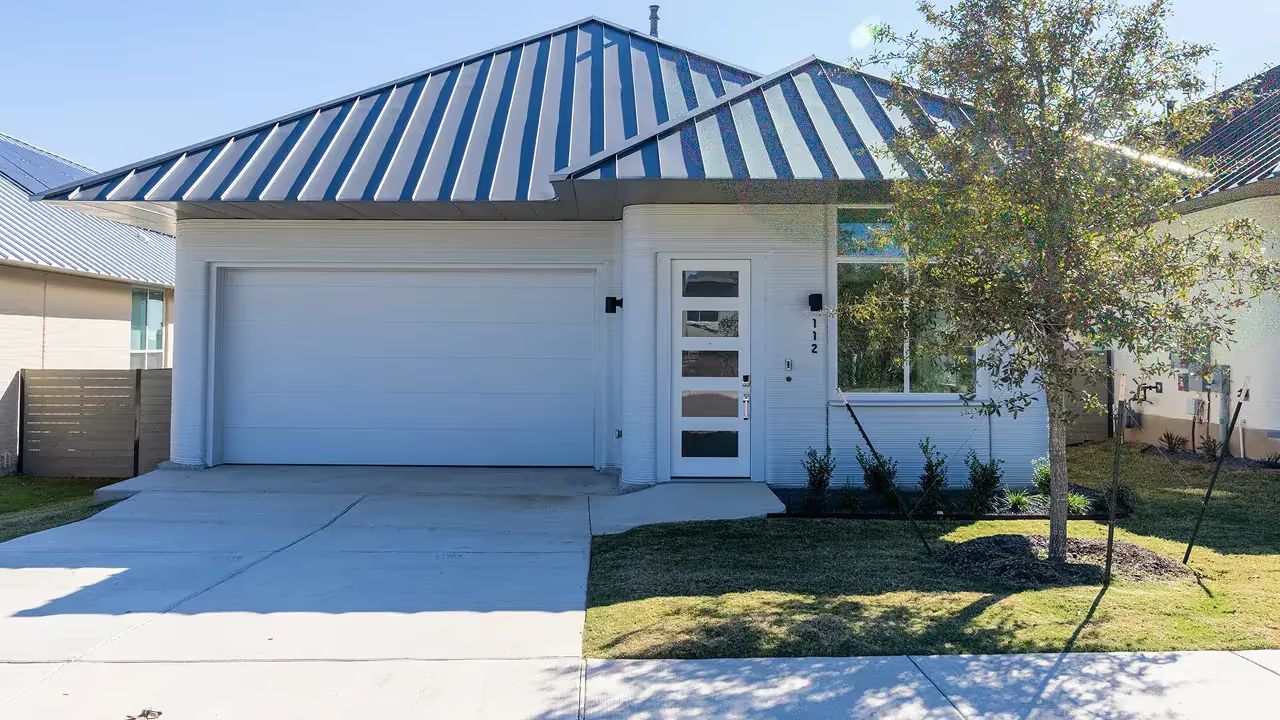
Another point is the texture of the walls. The layer-by-layer printing leaves a ribbed surface, with small air pockets along the facade, a feature that helps improve thermal insulation in the hot Texas climate.
This performance is reinforced by the density of the cementitious material used in the structures. In practice, the combination of printed wall, surface design, and solar generation enhances the efficiency proposal of 3D printed houses.
Vulcan Robot was the technological basis of Wolf Ranch
The equipment used to erect the walls was the Vulcan, a 3D printing robot over fourteen meters wide. It operates on rails and follows the design programmed in software to deposit successive layers of material.
The machine allows for the creation of curved walls and less conventional geometries without requiring the same artisanal cost of a project done by traditional methods. As the system calculates the amount of Lavacrete needed in each section, execution becomes more precise.
This continuous process reduces masonry stages and speeds up the formation of the base structure. The robot handles the heavy and repetitive part of the work, while human teams complete the phases that require installation, connection, and finishing.
Comparison shows advancement in speed and geometry
The difference between 3D printed houses and traditional construction appears mainly in the structural stage. In the model developed by ICON, the walls can be raised in a few days, as the printer deposits the material in continuous layers and reduces part of the manual work.
In common masonry, this process tends to be more time-consuming, as it involves block laying, curing, adjustments, and subsequent finishing. Another point observed by urban planners and professionals linked to the Architecture and Urbanism Council, CAU, is the performance of structures under severe weather conditions.
The 3D printed houses were designed to offer greater resistance to strong winds and hurricanes, while conventional constructions may present greater vulnerability in extreme impact situations, depending on the design, materials, and execution. The technology also changes the way architects think about the design of homes.
As 3D printing allows for the creation of curves, rounded volumes, and less conventional geometries more easily, the project gains formal freedom without requiring the same level of craftsmanship that would be necessary in a traditional masonry work. With this, the method has come to be seen as an alternative capable of accelerating construction, reducing repetitive steps, and expanding design possibilities in civil construction.
See how ICON uses robots in civil construction
The technology applied at Wolf Ranch is part of a larger movement of automation to accelerate residential construction. The video below presents a 3D printing robot developed by ICON to erect constructions with a high level of efficiency.
Watch the video and see how robotic 3D printing can transform the construction site, from reading the digital project to forming the walls layer by layer.


The content helps visualize the machine’s operation, the use of cementitious material, and the integration between software, robotics, and human teams during construction.
3D printed houses show a new model for housing
The completion of Wolf Ranch in 2025 left a central message for civil construction: robots can already participate in the delivery of entire neighborhoods, not just isolated prototypes. The project also showed that automation can work alongside human labor, without replacing all stages of construction.
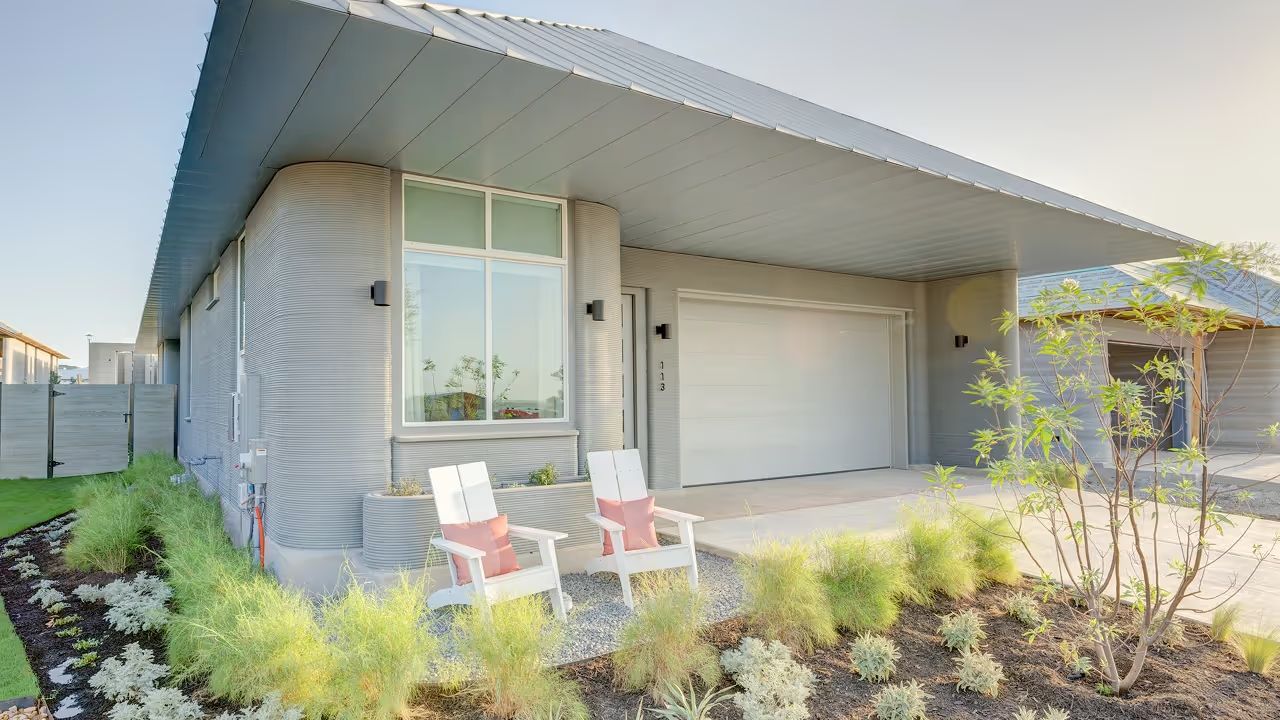
The 3D printed houses in Texas combine scale, solar energy, reduced material waste, and architectural freedom. With 100 residences completed, the neighborhood became a concrete example of how 3D printing can advance as a housing solution in large-scale projects.
With information from Monitor do Mercado