






 Portuguese
  Spanish


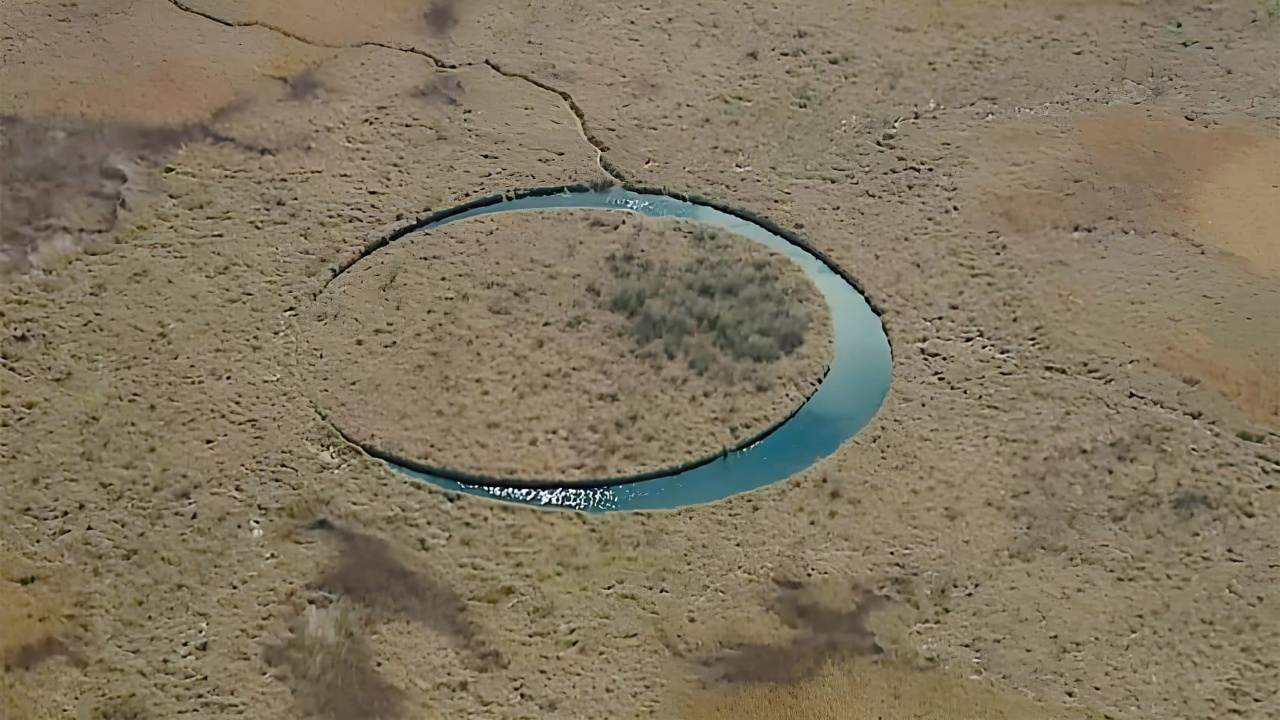


Island That Spins in Argentina Attracted Attention for Its Perfect Shape and Rotation. Understand the Phenomenon and the Truth Behind This Natural Curiosity.
A circular island that spins on its own axis: this really exists. And the most curious thing is that it is located in Argentina, in the swamps of the Paraná River. The structure attracted worldwide attention after being discovered in 2016 by producer Sergio Neuspillerm while he was searching for locations for a documentary on Google Earth.
The formation, known as “The Eye,” is approximately 118 meters in diameter and is positioned within an equally round lake.
What surprised Neuspillerm the most was noticing, after days of observation, that the island seemed to change position, slightly rotating around its own center.
-
In the city that the market called “road cockroach,” between Balneário Camboriú and Florianópolis, he launched a planned neighborhood worth R$ 1 billion with a marina for 90 boats and sold 80% of the lots in the first phase in 1 week.

-
At a depth of 5,000 meters, where there is no sunlight, researchers found ancient DNA preserved in the mud of the South Atlantic and discovered signs of organisms that did not match known records.

-
At 77 years old, a retired woman who never tires of learning completes her second degree in design in Ceará and moves people by revealing the help of her 98-year-old mother in the final project.
-
China’s masterstroke: a plant capable of regrowing even when buried by sand helps to recover more than 7,300 hectares of desert with 5 million seedlings, roots over 10 meters deep, and rainfall below 150 mm per year.



The phenomenon sparked conspiracy theories. Some claimed that aliens, ghosts, or supernatural forces were involved. However, the explanation is simpler — and natural.
What Causes the Movement of the Island That Spins in Argentina
The island, although it appears to be a fixed piece of land, is actually a type of floating vegetation, very common in that region.
Local residents were already familiar with the formation and had never seen anything abnormal at the site.
The aura of mystery surrounding the island is intensified by reports from local residents, some of whom avoid approaching the site.
According to investigations by filmmaker Sergio Neuspiller, some believe that a deity inhabits the area. Others mention strange “entities” associated with the region.
“The water looked black, but in reality, it was completely clear water, something that is almost impossible to find in the delta,” Neuspiller told the newspaper El Observador.
In addition, theories emerged that the island could be a secret Nazi base or even a portal for alien spacecraft. Although eye-catching, these assumptions lack any concrete evidence.
Here’s why the island spins:
- The vegetation detaches from the shore, floating freely.
- The river current and winds cause the mass of vegetation to spin slowly.
- The circular shape and the narrow water channel around it favor rotational movement.
According to experts, these formations are called “floating islands,” and, when isolated for a long time, they can even harbor unique species of plants or small insects. Therefore, no aliens.
Circular Formation Challenges Natural Logic
The island stands out not only for its symmetrical shape but also for the fact that it floats slightly and spins on its own axis, separated by a ring of water.
This unusual behavior has intrigued scholars, who seek natural explanations — such as underground water flows or specific accumulations of floating vegetation — but so far, no hypothesis has been confirmed with certainty.
Despite the island’s presence being detected since the early 2000s through satellites, records of its physical existence are scarce and there are far more doubts than answers.
Archaeological Indications and Indigenous Heritage
Near the island, along the banks of the Luján River, researchers found fragments of pottery and possible burial sites, suggesting the presence of indigenous peoples in the region.
It is believed that the Querandíes, an indigenous group that inhabited the Argentine pampas, used the area as a settlement.
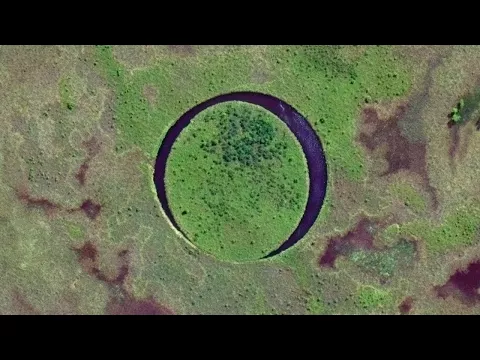

The island that spins in Argentina is a fascinating example of how nature can still surprise us — and generate good stories.
Source: Náutica







Acredito que seja a nota que a natureza está dando à atuação dos economistas argentinos!
Pode ser também a nota do Boca Juniors no campeonato mundial de clubes!
Acredito que ser trata de um portal … Mais não e nada fácil falar sobre esses assuntos pq a grande maioria não intende e os poucos q saber realmente do q ser trata , logo conspira contra o assunto…
Gosto muito das matérias expostas e apresentadas aqui, por dar a oportunidade dos leitores opinarem sobre os assuntos. Meus parabéns e obrigado.