Portuguese
  Spanish


Ricardo Laus was born and raised by the river in Tijucas, spent more than two decades enhancing other people’s land on the Santa Catarina coast, and now single-handedly signs the largest launch in the history of the city of 60,000 inhabitants
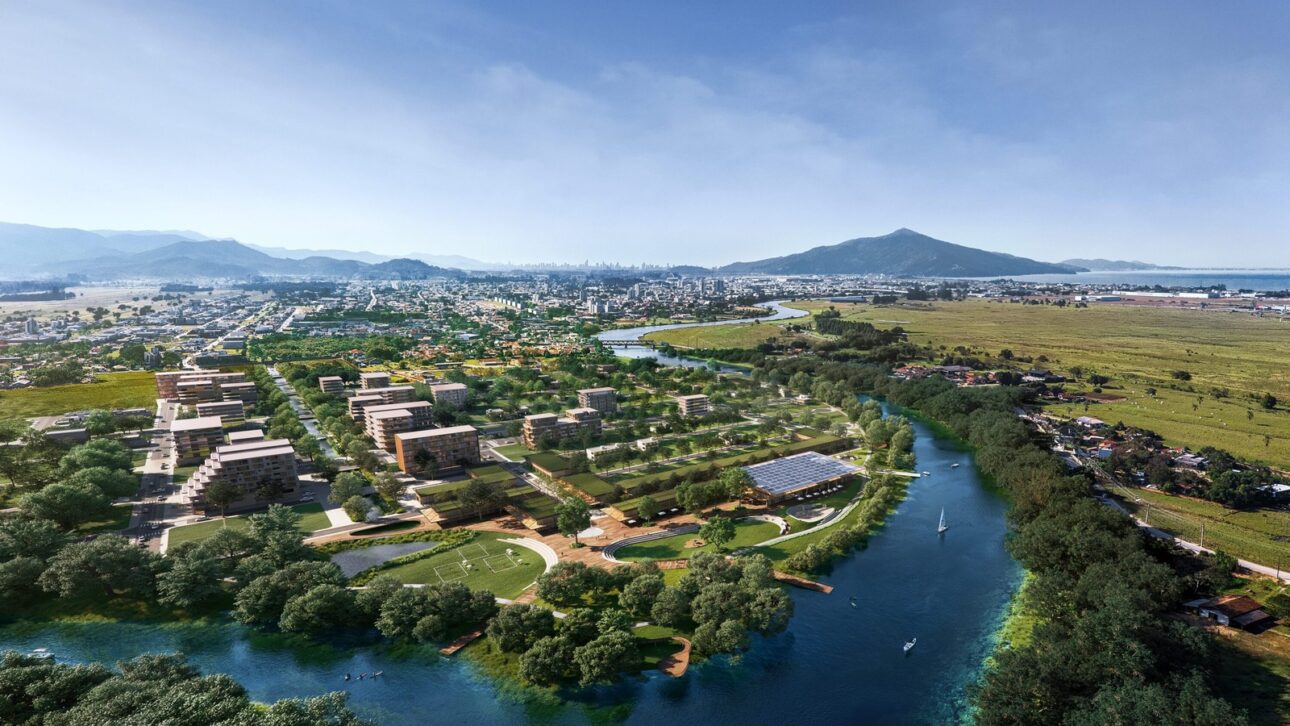
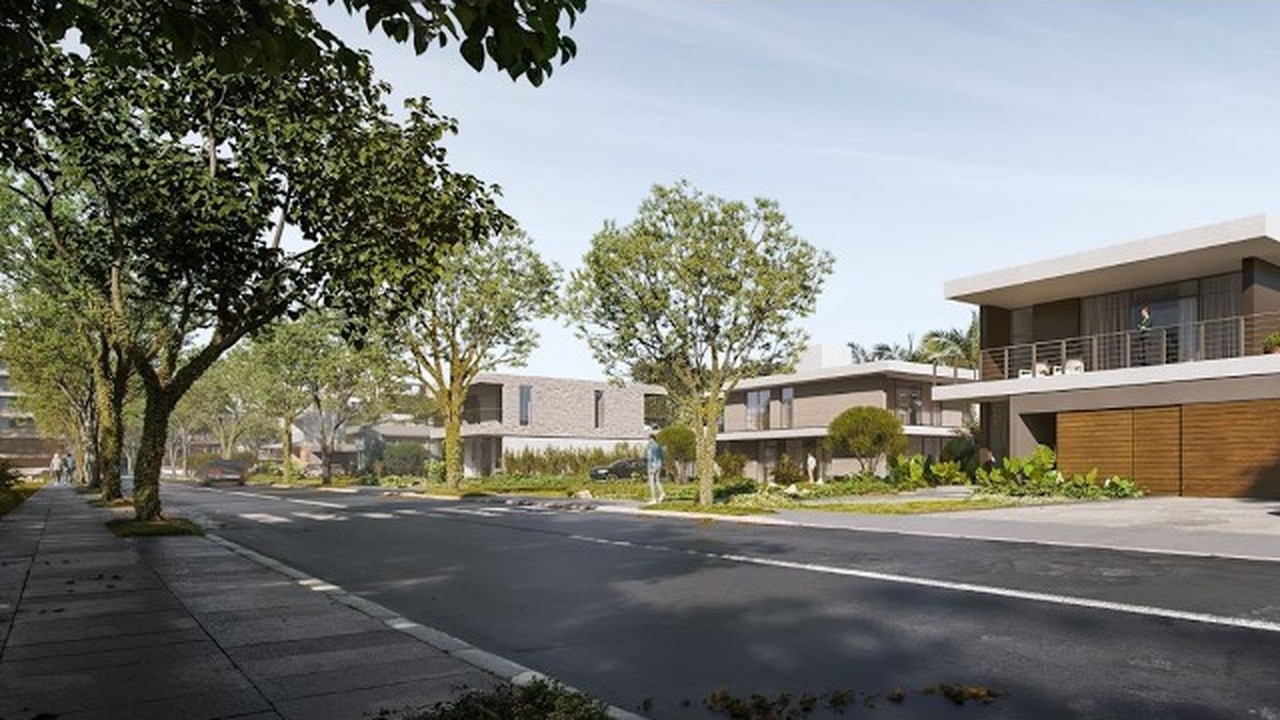
Rioparque was born in the city that has always been known for being in the middle of the road: Tijucas, in Santa Catarina, about 40 minutes from Florianópolis and less than half an hour from Balneário Camboriú and Itapema, the favorite coastal stretch of the Brazilian real estate market, according to Exame, in a report from July 4th. It was in this city of almost 60,000 inhabitants, treated as a passage, that businessman Ricardo Laus founded Novo Ambiente Urbanismo and launched Rioparque, a planned neighborhood of 400,000 square meters on the banks of the Tijucas River, with a marina and a 2-kilometer linear park.
The size of the bet leaves no doubt: the enterprise has a general sales value of R$ 1 billion, it is the largest launch in the city’s history, and in the first week of sales, 80% of the single-family lots in the first phase were already sold, according to Exame. The project was launched about 45 days ago, and the second phase is already scheduled for 18 months from now.
The boy from the riverside who became the owner of the largest project in the city
The businessman’s connection with the land comes from before the business. “I was raised by the river. I lived my whole life by the river and was passionate about playing, fishing, doing things since I was a child there,” Laus tells Exame. The river became the backbone of the project and, in his view, the embryo of a linear park that the city hall could extend throughout the entire city.
-
After three years living in a van, a couple bought an abandoned historic house and had to deal with mold, damaged plumbing, raccoons, and heavy cleaning before moving in.

-
At a depth of 5,000 meters, where there is no sunlight, researchers found ancient DNA preserved in the mud of the South Atlantic and discovered signs of organisms that did not match known records.

-
At 77 years old, a retired woman who never tires of learning completes her second degree in design in Ceará and moves people by revealing the help of her 98-year-old mother in the final project.
-
China’s masterstroke: a plant capable of regrowing even when buried by sand helps to recover more than 7,300 hectares of desert with 5 million seedlings, roots over 10 meters deep, and rainfall below 150 mm per year.


The trajectory in the real estate market began in 1998, when Laus was around 17 years old and started working with his father, using Caixa Econômica Federal financing with FGTS credit letters, and the duo built something between 600 and 700 houses during this period, according to Exame.
The turning point of 2004: the land bought with a deposit and faith
The leap came with a bold negotiation. In 2004, the family bought a plot of land in Tijucas from a former director of the Portobello ceramics without having the money for the entire land, paying a down payment and betting on the sales results, and the area became the Mata Atlântica subdivision and later the Bosque da Mata, launched in 2018, which became the most valued neighborhood in the city, according to Exame.
The first phase of that project had about 350 lots, a number that seemed crazy for Tijucas at the time. “The people in the city, local businessmen, thought we were crazy because 300 and some lots in the city and we would have lots to sell for the rest of our lives,” recalls Laus in the interview. The lots sold, and over three phases about 2,000 lots were released in that area. After decades participating in projects that valued Balneário Camboriú, Itapema, and Porto Belo without being the owner, he sums up the current moment: “It’s my turn now, alone, to take my step.”
The Rioparque from the inside: 468 thousand square meters, marina for 90 boats and 150 jets
The numbers of Rioparque are impressive for the size of the city. The land has a total of 468,000 square meters, of which about 150,000 were executed in the first phase, within the urban grid, in the center of Tijucas, with 2 kilometers of riverbank, according to Exame. The Gazeta do Povo, which also presented the project, details that the marina will have the capacity for 90 boats and 150 jets, along the banks of the Tijucas and Oliveira rivers, and that Rioparque is being presented as the first planned neighborhood in the region with a private marina.
To design the development, Laus gathered offices that signed well-known projects on the Santa Catarina coast, such as Pedra Branca in Palhoça and Viva Parque in Porto Belo, according to Exame. The proposal follows the concept of new urbanism: no house has a wall in front, the power cabling is underground, there are rules about where there can be a building, commerce, or house, and the idea is to live, work, and have fun without relying on the car.
The sales pitch: square meter starting at R$ 2 thousand
The price is the centerpiece of the discourse. The square meter of Rioparque starts at R$ 2,000, which seems cheap for those familiar with the prices in Balneário Camboriú, Itapema, and Porto Belo, according to Exame. Gazeta do Povo records the same thesis with different words: the developers’ bet is that the project will function as a real estate overflow from more saturated neighboring markets, such as Itapema and Balneário Camboriú.
The sales strategy deviates from the standard: no sending tables and materials via WhatsApp. “We make people come to see the development on-site,” says Laus to Exame, betting that the visit to the physical space, the model, and the sales room is what converts the buyer.
Who is buying: from the gaucho tired of traffic to the client from Boston
The buyer profile surprised the owner himself. There is the gaucho and the paranaense who were already seeking the region, the resident of Balneário Camboriú or Itapema tired of traffic and verticalization, the investor, and even a new movement of Brazilians living abroad buying in the region, according to Exame. “There was already a client who lives in Boston,” says Laus, explaining that some see Brazil as a safer destination to invest in amidst uncertainties in the migration policies of other countries.
The backdrop helps: Santa Catarina was one of the states that received the most migrants in Brazil in recent years, and the coastal strip between Garopaba and Penha concentrated a large part of the state’s real estate appreciation, still according to Exame. Balneário Camboriú verticalized first, then came Itapema, Porto Belo exploded when the master plan allowed larger constructions, and Tijucas, in Laus’s view, is the next link in this chain.
The ace up the sleeve: the license that could unlock nautical activities on the river
There is a trump card still off the board. A group of which Laus is a part recently obtained approval for an environmental license related to the drainage of the Tijucas river, still pending officialization, whose main function is to mitigate flooding problems, but which in his assessment would also open up space to better explore the nautical potential of the region, according to Exame.
The report itself lists what does not depend on the entrepreneur: the change in perception of the local consumer, accustomed to another price level, the continuation of the migratory flow to Santa Catarina, the officialization of the drainage license, and the willingness of the city hall to extend the linear park. For now, what exists is a first phase sold at record speed.
What the first week has already proven
The market gave the initial response. With 80% of the single-family lots sold in the first week, Laus deliberately retained the more strategic plots, those intended for buildings, commerce, and offices, to develop with partners in subsequent phases, according to Exame. It’s the same logic as the 2004 land: sell what moves quickly and keep what appreciates the most.
Here’s an observation from this editorial, duly noted: the Santa Catarina coast has seen this scenario a few times, first in Balneário Camboriú, then in Itapema and Porto Belo, and the man who watched all the chapters from the front row decided to bet R$ 1 billion that the next one takes place in the city where he learned to fish.
From the childhood riverbank to the biggest launch in history of Tijucas, Laus’s story shows that sometimes the best opportunity is in the place everyone passes by without noticing.
Tell us in the comments: do you live or have you ever thought about living on the coast of Santa Catarina, and do you believe that the next Balneário Camboriú could emerge in a passing town?