






 Portuguese
  Spanish


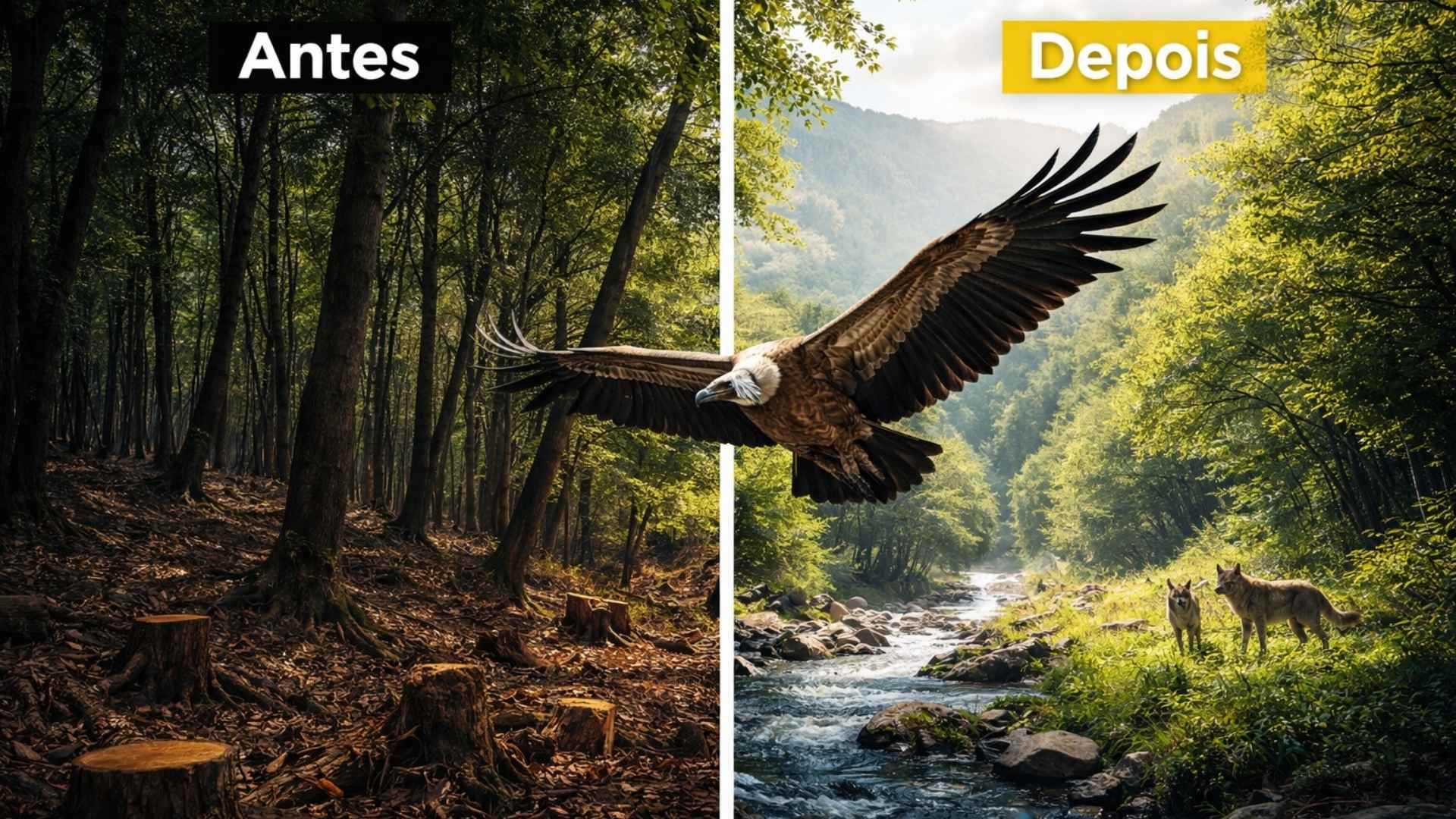


Selective Logging, Forest Management and Unusual Conservation Strategies Transform the Muga Valley in the Spanish Pyrenees into a Renaturalization Laboratory Seeking to Recover Water, Biodiversity and Ecological Functions Lost After Decades of Human Exploitation.
In the high Spanish Pyrenees, a renaturalization project in the Muga Valley has adopted a strategy that, at first glance, seems contradictory: cutting down trees to recover a forest.
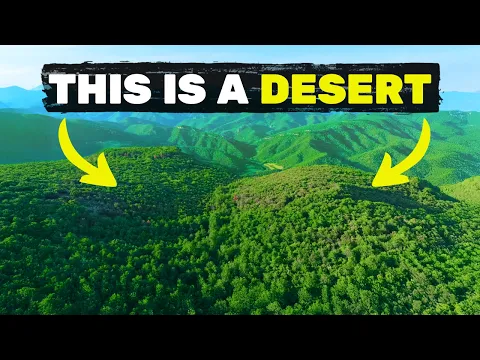
The initiative, led by the foundation Pioneers of Our Time with support from Planet Wild, seeks to reverse decades of environmental degradation associated with a type of dense and uniform forest, described by researchers as a “green desert”, for hardly supporting life in the understory and compromising the water cycle.
The proposal combines selective forest management, restructuring sections of forest, and measures to attract scavenger birds, such as vultures, considered key pieces for the functioning of the ecosystem.
-
Running 5 km Backwards in 30 Minutes: The Unusual Routine of Moisés, the “King of Reverse” from Brazil, Started as a Bet with a Friend

-
Woman Finds $1,200 Diamond Bracelet Hidden in $8 Goodwill Thrift Store Bag
-
Construction Workers in Germany Uncover Nearly Intact 29-Ton StuG III Tank Buried for 80 Years
-
Ohio Restaurant Owners Close for a Week to Take All 60 Employees on a Bahamas Cruise with Full Pay


According to the Planet Wild campaign itself, the mission financed the restructuring of 10 hectares of forest and the installation of five dummy traps to stimulate the return of these birds to the valley, as well as the marking of two individuals with GPS for monitoring.
Dense and Depleted Forest Due to Centuries of Exploitation
From a distance, the Muga Valley may seem like a preserved refuge.
However, appearances can be deceiving, according to those responsible for the project.
The area has been shaped by centuries of exploitation linked to charcoal production, favoring repeated regeneration and, over time, the formation of a very closed oak forest, with little plant diversity and little light reaching the ground.
In such a scenario, the forest remains “standing,” but loses basic functions.
The understory becomes impoverished, the soil tends to degrade, and water encounters more difficulty in infiltrating, nourishing springs and sustaining watercourses.
This is why, in the project’s presentation, the organizers sum up the diagnosis directly: “If you look at it, it seems healthy, but it really isn’t. It is under great stress.”

Water Crisis and Impacts on the Muga River
The recovery of the valley occurs in a context of increasing pressure on water in Catalonia.
In recent years, the region has faced drought episodes that led authorities to declare a water emergency in different areas, including municipalities supplied by the Fluvià-Muga aquifer.
In one of these measures, 22 municipalities returned to emergency mode due to drought, with consumption restrictions.
The impact of the lack of water was also visible in the Darnius-Boadella reservoir, linked to the Muga River.
In February 2024, the sharp drop in the reservoir’s water level completely exposed structures of an old industrial facility from the 18th century, the Royal Foundry of Sant Sebastià de la Muga, associated with the production of ammunition for cannons, which normally remains submerged.
It is against this backdrop that the project in the Muga Valley insists on a central idea: without adjusting how the forest “holds” or “loses” water, the river weakens, the impacts of drought intensify, and the landscape becomes more vulnerable to fires.
Tree Cutting as an Environmental Restoration Strategy
The method applied in the valley is not total deforestation, but selective cutting.
The logic is to open clearings and reduce the canopy density, allowing more light and moisture to reach the ground.
As a result, the understory vegetation tends to recover, the soil gains micro-habitats, and the hydrological cycle can improve, with water returning to infiltrate and nourish the springs and streams that sustain the river.
In Planet Wild’s communication about the mission, the group states that this measure is part of a plan to “bring the river back” and restore the health of the soil and understory.
The same campaign states that the original scenario, despite being green, functioned as a “green desert” precisely for blocking light, suffocating the understory and sucking water from the ground.
The initiative is part of a larger operation.
Pioneers of Our Time states it operates in 100,000 hectares in the Muga Valley, with an area defined as a living laboratory of 10,000 hectares to test regeneration solutions at the landscape scale.
Return of Species and Ecological Balance
As sections of the valley become more open and with greater diversity of microenvironments, the expectation is to encourage the return of animals that depend on water and more functional ecological corridors.
According to Planet Wild’s description, the process has already allowed for the observation of species such as otters and crayfish in areas linked to the river, as well as the registration of returning predators and herbivores, such as wolves and deer.

Even with this recovery, the organizers claim that an essential component was missing to close the ecological cycles: scavenger birds.
Importance of Vultures for Environmental Health
Vultures are often viewed with suspicion, but they are considered fundamental in many natural systems.
These birds consume dead animals and reduce the presence of carcasses in the environment.
Part of this role is linked to their ability to digest highly contaminated materials.
Conservation institutions describe some species as having extremely strong stomach acid, capable of neutralizing microorganisms present in decomposing meat.
International research also points out that the collapse of vulture populations can have indirect effects on public health.
Studies and analyses in India relate the decline of these birds to changes in carcass disposal dynamics and worsening sanitary conditions in certain regions.
In the Muga Valley, Planet Wild states that vultures had disappeared from the area and that the mission aims to support the return of these birds to restore this ecological function.
Dummies, Visual Baits and Controlled Feeding
The project’s most unusual strategy is the use of visual baits.
The campaign describes the installation of five dummies positioned as lures to attract vultures, social birds that can be influenced by the presence of other individuals when choosing landing and nesting sites.
“Believe it, there is a method to this madness.”
In addition to the dummies, the plan includes feeding points to provide an initial advantage while the natural food chain reestablishes itself.
Planet Wild claims to have set up feeding stations and implemented GPS tracking on two animals to monitor movements and the process of returning to the valley.
In a promotional publication related to the mission, Planet Wild also states that it has cut down 10,000 trees as part of the forest management intervention.
With ongoing monitoring and the opening of sections of the forest, the declared goal is for the valley to function more resiliently, with water circulating, greater habitat diversity, and species returning without indefinitely relying on supplemental feeding.
If a forest can seem healthy and yet fail to sustain water and biodiversity, what other green deserts may be hidden in landscapes that now seem intact?


