Portuguese
  Spanish


On Marajó Island, in Pará, police patrol flooded areas mounted on buffaloes. The practice has become a cultural symbol, attracting tourists and was recognized as a historical heritage of the state.
In the town of Soure, in the heart of Marajó Island, Pará, the Military Police found a solution as curious as it is efficient to tackle one of the most challenging terrains in the country.
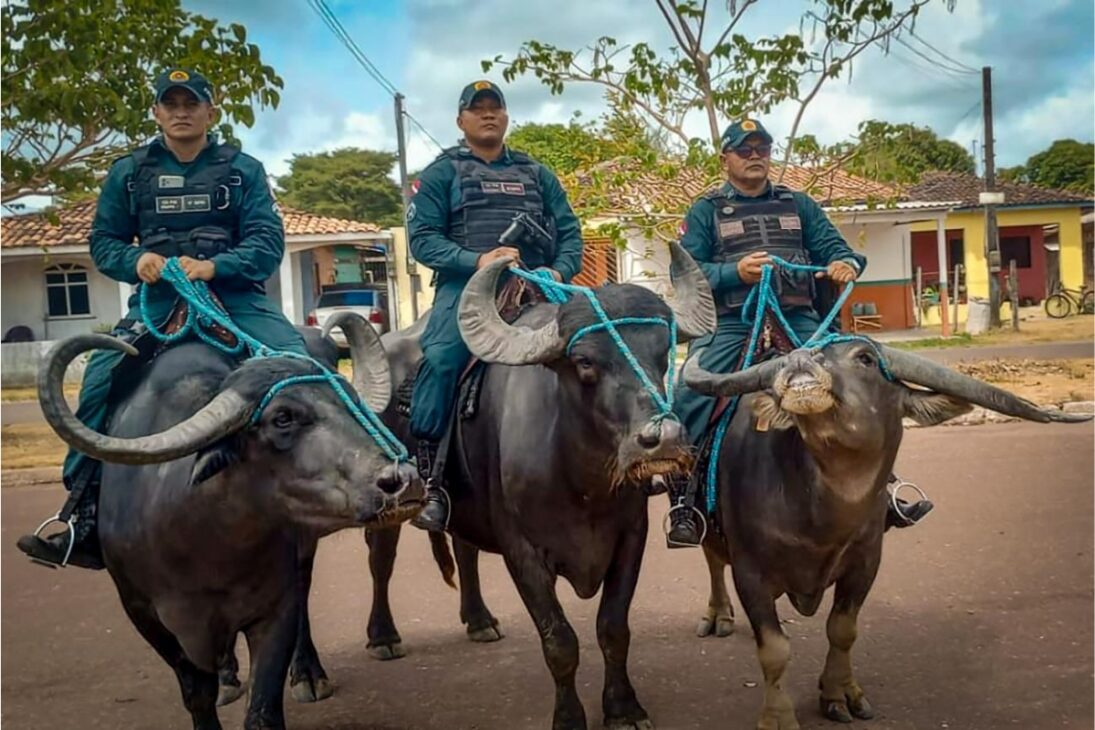
Instead of cars, motorcycles, or horses, the police patrol the flooded streets and fields mounted on Asian buffaloes, strong, docile animals perfectly adapted to the mud and shallow waters of the region.
What started as a practical necessity has transformed into a true cultural symbol of the island and one of the most emblematic images of the Brazilian Amazon.
-
65-year-old man lived in Arizona forest for 8 years, built illegal campsite, and accumulated half a ton of trash before being discovered by U.S. Forest Service agents

-
Former Biology Teacher Turns Financial Education App into a $1.2 Million Success in Brazil

-
Brazilian Entrepreneur Launches Staff-Free Laundry Chain with 636 Locations Nationwide, Generating $5 Million in Revenue
-
From Painting Houses in the U.S. to Producing Beyoncé and Paul McCartney Shows, Entrepreneur Opens Luxury Hotel in Brazil’s Trancoso with $8 Million Revenue Goal


The swampy soil and unstable terrain of Marajó have always hindered the work of security forces. At certain times of the year, the tide floods streets, pastures, and trails, making the ground almost impassable for conventional vehicles.
It was in this context that the idea emerged to utilize one of the region’s greatest assets: the buffalo. Introduced to the island over a century ago, the animal has become part of the local identity and is used for transportation, livestock, and now, in police operations.
The 8th Military Police Battalion, based in Soure, officially sanctioned the use of buffaloes in 2021, but the practice had already existed informally for decades.
The Marajoara Symbol of Security
The experience has proven so effective that the initiative quickly drew attention beyond Pará. The buffaloes are resilient, endure long hours of travel, and easily traverse the floodplains where even boats cannot operate properly.
The police receive specific training to handle the animals, which are prepared from a young age for urban coexistence and operational environments.
In Soure, residents are accustomed to seeing the pairs formed by police and buffaloes calmly circulating among the streets and rural areas, creating a unique scene that combines tradition and efficiency.
Over the years, mounted patrols on buffaloes have transitioned from being merely a logistical necessity to representing the very spirit of the Marajoara community. The battalion’s emblem features the image of the animal, and in March 2024, the state government officially recognized buffalo policing as an intangible cultural heritage of Pará.
This measure consolidated the practice as part of the island’s identity, reinforcing the bond between public security, culture, and tourism. Today, visitors arriving in Soure often find themselves surprised by the presence of uniformed buffaloes, and many are keen to photograph the scene, which has become one of the main attractions of the region.
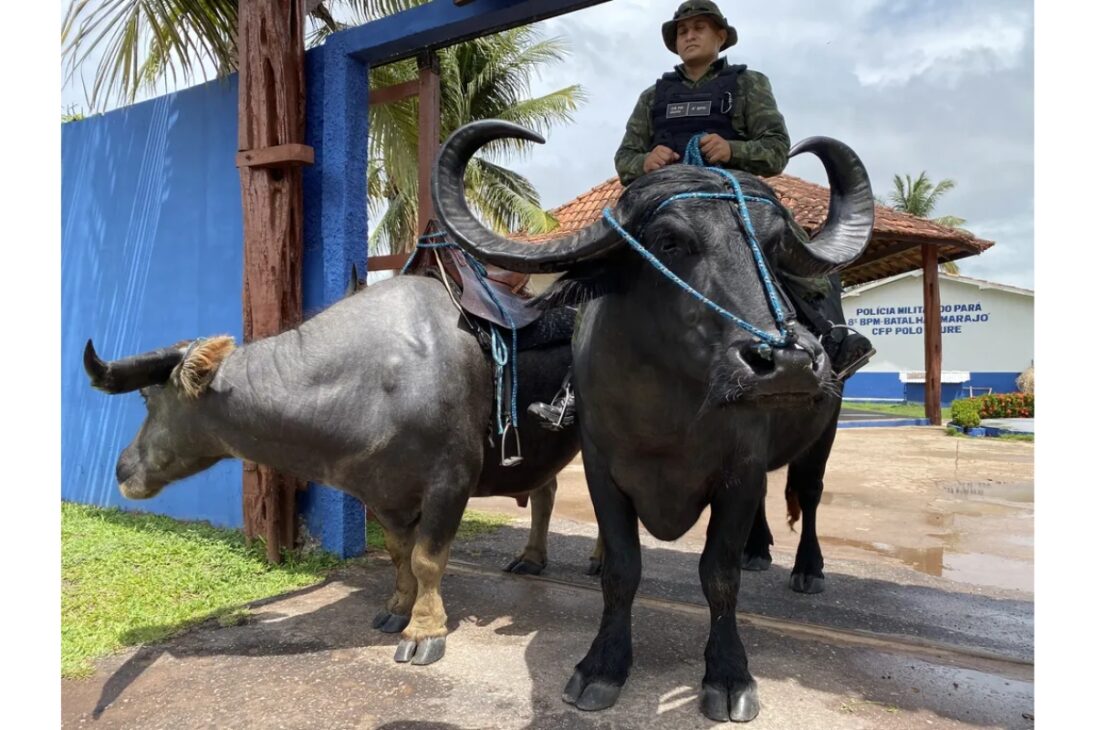
In addition to ensuring security in hard-to-reach places, the initiative has helped strengthen local tourism and promote Marajoara culture throughout the country. National media reports highlight the animals’ friendliness and the perfect adaptation between nature and human work.
In a territory where the buffalo is already part of the economy and food supply, police patrols with these animals seem a natural consequence. According to the police force itself, most officers were born on the island and know how to ride from a young age, which facilitates training and bond with the animals.
Challenges, Recognition, and Legacy
Despite all the success, the project also faces challenges. Keeping the buffaloes requires specific care regarding food, rest, and hydration, as they need to stay in humid areas to cool off.
There is also the constant work of training and socialization to ensure the animals remain calm in urban situations and when interacting with tourists. Nevertheless, the practical results and symbolic impact justify the effort: the buffalo policing has expanded the Military Police’s presence in previously inaccessible areas and has become a reference for integrating nature and public security.
More than just a patrol method, the initiative symbolizes the ingenuity and adaptability of the Amazonian people. The force of nature, which has long been an obstacle, has transformed into an ally.
Soure, known as the “capital of the buffalo,” is now also remembered as the only place in Brazil where the police patrol mounted on these animals, combining tradition, efficiency, and a touch of originality that inspires admiration among those who visit the island.


The buffalo patrol in Soure is an example of how public power can reinvent itself in the face of the extreme conditions of the Amazon, respecting the environment and valuing local culture.
More than just a curiosity, it is a lesson in harmonious coexistence between man and nature, a partnership that, in Marajó, remains strong, imposing, and proud, just like the buffaloes that roam its flooded fields.