Portuguese
  Spanish


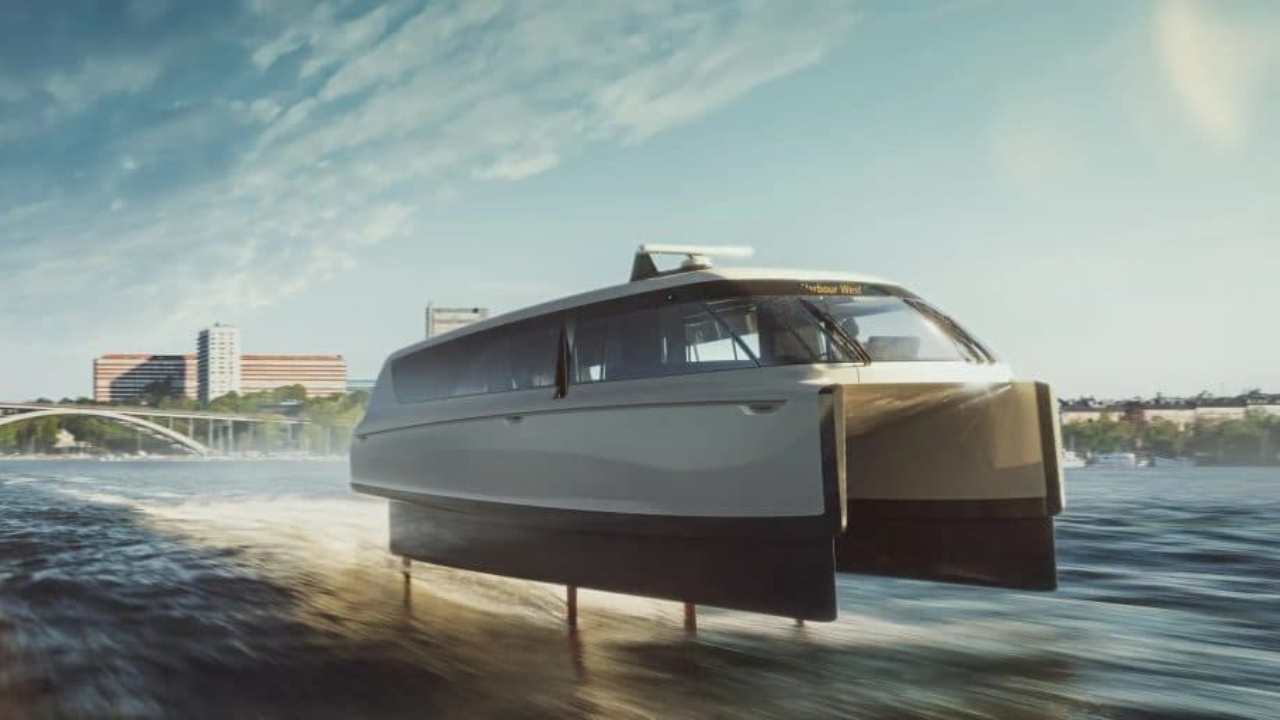


In Stockholm, the Swedish company Candela developed the electric ferry P 12 Shuttle with a speed of 55 km per hour, a range of 92 km, and a capacity for 30 passengers, to reduce travel time and cut up to 95 percent of energy consumption in water transport.
An electric ferry capable of practically flying over the water is about to change urban transport in Sweden. The company Candela presented the P 12 Shuttle, a 12-meter model that combines speed, efficiency, and advanced stabilization technology.
The project draws attention for its bold proposal. The vessel can reach 55 km per hour, equivalent to 30 knots, maintaining stability even at high speeds.
The goal is clear: to replace diesel ferries and transfer passengers from the pavement to the water, more quickly and with less environmental impact.
-
Engineers Develop Fridge-Sized Machine to Produce 95-Octane Synthetic Fuel from Air and Water, Aiming to Sustain Combustion Engines Without Oil

-
Two-Armed Robot Uses AI to Reassemble Destroyed Pompeii Frescoes, Solving an “Impossible” Puzzle
-
New Law in Brazil Requires Breaks for Type 1 Diabetes Management at Work, School, and Public Exams

-
Scientists Confirm “Greening” of Antarctica: Ice on the World’s Coldest Continent Turns Green as Mosses Multiply Over Tenfold in Four Decades


System with 100 Micro-Adjustments Per Second Creates Flying Effect Over the Water
The main differentiator lies in the electronically controlled hydrofoils.
The system performs 100 micro-adjustments per second, allowing the catamaran to rise from the surface and drastically reduce friction with the water.
This effect creates a stable and smooth trajectory, described by the company as a flight over the water. The technology was also designed to reduce seasickness, benefiting more sensitive passengers.
The result is a comfortable navigation experience even at high speeds.

Speed of Up to 55 km Per Hour with a Range of 92 km Per Charge
The P 12 Shuttle has a capacity for up to 30 seated passengers and weighs 8.5 tons.
The range reaches 92 km per charge when operating at up to 46 km per hour, a speed considered economical and still fast for urban travel.
Energy efficiency is impressive. According to the company, consumption is 0.1 kWh per passenger per kilometer, representing a 95 percent reduction compared to traditional commercial ferries.
The battery has 180 kWh and accepts high-speed charging above 200 kW in direct current, allowing for a recharge in less than an hour.
First Route Will Connect Stockholm City Center to the Suburb of Ekerö
Production of the vessel will begin later this year, and the first operation is scheduled to connect the center of Stockholm to the suburb of Ekerö.
Currently, the journey takes about 55 minutes using subway, bus, diesel ferry, or car during peak hours.
With the P 12 Shuttle, the estimated time drops to about 25 minutes.
This represents nearly an hour of savings per day for those who make the trip daily, according to Candela.

Pilot Project Will Last Nine Months and Could Expand Electric Fleet
The pilot project in the Stockholm region will last nine months.
If the results are positive, the company plans to significantly increase the number of flying electric ferries in local transport.
The proposal goes beyond replacing diesel vessels. The goal is to turn water into a real alternative to land traffic, with less emissions and greater efficiency.
The electric ferry from Candela shows that innovation and sustainability can go hand in hand in urban transport, combining a speed of 55 km per hour, a range of 92 km, and a 95 percent reduction in energy consumption, a scenario that could redefine mobility in cities with rivers and archipelagos.
Would you use an electric ferry that practically flies over the water to save almost an hour a day on your commute? Let us know in the comments.