Portuguese
  Spanish


Santa Catarina is a national leader in 12 agribusiness production chains and is among the top five producers in Brazil in more than 50 segments, according to the second edition of the Santa Catarina Agribusiness Map, prepared by the Federation of Business Associations of Santa Catarina. The study will be launched on Thursday (28) in Florianópolis and gathers data from IBGE, Ministry of Labor, Federal Revenue, and MDIC. Since 2024, Santa Catarina has obtained four new Geographical Indication seals granted by INPI.
Santa Catarina produces everything, and in many cases produces more than any other state in Brazil. The Santa Catarina Agribusiness Map 2026, prepared by FACISC, confirms the state’s leadership in 12 national production chains, highlighting apples, pork, fish, oysters, scallops and mussels, knit fabrics, and wooden frames. According to information released by the NSC portal, the survey shows that Santa Catarina not only leads in primary products but also in higher value-added segments such as clothing, fabric dyeing, fish preserves, and rope products.
The study will be launched on Thursday (28) at the FACISC headquarters in Florianópolis and expands the methodological reach of the first edition with estimates for all Brazilian states. The database includes information from IBGE, the Ministry of Development, Industry, Commerce and Services, the Ministry of Labor, and the Federal Revenue, crossing production, employment, number of companies, and foreign trade. The novelty of this edition is the inclusion of the agribusiness startup ecosystem, in partnership with the Santa Catarina Technology Association.
The 12 chains in which Santa Catarina leads Brazil

The list of national leaders from Santa Catarina is diverse and spans sectors from agriculture to industry. The state is the largest Brazilian producer of apples, pork, various fish, oysters, scallops and mussels, mollusk seeds, and canned fish. In the textile industry, it leads in garment making, fabric dyeing, and knit fabrics. In the wood chain, it dominates in frames and artifacts, as well as rope artifacts.
-
Small Farm in Brazil’s Minas Gerais Produces 403 Liters of Milk Daily, Sets Benchmark for Rural Producers

-
Man Revives 1930s Abandoned Trout Farm, Learns from Scratch, and Earns $1.1 Million Annually Selling Fish to Michelin-Starred Restaurants

-
Bangladeshi Farmers Use Bamboo Levers to Pump Thousands of Liters of Water Daily Without Engines or Electricity
-
Brazilian Forests Could Expand by an Area Twice the Size of Switzerland by 2035, but Agricultural Sector Holds the Key, Study Finds



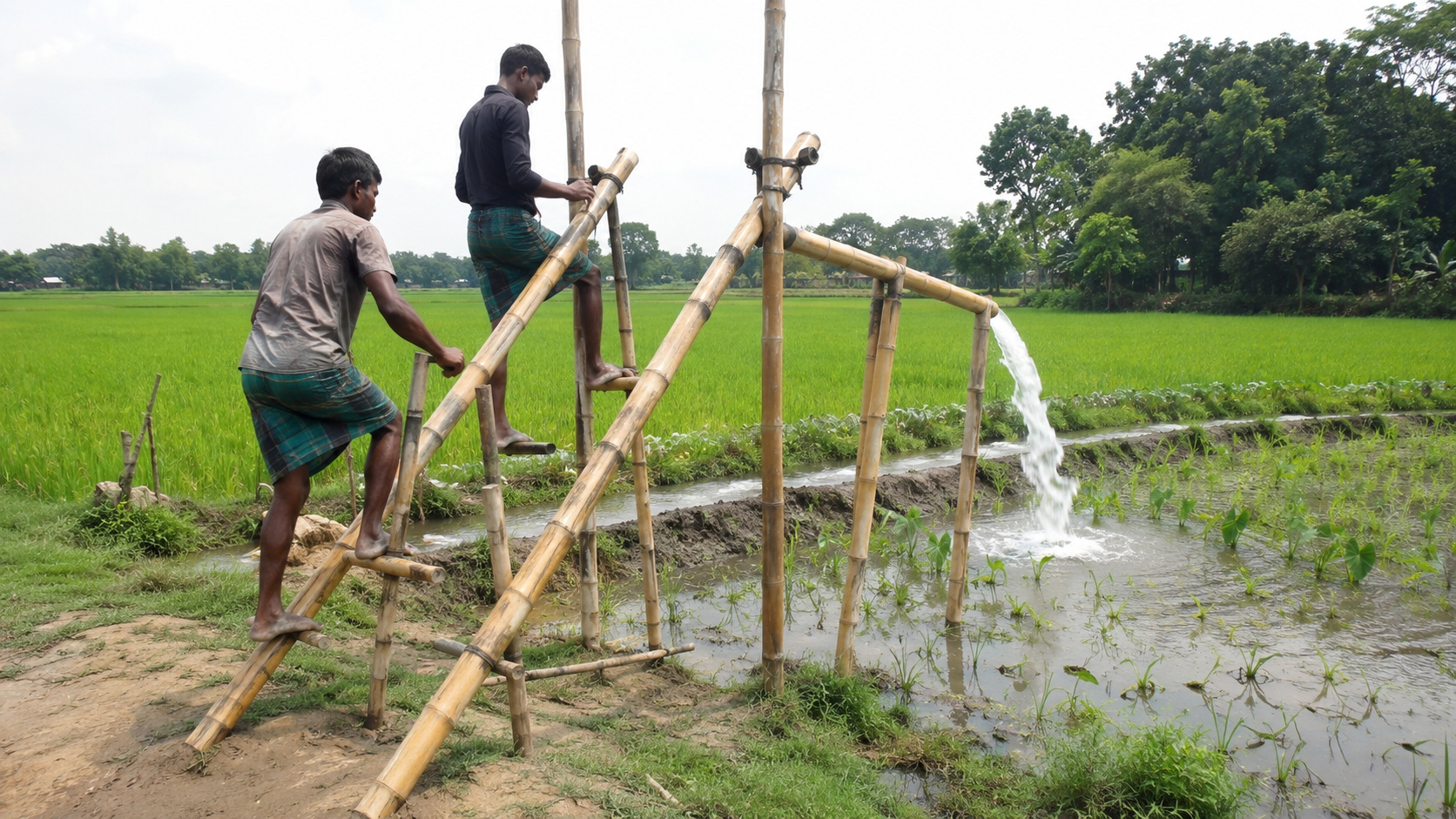

This diversity is what sets Santa Catarina apart from states that depend on one or two commodities. While Mato Grosso leads in soybeans and Minas Gerais in coffee, the agriculture of Santa Catarina spreads its strength across dozens of segments, which reduces vulnerability to sectoral crises and price fluctuations. The strong presence of family farming, combined with large agro-industries like BRF and Aurora, creates a productive ecosystem that few states can replicate.
The weight of agro-industry and services in the agriculture of Santa Catarina
The Agro Map 2026 makes it clear that the agribusiness of Santa Catarina goes far beyond primary production. Sectors such as processed foods, paper and cellulose, wood and furniture, machinery and equipment, logistics, and storage are part of the productive chain of Santa Catarina and account for a growing share of the value generated by agriculture in the state.
Lenoir Broch, director of Railways and Agribusiness at FACISC, defined the sector as “a broad, integrated, and highly diversified system that connects agriculture, industry, services, and commerce.” The integration between primary production and industrial transformation is what allows Santa Catarina to export not only raw materials but also products with higher added value, such as processed meats, preserves, and ready-to-eat foods.
The four new Geographical Indication seals
Since 2024, Santa Catarina has obtained four new Geographical Indication seals granted by the National Institute of Industrial Property. This mechanism certifies the quality, tradition, and unique characteristics of regional products, functioning as a guarantee of origin that adds commercial value and differentiates the product from Santa Catarina in the national and international market.
Geographical Indications protect products that have a direct link with the territory where they are produced, such as wines, cheeses, fruits, and mollusks. For Santa Catarina, which already led in the production of oysters and mussels, the certification reinforces its reputation and opens doors to markets that require traceability and proof of origin.
The logistical bottleneck that hinders the agriculture of Santa Catarina
Despite the impressive production numbers, Santa Catarina faces a problem that limits its competitiveness: distribution. The state’s transportation matrix is still concentrated on highways, which raises costs, increases deadline variability, and reduces operational efficiency for products that need to reach the port or consumer market quickly and predictably.
Broch pointed to the railway as a structuring axis to solve this bottleneck, arguing that rails reduce the cost per ton, increase logistical capacity, and provide greater predictability to the flow of cargo. The FACISC study also cross-references production and export dispatch data to identify distortions between producing municipalities and customs zones. Leadership in 12 production chains is consolidated by FACISC data that reveals that part of the wealth generated in the Santa Catarina countryside is accounted for in other states due to inefficient logistical routes. The ambition is that leadership in the 12 chains translates into effective revenue for the producing municipalities.
Did you know that Santa Catarina leads Brazil in 12 agribusiness chains, from apples to oysters? Which Santa Catarina product surprises you the most? Tell us in the comments.