






 Portuguese
  Spanish


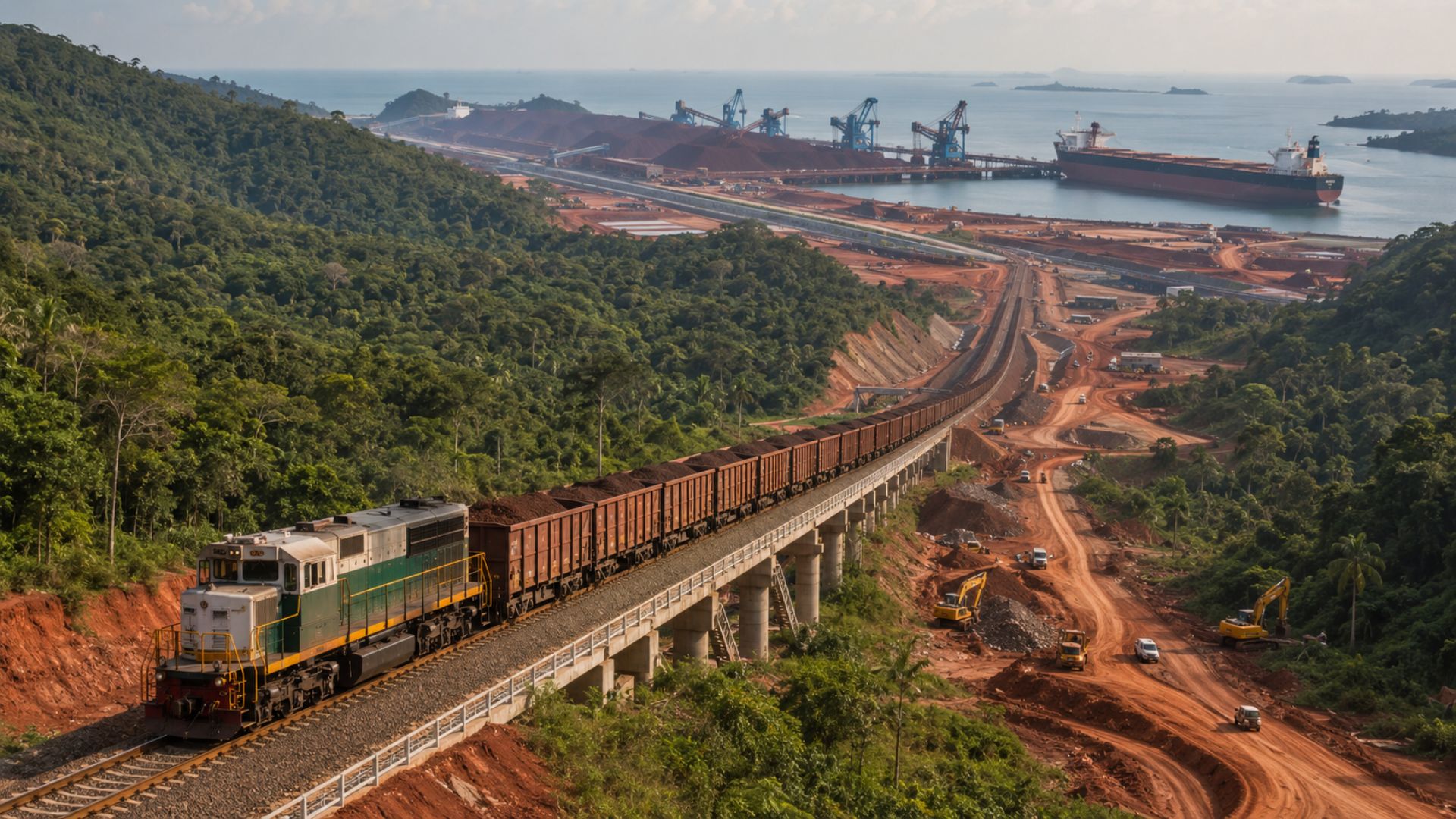

The RTM Cartier ship delivered on March 25, 2026, the first 201,500 tons of iron ore from the Simandou deposit in Guinea to the port of Dalian in China. The megaproject involved investments exceeding 20 billion dollars, the construction of more than 600 kilometers of railway, and a deep-water port. Simandou’s iron ore has a purity level of 65%, a premium classification that places the product among the most valuable in the world. The IMF predicts that the operation will increase Guinea’s GDP by 26% by 2030.
The largest unexplored iron ore deposit on the planet has finally begun to produce and deliver. The first 201,500 tons of iron ore extracted from Simandou in Guinea arrived at the port of Dalian in China on March 25, 2026, aboard the cargo ship RTM Cartier. According to information from the portal Catraca Livre, the shipment marks the beginning of a commercial flow that took more than two decades to materialize, involving military coups, corruption scandals, corporate disputes, and an investment exceeding 20 billion dollars in infrastructure that includes mines, railway, and port built in one of the most remote regions of West Africa.
Simandou’s iron ore has an average purity level of 65%, placing it in the premium segment of the global market. China, which consumes more than 70% of all iron ore traded in the world, received the shipment as a sign that a new supply source is finally operational. The production forecast for 2026 is 20 million tons, with expectations to reach 40 million in 2027 and 55 million in 2028, until reaching the full capacity of 120 million tons annually.
What is Simandou and why did it take so long

Simandou is a mountain range in southeastern Guinea that hosts estimated reserves of 2.8 billion tons of high-grade iron ore. The deposit was first identified in the 1950s when Guinea was still a French colony, but it remained untouched for almost 70 years due to geographical isolation, political instability, and the logistical complexity of extracting iron ore from a rainforest and transporting it to the coast.
-
China’s Engineered Bamboo: The “Material of the Future” Stronger Than Steel and a Sustainable Wood Alternative

-
Egypt’s “New Nile”: 170 km Artificial River Aims to Turn Desert into Farmland, but Water Supply Concerns Loom
-
Unable to secure a mortgage as a self-employed single mother, she designed her own floating home from a 20-meter boat and now lives “off-grid” with her two children and solar panels on an English canal.
-
Man Transforms Rusty Shipping Container into Luxury Home with Insulated Walls, Large Windows, and Drywall Finish, Surprising Onlookers


The project is divided into four blocks: blocks 1 and 2 are operated by the Winning Simandou Consortium, a Chinese-Singaporean consortium, while blocks 3 and 4 are explored by SimFer, a joint venture between Rio Tinto (53%) and Chinalco (47%). The Guinean government holds a 15% stake in each group and in the Compagnie du TransGuinéen, responsible for transportation infrastructure.
The railway and port that cost 20 billion dollars
To get the iron ore from the Simandou mountains onto ships, it was necessary to build infrastructure that did not exist. More than 600 kilometers of multi-use trans-Guinean railway were constructed, cutting through forests, rivers, and rugged terrain to connect the mines in the southeast to the deep-water port on the Atlantic coast.
The total investment exceeds 20 billion dollars, according to Baowu, one of the Chinese companies involved in the consortium. The railway is already transporting iron ore from the mine to the port, and the port facilities are in the final stages of commissioning. The future estimated capacity is 120 million tons annually, a volume that would place Simandou among the largest iron ore operations on the planet, alongside Australia and Brazil.
What Simandou’s iron ore changes for China
For China, Simandou represents diversification of suppliers at a time of increasing tensions with Australia and historical dependence on Brazil. Simandou’s iron ore, with 65% iron content, is ideal for steel mills seeking to reduce emissions, because higher purity ores require less energy to process and generate less waste and polluting gases in blast furnaces.
The Chinese participation in the project is massive: among Chinalco, Baowu, China Rail Construction Corporation, and other partners, Chinese companies control approximately 75% of the operations. This participation ensures priority access to iron ore and reduces China’s exposure to suppliers who may use the product as a geopolitical pressure tool, as Australia did during the diplomatic tensions of 2020 and 2021.
The impact for Guinea and the risk for Vale and BHP
The International Monetary Fund predicts that the Simandou project will increase Guinea’s GDP by 26% by 2030, transforming one of the world’s poorest countries into a relevant exporter of commodities. The revenue from iron ore, combined with the jobs generated in the railway, port, and mines, can structurally alter the Guinean economy and finance a sovereign fund that the military government already plans to create.
For mining companies like Vale and BHP, the entry of Simandou into the global market puts downward pressure on prices. BTG Pactual estimated that the initial production of 20 million tons in 2026 should not cause immediate disruption, but the advance to 55 million in 2028 and 120 million at full capacity may force higher-cost suppliers out of the market. Goldman Sachs has already adjusted projections, and the debate about the impact of Simandou’s iron ore on global prices is just beginning.
Do you think Simandou’s iron ore will drive prices down and affect Vale, or will the market absorb the supply? What impresses you the most: the 20 billion invested, the 600 km of railway in the jungle, or the 65% purity grade? Tell us in the comments.







