Portuguese
  Spanish




Canadian Company Develops Technology That Transforms CO2 Into Fuel. The Gas Is Removed From The Air And Still Pure Is Combined With Hydrogen, Generating 1 Barrel Of Fuel Per Day.
Carbon Engineering, a company from Canada, has released a study in recent weeks stating that it has developed a technology capable of transforming CO2 into fuel. Carbon dioxide is extracted from the atmosphere at a lower cost than other technologies already developed. The company’s scientists estimate that for every ton of carbon captured, the cost is 100 Canadian dollars.
Company From Canada Uses Gas To Transform CO2 Into Fuel
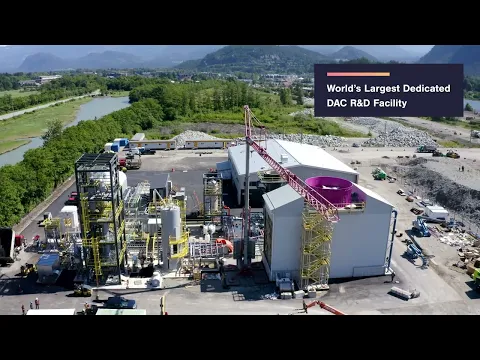

The technology developed by the company is sponsored by Bill Gates, an American billionaire who developed a very similar technique currently used by the Swiss company Climeworks.
The difference between the two technologies is the cost of the process. When it opened about a year ago, the Swiss company’s process cost 600 dollars per ton, with an expectation of decreasing to 100 dollars only in 2025, an initial value that is what the Canadian company charges to transform CO2 into fuel.
-
She spent 73 years breathing inside an iron lung, survived the aftereffects of polio, and became the last woman in the United States dependent on the equipment before dying at 78 years old.

-
Brazilian students created a $1 filter using pine bark, cotton, and 3D-printed parts to clean cassava wastewater, reduce the toxicity of a hazardous waste, and transform contaminated water into biofertilizer.

-
Astronaut from Artemis II steps down after mission to the Moon and decision surprises after a record of 406,771 km, a historic 10-day journey, and an unprecedented achievement for Canada.

-
A fossil kept for years in a small museum in Montreal concealed 450-million-year-old soft tissue, a discovery that has only happened once before in history.


Another major difference between the companies is how the CO2 removed from the atmosphere is used. Carbon Engineering, from Canada, uses the gas to transform it into synthetic liquid fuels. The company’s first operational plant was inaugurated in 2015 and extracts around one ton of carbon per day.
The pure gas is adjusted with hydrogen from water through clean energy, being converted into synthetic fuel. On average, the company manages to generate about one barrel of fuel per day. According to Harvard University professor and co-founder of Carbon Engineering, David Keith, in an interview with the BBC, the long-term plan of the Canadian company is to generate about 2,000 barrels of fuel per day.
Lack Of Government Incentives May Be A Major Problem
Carbon Engineering is seeking investors to develop a new plant aimed at increasing capture and transforming CO2 into fuel. However, industry observers argue that the Canadian company will face significant challenges in expanding operations due to a lack of government funding and subsidies.
Meanwhile, Edda Sif Aradóttir, from Reykjavik Energy, a partner of Climeworks in the Icelandic project that turns carbon into rocks, states that the lack of government policies to promote such activities is a major issue. Aradóttir highlights that technical solutions to prevent climate change are already available; however, countries’ legislation does not provide sufficient funding or obligations for them to be utilized on a large scale.
Over 36.3 Billion Tons Of CO2 Are Emitted Annually
Despite knowing that there will be several obstacles in the work done by the company, David states that there is much to be done to reduce CO2 in the atmosphere and to provide options for transportation methods that cannot use energy as a source of fuel.
For liquid fuels, the way forward is this approach, of CO2 from the air plus hydrogen obtained. In 2020, when the world was impacted by the coronavirus pandemic, studies indicate that 1.9 billion tons of carbon dioxide were emitted into the atmosphere, a reduction of 5.2% compared to the previous year.
In 2021, emissions exceeded 36 billion tons. According to data, the global economy heavily relied on coal to recover, resulting in a significant increase in pollution. This fossil fuel accounted for over 40% of the overall increase in CO2 emissions in 2021.