Portuguese
  Spanish


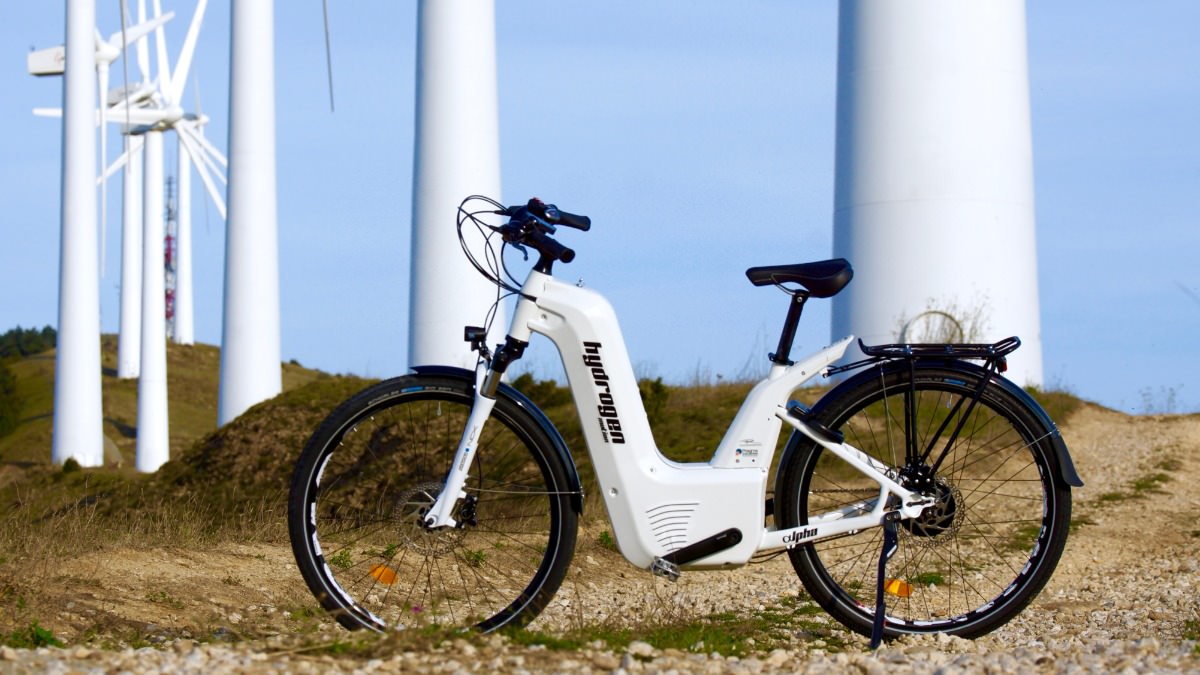


Pragma Mobility, A Company From France, Developed a Hydrogen-Powered Bicycle Capable of Delivering a Range of 150 km.
Before the arrival of current electric bicycles, another sustainable mobility solution emerged in 2007, with the development of a hydrogen fuel cell bicycle, a kind of hybrid vehicle that sits between a motorcycle and a bicycle. More than ten years later, the French company Pragma Mobility is attempting to revive the idea. One of its most recent projects is the Alpha, a bicycle that, according to the manufacturer, provides about three times the average range of an electric bicycle, without having to wait hours for charging.
Hydrogen-Powered Bicycle Offers a Range of 150 km


The innovation has just hit the market as the Alpha Neo model. The model resembles an electric bicycle and is equipped with a hydrogen cell instead of a battery. According to the French company, the vehicle can be refueled in under two minutes.
The hydrogen-powered bicycle is driven by a 250-watt electric motor with a peak power output of 350 W. The maximum speed is limited to 25 km/h to meet electric bicycle regulations in Europe. As for the energy source, its small hydrogen fuel cell provides an estimated range of up to 150 km. The Alpha Neo is priced at 5,690 euros, just over R$ 31,000 at current exchange rates.
-
End of an era in Brazil: beloved sedan by Brazilians is discontinued despite having a 2.0 engine with 151 hp, CVT transmission, 466-liter trunk, and up to 650 km of range.

-
New Law Proposal in Brazil Could Heavily Penalize Drivers: Dangerous Overtaking May Become a Serious Offense with Fines Increased Tenfold and a 12-Month License Suspension; Update on 2026 Progress

-
Electric Revolution: Watts W125 Motorcycle Offers 160 km Range, 90 km/h Speed, and Affordable Price Starting at $3,000
-
General Motors Replaces Over a Thousand Workers with 50 Cobots at Electric Vehicle Plant, UAW Union Criticizes Move Amid Industry’s Automation Push




To make purchasing the hydrogen-powered bicycle easier, the company is offering the bicycle through a long-term rental scheme. This way, customers pay an upfront fee of 1,700 euros, the equivalent of R$ 9,3 thousand, and the remainder is divided into monthly payments of 79 euros.
Finally, the vehicle’s good performance also depends on more hydrogen stations. Thus, it could be a new trend in the Old Continent with the advancement of more refueling stations.
StudioMom Develops Hydrogen Bicycle With a Range of 300 km
The Dutch design office StudioMom developed the LAVO bicycle, a hydrogen-powered transport concept. Commissioned by Providence Asset Group and in collaboration with the University of New South Wales Sydney, Hyper Kid, and Elian Steering, the model’s design utilizes hydrogen storage technology developed in Australia.
According to the office, at the launch of the concept, hydrogen technology promises emission-free energy and makes it possible to transport three times more energy compared to a state-of-the-art battery.
Small-scale transport combined with hydrogen is finally solving the problem of short range. As a result, the cargo bicycle can serve as an alternative to cars for transporting goods over longer distances.
Green Hydrogen Could Be the Future of Fuels
Hydrogen is the most abundant chemical element in nature, and its relationship with the industry goes back a long way. This gas has been used as fuel since the early 19th century in cars, spacecraft, and airships.
The decarbonization of the global economy, an urgent process, will highlight it further, and if its production reduces its price by 50% by 2030, we will be facing one of the fuels of the future. This energy source has several essential advantages, including being completely sustainable, emitting no pollutants either during combustion or production.
Hydrogen is easy to store, allowing for later use in various applications and at different times than its production.