Portuguese
  Spanish


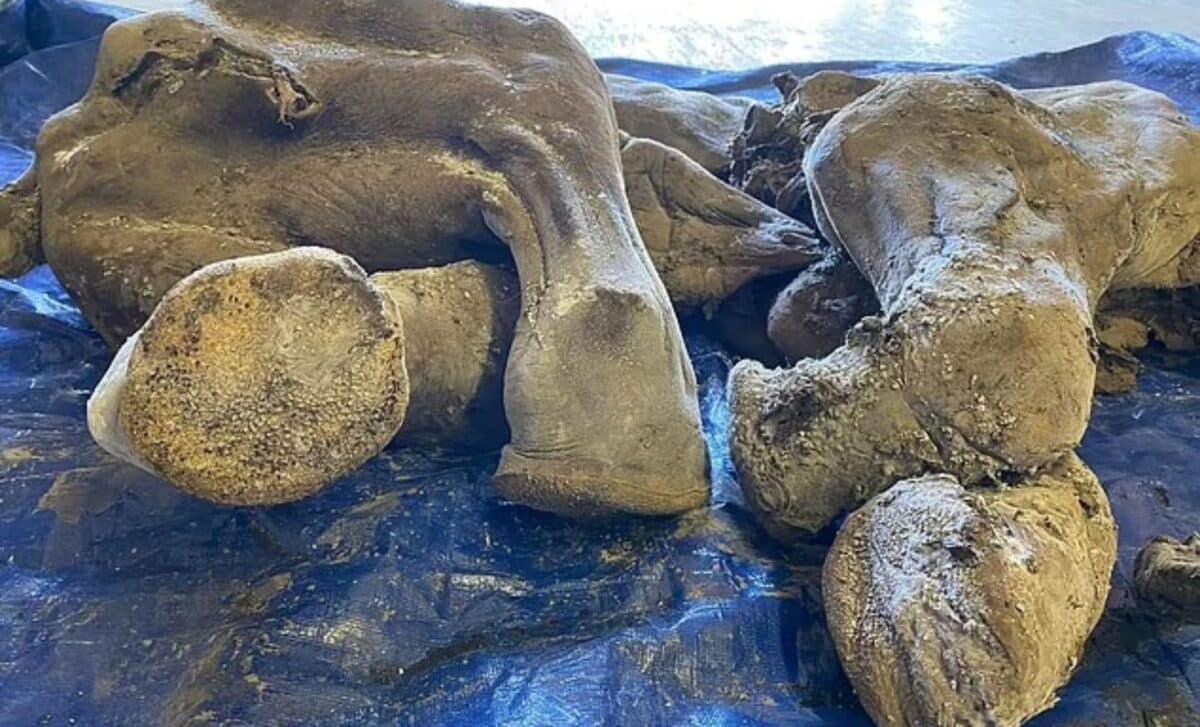

Discovered In Tribal Lands Of Yukon, The Nun Cho Ga Mammoth Impresses With Its Preservation And Reinforces Research On Life In The Ice Age
Gold miners in the Klondike gold mines, in Yukon, Canada, found a rare woolly mammoth calf in an impressive state of preservation. The discovery occurred on the tribal lands of the Trʼondëk Hwëchʼin, who named the animal “Nun cho ga,” which means “big baby” in the Hän language. According to experts, it is the most complete mammoth ever discovered in North America.
Ice Age Mammoth
The Nun cho ga calf belongs to the species Mammuthus primigenius, also known as the woolly mammoth. These animals lived during the Pleistocene, a period that preceded the Holocene when the species became extinct.
They are one of the most studied prehistoric animals, mainly due to preserved specimens found in Siberia and Alaska.
-
Pennsylvania Mine Creates Ice in Summer Heat and Melts in Winter, Turning a Mountain Crevice into a Reverse Natural Refrigerator

-
China Accelerates Global Expansion of Robotics: From Smart Vacuums to Industrial and Humanoid Machines, Millions Exported to Over 150 Markets
-
Polar Air Mass to Hit Brazil: Temperatures to Plummet in Nine States, Near Freezing in the South with Frost Risk Until Monday
-
Chinese “dark factories” produce electric cars 24/7 with minimal human intervention, as Zeekr assembles 800 units daily, raising concerns in Brazil.





The woolly mammoth had a size comparable to today’s African elephants. Adult males could measure between 2.7 and 3.4 meters at the shoulder, weighing up to 6 tons.
The females were slightly smaller, ranging from 2.6 to 2.9 meters and weighing up to 4 tons. Their tusks, which are striking, are actually modified incisor teeth.
Dream Come True
For Ice Age paleontologist Dr. Grant Zazula, the discovery was significant. “One of my lifelong dreams was to come face to face with a real woolly mammoth. That dream came true today. Nun cho ga is beautiful and one of the most incredible Ice Age mummified animals ever discovered in the world. I’m excited to learn more about her,” he stated.
Fossil records show that the population of woolly mammoths began to decline at the end of the Pleistocene. Nevertheless, some groups persisted in isolated areas. On St. Paul Island, they survived for about 5,600 years; on Wrangel Island, until about 4,000 years ago.
There is also evidence that small groups may have lived in Yukon until approximately 5,700 years ago, according to ancient environmental DNA found.
Found By Chance During Mining
Nun cho ga has been frozen in permafrost for over 30,000 years. At that time, Yukon hosted a diverse Ice Age fauna, such as wild horses, cave lions, and steppe giant bison.
The size of the calf is comparable to other similar finds: “Lyuba,” a 42,000-year-old calf found in Siberia in 2007, and “Effie,” a partial specimen found in Alaska in 1948.
The discovery occurred during gold mining excavations in Eureka Creek, near the Baker-Minook border. Geologists from the Yukon Geological Survey and the University of Calgary participated in the recovery of the remains.
They collaborated with the Klondike Placer Miners’ Association and the Trʼondëk Hwëchʼin community. This collaboration was essential for the success of the recovery and preservation.
Reinforcement For Scientific Research
The scientific importance of the find was highlighted by Ranj Pillai, Minister of Tourism and Culture of Yukon. He noted that the region is already recognized for its research on the Ice Age and Beringia. “Yukon has always been an internationally recognized leader in Ice Age and Beringia research. We are excited about this significant discovery of a mummified woolly mammoth calf: Nun cho ga. Without solid partnerships between placer miners, Trʼondëk Hwëchʼin, and the Yukon government, discoveries like this could not happen,” the minister stated.
Cultural And Scientific Value
The Trʼondëk Hwëchʼin community also highlighted the cultural significance of the discovery. “This is a remarkable recovery for our First Nation, and we look forward to collaborating with the Yukon government on the next steps of the process to advance these remains in a way that honors our traditions, culture, and laws,” they added.
The almost intact preservation of Nun cho ga offers a unique opportunity to deepen the studies on prehistoric life in North America. The calf now joins a select group of discoveries that help reveal more details about the fauna that inhabited the planet during the Ice Age.
With information from Daily Galaxy.