






 Portuguese
  Spanish
  5 min of reading
  0 comments


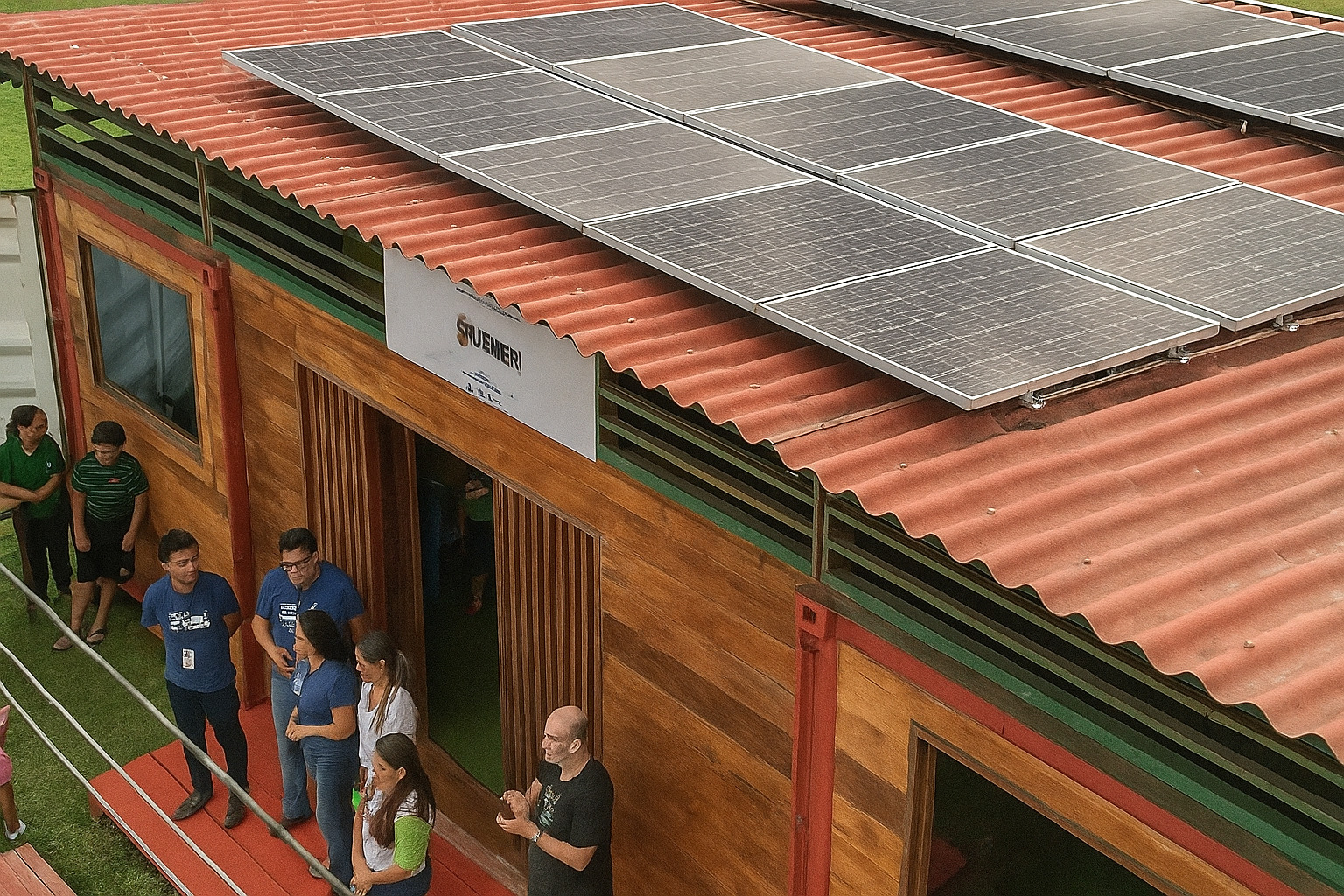
Clean Energy in Riverine Communities of the Amazon Transforms Lives by Bringing Social Inclusion, Sustainable Development, and New Opportunities to Previously Isolated Populations.
The arrival of clean energy in riverine communities of the Amazon represents much more than infrastructure. In fact, it symbolizes dignity, social inclusion, and hope for families who have lived isolated and dependent on polluting sources for decades.
In the past, electricity in the Amazon region was restricted and precarious. Firstly, many communities relied solely on diesel generators, which had high maintenance costs and a severe environmental impact.
Moreover, this model limited quality of life, restricted access to education, and compromised local economic activities.
-
Brazilian scientists are simultaneously advancing two research projects on clean hydrogen and driving solutions that could transform the energy matrix, enhance industrial competitiveness, and accelerate large-scale emission reduction targets.

-
Advancement in renewable energy: A R$ 150 million project launched by Petrobras and Finep aims to create state-of-the-art electrolyzers for green hydrogen, strengthening national research and preparing Brazil to compete in a billion-dollar energy market.
-
Illiterate or semi-literate grandmothers were trained to repair solar systems, open rural workshops, and light up homes that still depended on kerosene.
-
The world has bet on green hydrogen as the fuel of the future, but now faces the side effect: producing 1 kilogram requires about 9 liters of ultrapure water, and the largest projects on the planet are precisely in the driest regions of the Earth, where water is already scarce for people.





However, with the creation of programs like Luz para Todos and more recent initiatives like Luz do Povo, the scenario began to change significantly.
Thus, these actions not only expanded the electrical grid but also encouraged the use of renewable sources, such as solar energy and hybrid systems. As a result, riverine communities achieved safer and more sustainable conditions for living and developing.
The energy transition, therefore, did not happen suddenly but rather as a result of continuous public policies.
In this sense, at each stage, new solutions were devised to ensure not only the supply of electricity but also the social inclusion of those living along the banks of the great Amazon rivers.
In this way, energy ceased to be an urban privilege and began to become a right accessible to all.
Social Inclusion as Part of Energy Policy
When the government decided to expand investments in renewable energy to isolated areas, the objective was clear: to promote social inclusion. After all, having access to electricity also means having access to education, health, and income opportunities.
For example, in communities where energy arrived, schools gained better conditions to operate.
As a consequence, evening classes became possible, and teachers could utilize digital resources.
Additionally, healthcare also benefited. Health posts were able to store vaccines in refrigerators, operate basic equipment, and provide higher-quality care.
Thus, the arrival of energy not only illuminated homes but also strengthened essential community services.
Another fundamental point is income generation. Electricity enabled the establishment of small inns, the use of freezers for food preservation, and the expansion of activities related to community tourism.
As a result, many families began to have new sources of livelihood. Therefore, energy inclusion directly contributed to reducing social inequalities in the region.
It is important to highlight that electricity also enabled social mobility in various communities. Young people gained access to online courses, allowing them to study without needing to travel to larger cities. Additionally, local entrepreneurs were able to invest in small businesses, using electricity for equipment, lighting, and digital communication. In this way, renewable energy acts as a catalyst for opportunities that once seemed distant.
Another significant aspect is the strengthening of collectivity. With electricity, community spaces began to be used for meetings, cultural events, and educational activities. This reinforces social ties and promotes a culture of collaboration, essential for remote areas.
Solar Energy as a Sustainable Solution
Among the implemented alternatives, solar energy stood out particularly.
In communities such as Braga and Betel, in the municipality of Manacapuru, solar systems with lithium batteries were installed.
This model ensures continuous electricity supply, reduces dependence on fossil fuels, and ensures stability in supply.
Similarly, in locations such as Santa Helena and Bela Conquista, in Tefé, hybrid solutions were also applied.
Thanks to this, frequent interruptions decreased and energy security increased.
Consequently, the daily lives of families transformed as they now had regular lighting, electrical appliances, and more comfort.
Moreover, unlike diesel generators, solar energy reduces costs and minimizes environmental impacts.
Thus, it contributes to the preservation of the forest and improves quality of life.
For this reason, this renewable source has established itself as the most viable path for riverine communities seeking to grow sustainably.
It is also worth mentioning that solar energy strengthens environmental education. Schools and families learn to value sustainability, understanding the importance of caring for natural resources. Additionally, by reducing the use of fossil fuels, communities directly contribute to reducing pollutant emissions, helping to preserve local biodiversity.
Another important benefit is the capacity for local innovation. With electricity available, communities can experiment with simple technological solutions, such as automated irrigation systems, water pumps, and small home-based industries. These advances not only improve daily life but also stimulate the development of technical and professional skills among residents.
Prospects for the Future of Clean Energy in Riverine Communities of the Amazon
Although much has already been done, there are still countless challenges. In fact, thousands of families continue to live without reliable access to electricity.
However, as new technologies become more accessible and public policies strengthen, the expectation is that more communities will be benefited.
In this scenario, clean energy projects not only expand the scope of electrification but also promote autonomy.
This is because, by learning to operate and maintain energy systems, the residents themselves actively participate in the development process.
Beyond the social aspect, there is also an economic impact.
In the medium term, investments in renewable energy reduce spending on fossil fuels and create local business opportunities.
Thus, communities that were once dependent transform into protagonists of their own story.
Additionally, the expansion of clean energy can stimulate regional integration. Previously isolated communities can connect more easily, exchanging experiences, products, and services. This strengthens local production chains and creates new opportunities for economic growth.
Another important point is the empowerment of women. With electricity, many female leaders have developed their own initiatives, such as small businesses, courses, and cultural activities, increasing social participation and visibility in the community.
Therefore, the advancement of clean energy in riverine communities of the Amazon represents a decisive step toward social inclusion, sustainable development, and environmental preservation.
More than just electricity, energy has brought dignity and opened pathways for a future where everyone can have access to fair and balanced living conditions.








Be the first to react!