Portuguese
  Spanish


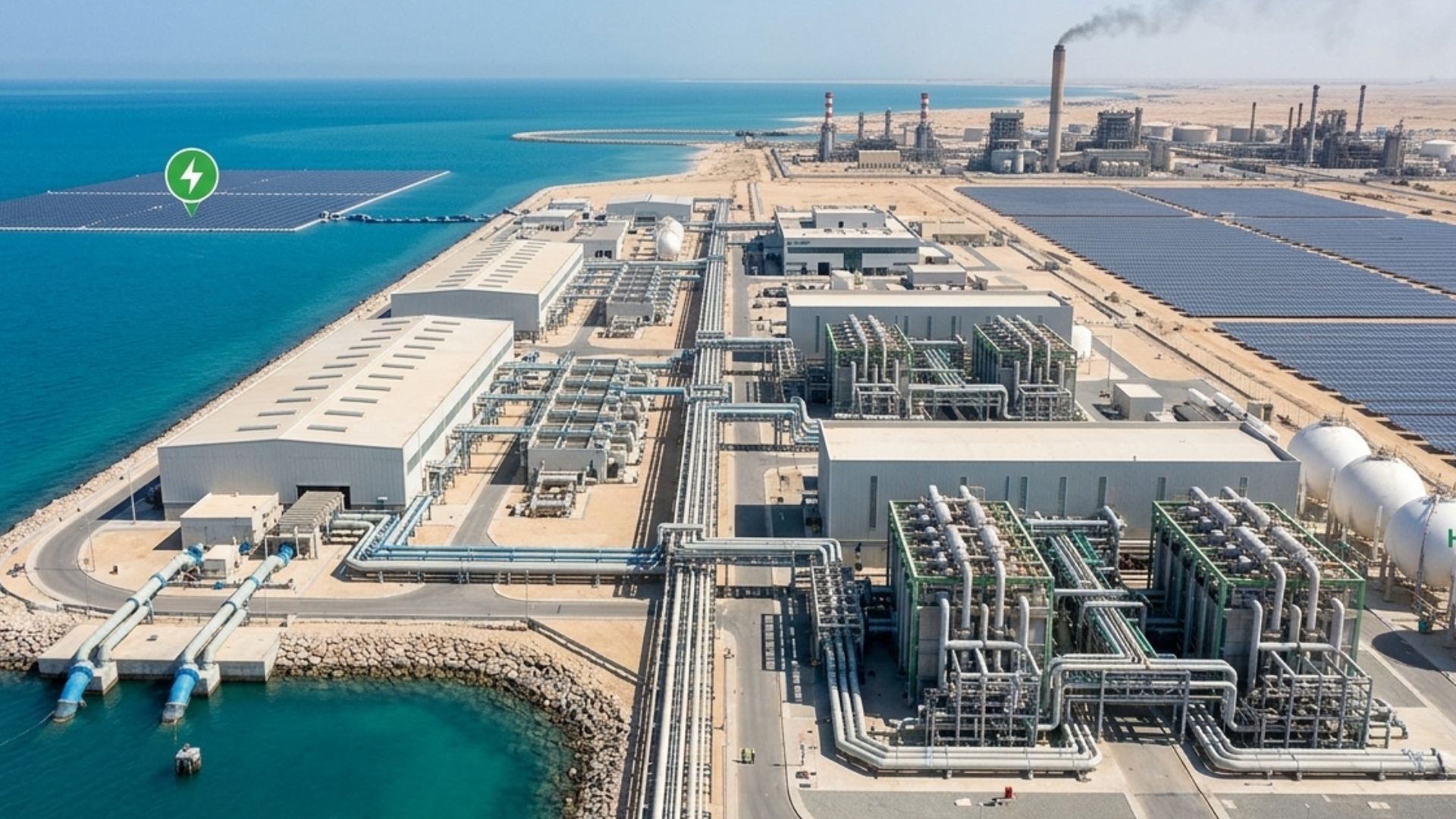

Green hydrogen promises to replace fossil fuels, but requires ultrapure water and could make desalination a central piece of the energy transition in the Gulf
Green hydrogen has become one of the most ambitious bets of the global energy transition because it can replace fossil fuels in hard-to-decarbonize sectors such as heavy industry, transportation, and power generation. However, there is a critical point that often appears less in the enthusiasm surrounding this race: it requires water, and not just any water, but high purity water. According to ORF Middle East, this detail gains special weight in the Gulf, precisely one of the most arid regions on the planet and one of those betting the most on large green hydrogen hubs.
At the chemical base of the process, the calculation seems small. Producing 1 kilogram of hydrogen by electrolysis requires about 9 liters of water. The problem arises when the scale moves from the laboratory to the industrial level. According to RMI, this basic volume increases when including water purification, equipment cooling, and auxiliary systems, raising the actual consumption to around 20 to 30 liters per kilogram in many commercial projects. In giant plants, this turns water into a strategic input, not a technical detail.
The biggest paradox of green hydrogen is that the best places for energy are usually the worst for water
The global map of green hydrogen carries a difficult paradox to overcome. The regions with the best potential to produce cheap renewable electricity, with plenty of sun, constant wind, and large available areas, are usually exactly those with the least availability of fresh water.
-
Green Hydrogen Projects in Northeastern Brazil Stalled for 18 Months Awaiting Government Decree, Delaying Billions in Investments

-
Brazil Concludes Largest Energy Auction in History, Secures 18.97 GW and Mobilizes $12.8 Billion to Ensure Supply Until 2031
-
How Norway Produces More Energy Than It Consumes with Nearly 1,800 Hydropower Plants and Over 1,100 Reservoirs

-
Axia Energia Invests $280 Million in Q1, Increases Investments by 36%, and Turns Loss into $740 Million Profit


This is why the topic has gained so much traction in the Gulf. According to ORF Middle East, countries in the region already heavily depend on desalination for urban supply, and in several cases, this dependence reaches very high levels.
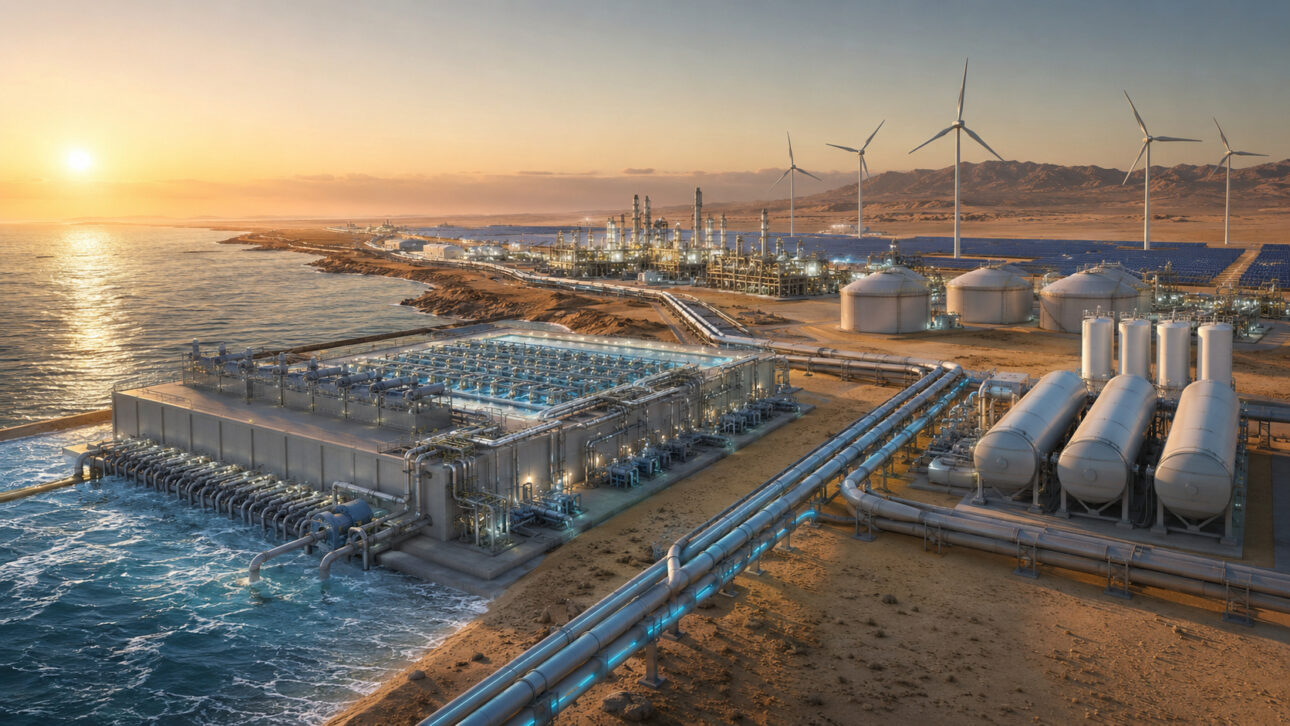
This means that the expansion of green hydrogen in desert areas cannot be thought of solely as an energy project. It also needs to be treated as a water project. Without this planning, the production of a fuel sold as clean risks increasing pressure on a resource that is already structurally scarce.
The central warning is this: abundant renewable energy does not eliminate the water problem. In arid regions, the two issues must go hand in hand.
Desalination does not make green hydrogen unfeasible, but requires infrastructure and environmental management
The main technical solution to this impasse is already in place. According to ORF Middle East, the solution adopted by large projects is to integrate hydrogen production with desalination plants powered by renewable energy, reducing dependence on fossil fuels and preserving the low-emission logic of the final fuel.
The debate in the Gulf itself has shifted from whether desalination will be necessary to how to do it in the least aggressive way possible.


The additional cost of this step, contrary to what many people imagine, is not the main blocking factor. According to ORF Middle East, industry analyses indicate that desalination tends to add only a small fraction to the final cost of hydrogen, in the range of 1% to 2% in large-scale projects.
The sensitive point is not immediate economic unfeasibility, but the need to build the right infrastructure from the start and properly manage the disposal of concentrated brine, which can impact marine ecosystems if poorly managed.
Water consumption of green hydrogen can decrease with reuse and closed-loop systems
Another important front is the efficiency of water use within the plants themselves. According to RMI, green hydrogen does not need to operate in a linear model of irreversible consumption.
The use of more efficient cooling systems, closed-loop circuits, and reuse strategies can significantly reduce the additional water demand that currently weighs on many projects.
This changes the discussion because it shows that the water issue is not binary. The problem exists, but there is room for process engineering, loss reduction, and better design of facilities.
Instead of thinking only about the gross volume required by electrolysis, more mature projects have started to treat water as a component to be recycled, optimized, and monitored throughout the entire operation.
When well planned, green hydrogen can expand the water supply instead of competing with it
One of the most interesting points of this debate is that the infrastructure built to produce hydrogen can, in some cases, generate a positive effect for nearby communities as well. According to ORF Middle East, if the desalination plant is sized beyond the strict demand of electrolysis, the surplus treated water can supply cities, agriculture, and industrial activities in the region.
This creates an important inversion. Instead of green hydrogen appearing only as a competitor for scarce water, it can become the economic reason that enables new water infrastructure.
When this happens, water ceases to be just the bottleneck of the project and becomes a collateral benefit of the energy transition, especially in dry coastal regions dependent on desalination.
The challenge of green hydrogen in the Gulf is not the lack of solution, but the order of planning
The debate about green hydrogen in the Gulf does not point to a technical dead end. What it shows is that energy and water need to be planned together.
According to RMI, the chemical requirement of 9 liters per kilogram of hydrogen is just the beginning of the real calculation. According to ORF Middle East, renewable desalination already offers a concrete path to meet this demand without dismantling the climate logic of the projects.
The decisive point is to make this planning beforehand, not afterward. In arid regions, building the hydrogen plant without resolving the origin, purification, reuse, and destination of the water means pushing forward a problem that later returns as an environmental and political cost.
Green hydrogen can continue to be one of the great promises of global decarbonization, but it will only make full sense where water security is part of the project from the first phase.