






 Portuguese
  Spanish


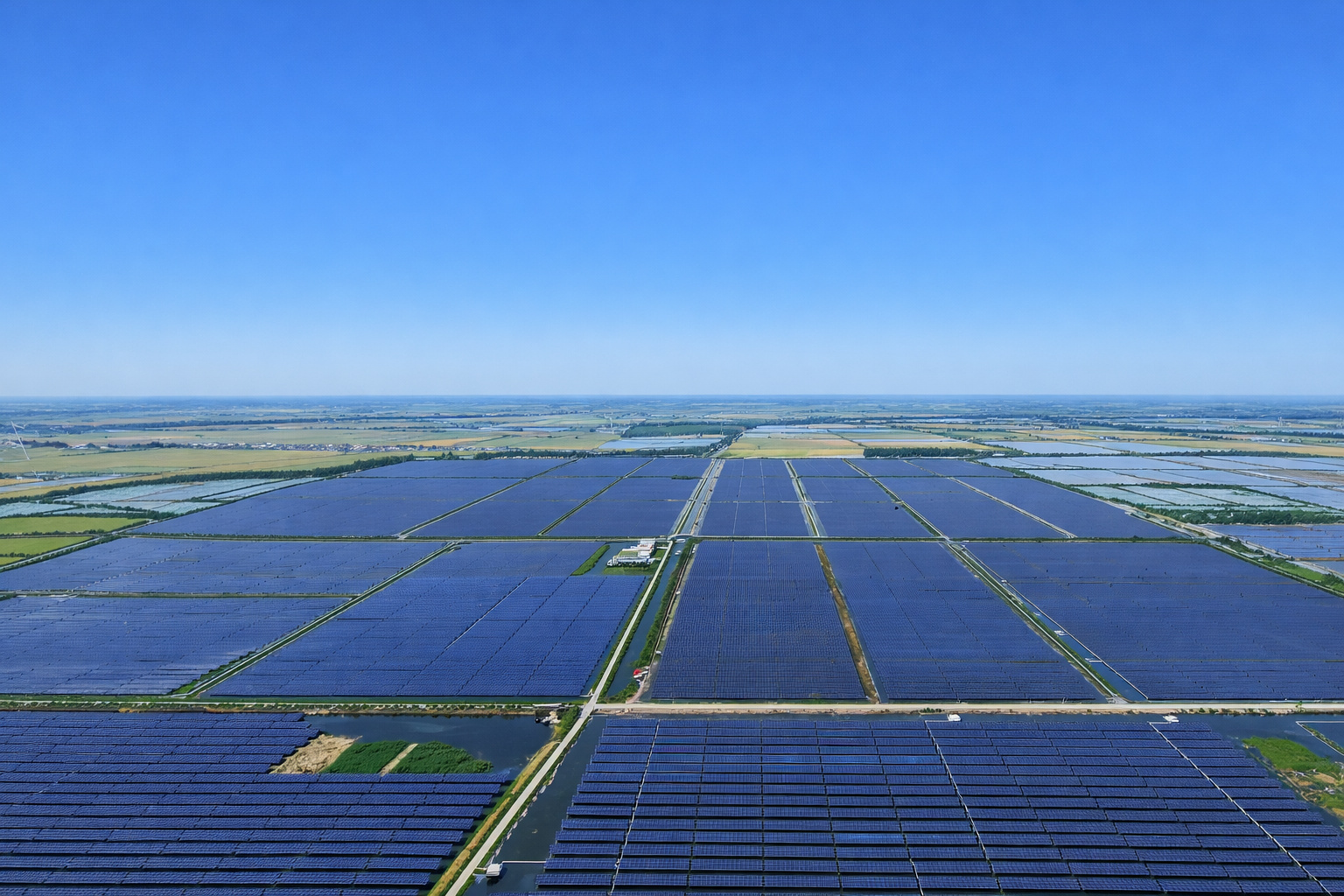


Renewable Energy In China Makes Historic Advances, Reduces Dependence On Coal And Signals A Structural Change In The Electricity Matrix, Even With Energy Consumption At Record Levels.
Renewable energy in China is currently experiencing a historic moment. Over the past few decades, the country has sustained its growth primarily on coal. However, China is now registering a clear and consistent change in its energy matrix.
According to recent data, fossil fuel generation has fallen for the first time in ten years. At the same time, renewable sources have taken on a central role in meeting the growing demand for electricity.
In this context, this movement reinforces a long-term trend. Furthermore, it consolidates China as a global leader in the energy transition.
-
Robots Clean Solar Panels in Desert Power Plants Without Water, Preventing Energy Losses

-
Brazil’s Offshore Wind Energy Potential Worth $1 Trillion Stalled by Long-Delayed Agreement

-
World’s Largest Engie Solar Plant in Brazil Highlights Billion-Dollar Energy Waste Issue: Company Considers Batteries and Bitcoin Mining to Avoid Wasting Production

-
Air Products Cancels $2.9 Billion Clean Hydrogen Megaproject in Louisiana, Shuts Down Arizona Unit, Highlighting High Costs of U.S. Energy Transition


Even with total electricity consumption at record levels, clean sources have been able to meet the demand. Thus, they have reduced pressure on fossil fuel-based generation.
Therefore, the current scenario did not arise suddenly. On the contrary, it is the result of strategic decisions made over decades.
In this way, state planning, continuous investments, and long-term vision explain why renewable energy in China has now reached a new level of relevance.
The Historical Context Of The Chinese Energy Matrix
Since the early 2000s, the Chinese economy has undergone rapid industrialization. Consequently, demand for electricity has grown significantly across the territory.
During this period, coal, being abundant and accessible, has supported energy generation. At the same time, it ensured accelerated economic growth.
However, this model has brought significant environmental impacts. Over time, air pollution began to affect large urban centers.
Additionally, the quality of life of the population deteriorated. At the same time, greenhouse gas emissions have continuously increased.
For this reason, China has taken a central position in the global climate debate. Faced with this scenario, the government decided to revise its energy strategy.
Thus, renewable energy in China ceased to hold a secondary role. Gradually, it began to integrate into the core of long-term planning.
In this way, the country started to align economic growth with environmental sustainability.
Expansion Of Renewable Sources And Modernization Of The System
In the last two decades, consistent investments have transformed the Chinese electricity sector. First, the country quickly expanded the installed solar energy capacity in desert regions.
Additionally, it capitalized on the high solar incidence and the large availability of areas. Simultaneously, wind energy advanced both in inland areas and along the coast.
These projects gained scale and efficiency over time. At the same time, hydropower maintained its historical relevance.
Moreover, it contributed to the stability of the electricity system. Meanwhile, nuclear energy reinforced energy security, as it provides continuous and low-emission generation.
At the same time, China modernized its transmission networks. Thus, it implemented ultra-high voltage lines to connect producing regions to major consuming centers.
As a result, this set of actions allowed renewable energy in China to keep pace with the growth of demand. Therefore, the country did not need to expand fossil generation at the same rate.
Unprecedented Fall In Fossil Generation And Structural Change
Recently, the results of this strategy have become evident. Even with electricity consumption at record levels, thermal generation has contracted.
This data breaks a historical trend marked by the constant advance of coal. In this sense, renewable energy in China has begun to replace fossil generation at strategic moments.
Thus, it has ceased to act merely as a complement to the system. Furthermore, the reduction of reliance on coal indicates a structural change in how the country produces and consumes electricity.
At the same time, growth in demand has proven to be more balanced. On one hand, traditional sectors have adopted more efficient practices.
On the other hand, new economic activities have emerged already aligned with a cleaner energy model.
Climate Commitments And Diversification Of The Matrix
China has established clear targets for controlling carbon emissions. Additionally, it has directed public policies to meet these objectives.
The commitment to reach peak emissions before 2030 requires practical actions. In this context, the expansion of renewable energies occupies a central position.
Moreover, the diversification of the energy matrix strengthens this process. While hydropower remains relevant, nuclear energy is growing as a stable and low-emission source.
Simultaneously, solar and wind energy are advancing with the support of technological innovation and cost reductions. Thus, this diversity increases the resilience of the electricity system.
As a result, renewable energy in China also benefits from research incentives, technological development, and integration among different sources.
In this way, the sector accelerates its evolution.
Economic Impacts And Global Influence
The expansion of renewable energy in China broadly boosts the economy. First, the sector generates jobs.
Second, it stimulates innovation. Additionally, it strengthens strategic production chains.
For this reason, the clean energy equipment industry has become one of the pillars of the country’s industrial growth.
On the international stage, this transformation exerts a strong influence. As China is the largest carbon emitter in the world, any structural change in its energy matrix directly impacts global efforts to combat climate change.
Thus, the reduction in fossil generation sends a positive signal to the international market.
Moreover, the country exports technology, equipment, and knowledge related to renewable energies. In this way, it expands its presence and influence in the global energy transition.
Long-Term Prospects For Energy In China
The demand for electricity continues to expand. Currently, sectors such as digital technology, data centers, and electric vehicle production are driving this growth.
By meeting this demand with clean sources, China reduces environmental risks. At the same time, it strengthens its economic competitiveness in the long term.
Finally, projections indicate a continuing advance of renewable energies. Analysts believe that thermal generation is unlikely to resume the growth rate seen in the past.
Thus, even in the face of new economic cycles, the long-term trend remains clear.
In summary, the record of renewable energy in China and the unprecedented fall in fossil generation mark a historical turning point.
More than a point-in-time data, this movement signals a profound redefinition of the energy sector. Thus, a model that combines economic growth, energy security, and environmental sustainability is solidified in a sustainable and timeless manner.


