






 Portuguese
  Spanish


Solar Energy Surpasses Oil In China And May Reach 27 Exajoules Of Electricity. With This Historical Milestone, The Country Leaves The US Behind And Becomes A Leader In The Segment.
Gas and oil have powered over a hundred years of economic and industrial development worldwide; however, the demand for electricity from solar plants is growing even faster with China’s investment in Green Energy. Seven giant solar companies in China are generating enough solar energy to surpass the energy reserves of the seven largest oil companies. The largest of them, Tongwei Co., produces enough solar panels in one year to power all of Italy. Check out how solar energy is surpassing oil.
Solar Energy Surpasses Oil And May Reach 27 Exajoules Of Energy
The cost of solar energy has dropped dramatically in the past 20 years, and research on the efficiency of a solar plant has come a long way at the same time. It is common to observe trends and conclude that solar energy surpasses oil and will become the main energy source in the next hundred years. The simplicity, durability, low cost, and high efficiency of solar energy already make it an obvious choice. And as it continues to improve, its popularity is only expected to grow.
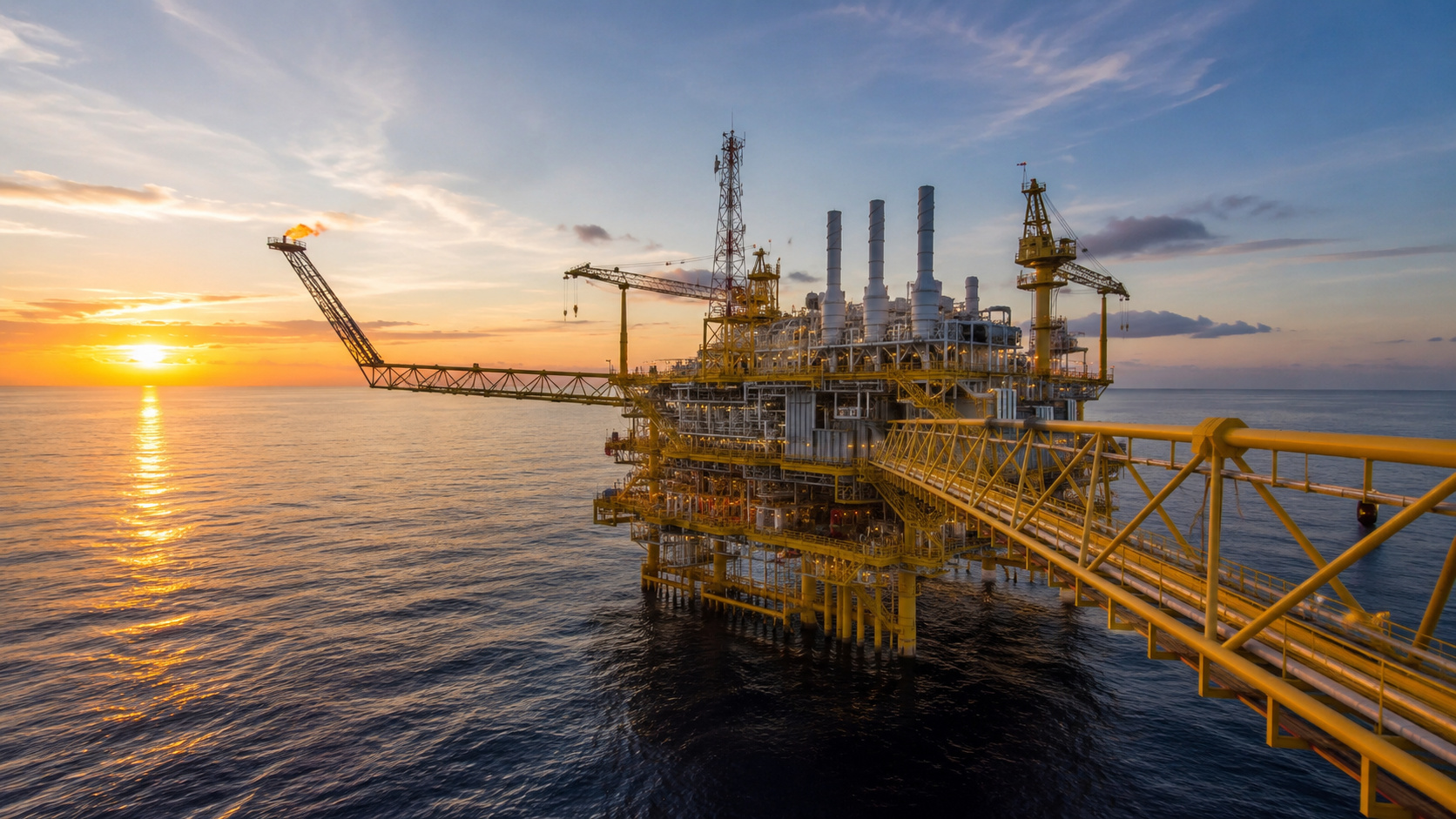
According to a Bloomberg report, the seven largest giants in the oil sector (Exxon, Shell, Chevron, TotalEnergies, BP, ConocoPhillips, and Eni) extract about 40 exajoules of oil energy per year, equivalent to approximately 18 million barrels per day. When we compare this with the exajoules of electricity produced by the seven largest solar companies in China, the difference does not seem so impressive.
-
Oil production grows in Rio, but reserve replacement raises a warning sign

-
Petrobras is expected to complete the drilling of the Morpho well in the Foz do Amazonas in August 2026, the first well in the Equatorial Margin, an oil frontier that the ANP estimates at more than 30 billion barrels and could redraw the map of Brazil.

-
Oil returns to the center of concerns with tension between the US and Iran

-
IEA reduces forecast for global oil demand in 2026 after impacts of the Middle East crisis


However, it is important to consider that most of the energy from oil is lost as heat and noise. Furthermore, the lifetime energy production of a solar panel is not considered, only what it produces in a year. Most solar panels from a current plant have a warranty of 25 years, while oil and gas extracted this year will be consumed in one or two months and will be gone forever.
Using a conservative production metric, the solar panels of a single plant in 2024 will contribute about 27 exajoules of electricity to the grid. In comparison, the oil and gas extracted by Exxon this year will amount to only six exajoules. In fact, the combined energy of all seven largest oil producers will be less than Tongwei’s long-term solar output.
Solar Energy Surpasses Oil In China And US Falls Behind
Since the first industrial revolution, which elevated Britain, Germany, and the US, rich in coal, to dominance, and the rise of oil brought power and wealth to Russia and the Middle East while widening the global leadership of the United States, nations that controlled these energy sources led the following centuries.
Currently, seven Chinese companies have a larger share in the main energy source of the 21st century than the Seven Sisters of Oil had in the 20th century. Thus, solar energy surpasses oil in China, while the US lags far behind in terms of research, development, and production. China, therefore, will almost certainly have the advantage in the future of energy production.

It is important to emphasize that China recently launched the world’s largest solar plant in Xinjiang, with a capacity of 3.5 gigawatts, covering over 13,300 hectares. The plant, operated by CGDG and Power Construction Corp of China, is located in a desert region of Urumqi, the capital of Xinjiang. The facility has the potential to generate about 6,090 million kilowatt-hours per year, which would be enough to supply regions like Papua New Guinea.
As solar energy surpasses oil, Xinjiang plays a crucial role in expanding China’s energy footprint. The region is a central point in the production of polysilicon, an essential component for the photovoltaic cells used in solar panels. Xinjiang is home to four of the five largest polysilicon factories in the world, highlighting the local low energy costs, which result from the abundance of coal in the region.
Brazil Hits 40 GW And Ranks 6th In Global Solar Energy Generation
Solar energy surpasses oil in China; however, it is not only the Asian country that is growing in the sector. Brazil has moved up two spots in the global ranking and is now the 6th largest producer of solar energy in the world. The country ended the last year with over 37 GW generated from operational solar energy capacity. The data was collected by the Brazilian Solar Photovoltaic Energy Association, with information from the International Renewable Energy Agency (IRENA). The sector raised BRL 5.6 billion in the last year, a value 49% higher than the previous year.
In 2023 alone, almost 12 GW of capacity were added, considering the total annual capacity added, Brazil ranks 4th. Currently, solar power is the second largest source in the national electric matrix, responsible for over BRL 195 billion in new investments, which generated more than 1.2 million jobs. The share of this modality is equivalent to 17.4% of electricity production in Brazil. For Absolar, the energy generated by photovoltaic plants is becoming increasingly competitive in the country.
According to Rodrigo Sauaia, president of the association, Brazil has one of the best solar resources in the world and is increasingly taking the lead in this process of energy transition and combating global warming. It is important to mention that in the year 2024, Brazil reached a historic milestone in the sector, as the country surpassed 40 GW of installed capacity from this source.
The volume includes self-generation energy systems on roofs, facades, and small lands, known as distributed generation (GD), and large solar plants, generally contracted in centralized auctions promoted by the federal government. The GD segment accounts for 27.5 GW, while the centralized segment accounts for 12.5 GW of installed capacity.








Por isso as megacorporações petrolíferas do EUA quer tanto destruir a China e os emergentes.