Portuguese
  Spanish


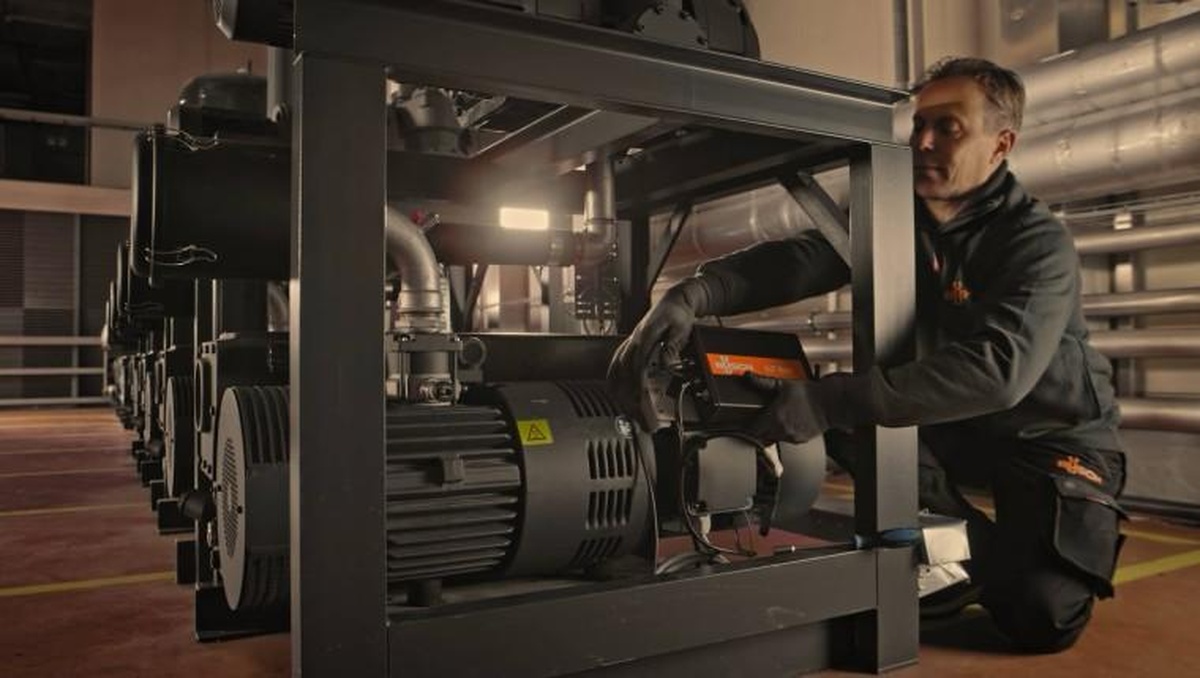

Specialists Highlight Strategic Role of Engineering in Process Integration, Automation, and Reliability of Industrial Vacuum Systems
The engineering applied by Busch Brazil plays a central role in advancing efficiency, safety, innovation, and sustainability in vacuum systems used by the global industry. According to data from MarketsandMarkets Research (2023), the global vacuum pump market is expected to grow from US$ 6.5 billion in 2025 to US$ 8.4 billion in 2030, driven by sectors such as chemical, pharmaceutical, plastics, food, sugar-alcohol, and automotive.
Engineering Applied in Vacuum Systems
In a structured manner, engineering ensures everything from the sizing of vacuum pumps to field installation. Thus, each stage of the process involves calculation, analysis, assembly, welding, testing, and integration of components.
- Control electrical panels: They can vary between simple and complex solutions.
- Regulatory compliance: They fully comply with Brazilian legislation and technical standards.
- Automation: It is addressed in two complementary fronts: hardware (electrical panels) and software (logics that control the operation).
Thus, automation not only transforms hardware into an intelligent solution but also enables process customization according to each client’s needs.
-
Statkraft Brazil Earns Pro-Ethics Certification from CGU, Highlighting Commitment to Compliance, Governance, and Sustainable Renewable Energy

-
Despite Perceived Delays, Rio de Janeiro’s New Stock Exchange on Track for Launch by Early Next Year

-
Constellation Earns 2025–2026 Pro-Ethics Seal from Brazil’s CGU, Stands Out as Only Offshore Drilling Company Recognized

-
Brazilian Soft Drink Company Dolly Faces Billion-Dollar Bankruptcy Battle Over $3 Billion Debt Accumulated Over Two Decades


Customized Industrial Solutions
Busch Brazil provides complete vacuum systems essential for critical industrial processes:
- Chemical and pharmaceutical: systems for lyophilization, drying, and distillation.
- Plastic industry: solutions for extrusion and transport of raw materials.
- Automotive: applications in severe conditions, such as high-temperature vacuum in tire production.
With this, engineering ensures not only technical performance but also sustainability and continuous innovation in the production chains.
Long-term Efficiency and Reliability
According to Achim Lessel, General Director of Busch Brazil (2024), the commitment goes beyond equipment delivery. He emphasizes that the goal is to ensure optimized, safe, and high-performance systems over time.
“Our role as engineers is to understand each process in depth, calculate and integrate solutions that ensure reliability and sustainability, always in partnership with the client,” Lessel emphasized.
Structuring Engineering Projects
The development of industrial vacuum systems requires integrated and chronological processes, divided into well-defined stages:
- Consulting and analysis – the initial stage, where the technical team identifies client processes, demands, and challenges.
- Project and budgeting – transforming requirements into technical solutions, aligned with local conditions and legal demands.
- Construction – assembling each component with precision and quality.
- Installation – connecting the solution to the production process, followed by rigorous testing.
- Training – training the client’s team for correct operation.
- Preventive maintenance – ensures operational continuity and avoids unexpected downtime.
This structured flow allows for delivering customized and reliable solutions, strengthening the competitiveness and sustainability of the companies served.
Differential of Proximity and Collaboration
For Achim Lessel, the great differential of Busch Brazil lies in its close and collaborative engagement with clients. This allows transforming complex technical requirements into vacuum systems that deliver consistent, reliable, and adaptable results for the future.
Thus, by combining specialized engineering, advanced automation, and personalized service, Busch Brazil consolidates its position as a global reference in vacuum technology.