






 Portuguese
  Spanish


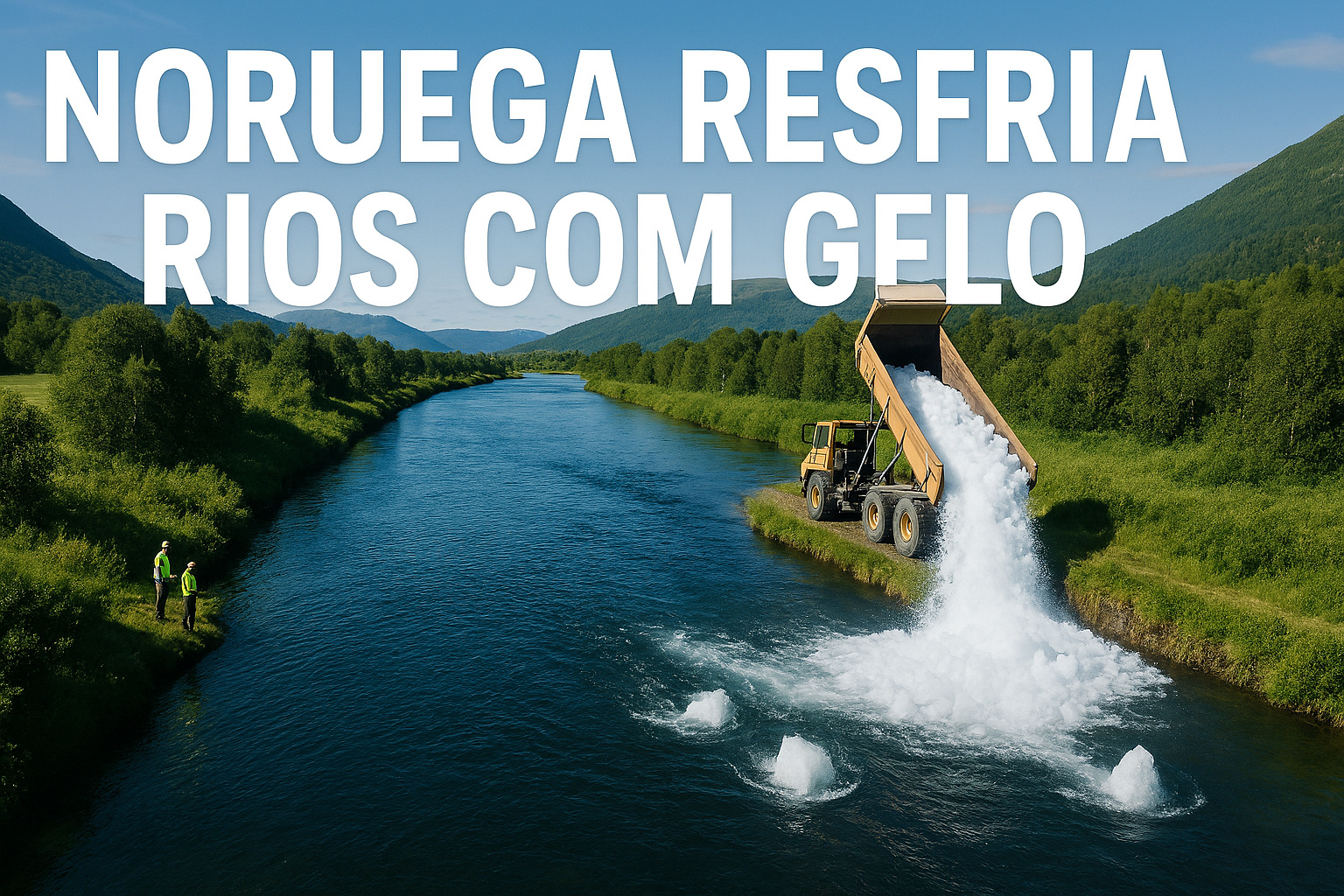


During Heat Waves, Norway Uses Crushed Ice to Cool Rivers and Save Salmon from Biological Collapses in a Real Environmental Protocol Known as Salmonid Cold-Water Emergency Projects.
The Northern Hemisphere has recorded a dangerous combination in recent decades: hotter summers, accelerated snowmelt, lower river flows, and temperature spikes that exceed tolerable limits for heat-sensitive species. Among these species, salmon is the most emblematic case. Fish from the genera Salmo and Oncorhynchus rely on cold, oxygenated water to migrate, spawn, and complete their life cycle. When water heats above certain levels, dissolved oxygen drops, fish physiology becomes stressed, and mortality outbreaks can occur quietly and rapidly.
This problem is not exclusive to Norway. Canada, the United States, the United Kingdom, and Baltic countries have also documented severe thermal events in rivers. However, Norway has adopted a measure that stands out for its practical approach: creating emergency “cold zones” by dumping crushed ice over rivers during intense heat waves.
The Norwegian Method: Crushed Ice on Top of the Water Column
The operation is known in environmental protocols as Salmonid Cold-Water Emergency Projects, under the supervision of Norwegian environmental agencies and research institutes.
-
Table Salt Sodium Emerges as Billion-Dollar Bet for Cheaper Electric Vehicle and Energy Storage Batteries

-
Ultrasound Body Scanner Promises Full-Body Mapping in 60 Seconds Without Radiation or Contrast, Enhanced by AI for a Faster, More Comfortable Preventive Exam Experience

-
In the US, researchers attached iPhones to a $25 grabber, turning 22 homes into a database to teach robots to open drawers and handle objects like humans.

-
IBM Breaks 1-Nanometer Barrier with 0.7 nm Chip Featuring Nearly 100 Billion Transistors and 3D Architecture, Promising AI Revolution


The logic is simple but technically accurate: crush industrial or controlled-origin ice and spread it over strategic sections of the rivers, allowing for rapid cooling of the surface layer and, in some cases, the water column to a functional depth for the fish.
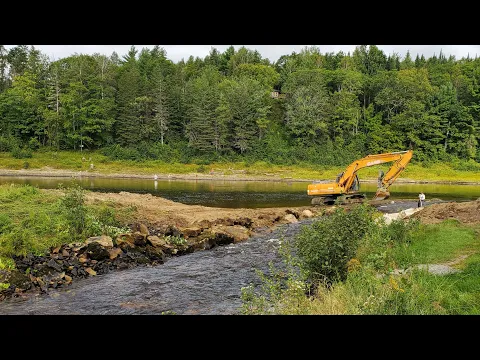

This intervention is typically applied in stretches where juvenile salmon are developing or in migratory corridors where adults need to cross warm areas before reaching breeding zones. The melting ice reduces the local temperature, slows down extreme physiological reactions, and creates temporary “thermal refuges.”
Although it may seem improvised, the method is scientific and monitored. Technicians measure the temperature before, during, and after the intervention and determine the necessary volume to produce a significant drop—usually several degrees Celsius—enough to prevent collapse.
When A Few Degrees Save An Entire Species
The importance of this difference is greater than it seems. For many salmon species, the fatal temperature can be around 22°C to 24°C, while severe stress begins much earlier. A reduction of just 2°C to 4°C can be the difference between a functional river and a mortality corridor.
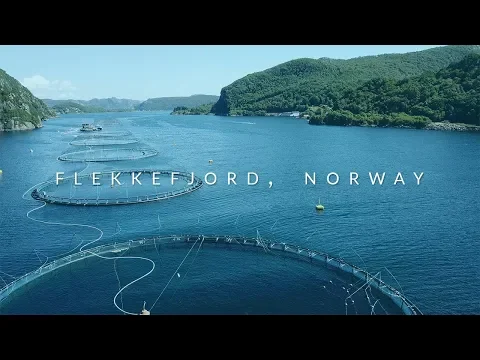
By reducing heat, the ice indirectly increases dissolved oxygen, reduces fish metabolism, and provides time for populations to cross critical periods. In some basins, this process is done in sync with meteorologists and hydrologists, who identify windows of increased thermal risk even before the events occur.
Why This Method Is Not Just ‘Throwing Ice in the River’
The operation is, in fact, an emergency environmental process. To work, it depends on three fundamental steps:
- Continuous Monitoring: hydrological stations record temperature, flow rate, and usage patterns.
- Logistics and Transport: crushed ice needs to reach the river quickly; sometimes refrigerated trucks are used.
- Targeted Application: ice is not dumped in large blocks but crushed to maximize contact area and melting rate.
- Post-Evaluation: teams check if there was thermal improvement and if fish are using the area as a refuge.
These protocols were born from Norwegian studies and the history of Atlantic salmon management, where this species is not only cultural and ecological but also economic.
The Biological Reason: Salmon as River Engineers
Another reason for the effort is the ecological role of salmon. Species like Salmo salar are not just migratory fish: they are distributors of marine nutrients to the terrestrial environment. When they swim upstream and die after spawning, their bodies feed birds, mammals, insects, and even riparian trees. Ecologists call this process “marine nutrient pump.”

When rivers get too warm and salmon die before spawning, this cycle breaks. It’s a cascading effect that impacts forests, terrestrial fauna, and human communities that depend on this biological chain.
Therefore, preventing massive mortality during heat waves is not just about saving fish; it’s about keeping the entire system functioning.
Emergency Today, Adaptation Tomorrow
The applications of crushed ice are not seen as a permanent solution but as an emergency response in a warming world. For this reason, Norway is also testing other ways to cool rivers and lakes, such as:
• Increasing riparian shading with strategic planting
• Conserving minimum flows during summer
• Restoring deep wells and backwaters
• Controlling dams for cooler reservoir levels
These actions seek to build thermal resilience without relying on constant emergency measures.
What Norway Teaches the Rest of the World
The Norwegian case reveals three global trends:
- Engineering-Based Conservation — in several countries, ecology and engineering have started to integrate.
- Rapid Responses to Extreme Events — heat waves are no longer exceptions; they are patterns.
- Ecological Infrastructure as Public Policy — river management is moving beyond just hydrology and into climate, energy, and biodiversity.
Countries like Canada and the United States are already studying similar approaches in thermally sensitive basins, especially in the Northern Pacific, where salmon species are also under thermal stress.


