






 Portuguese
  Spanish


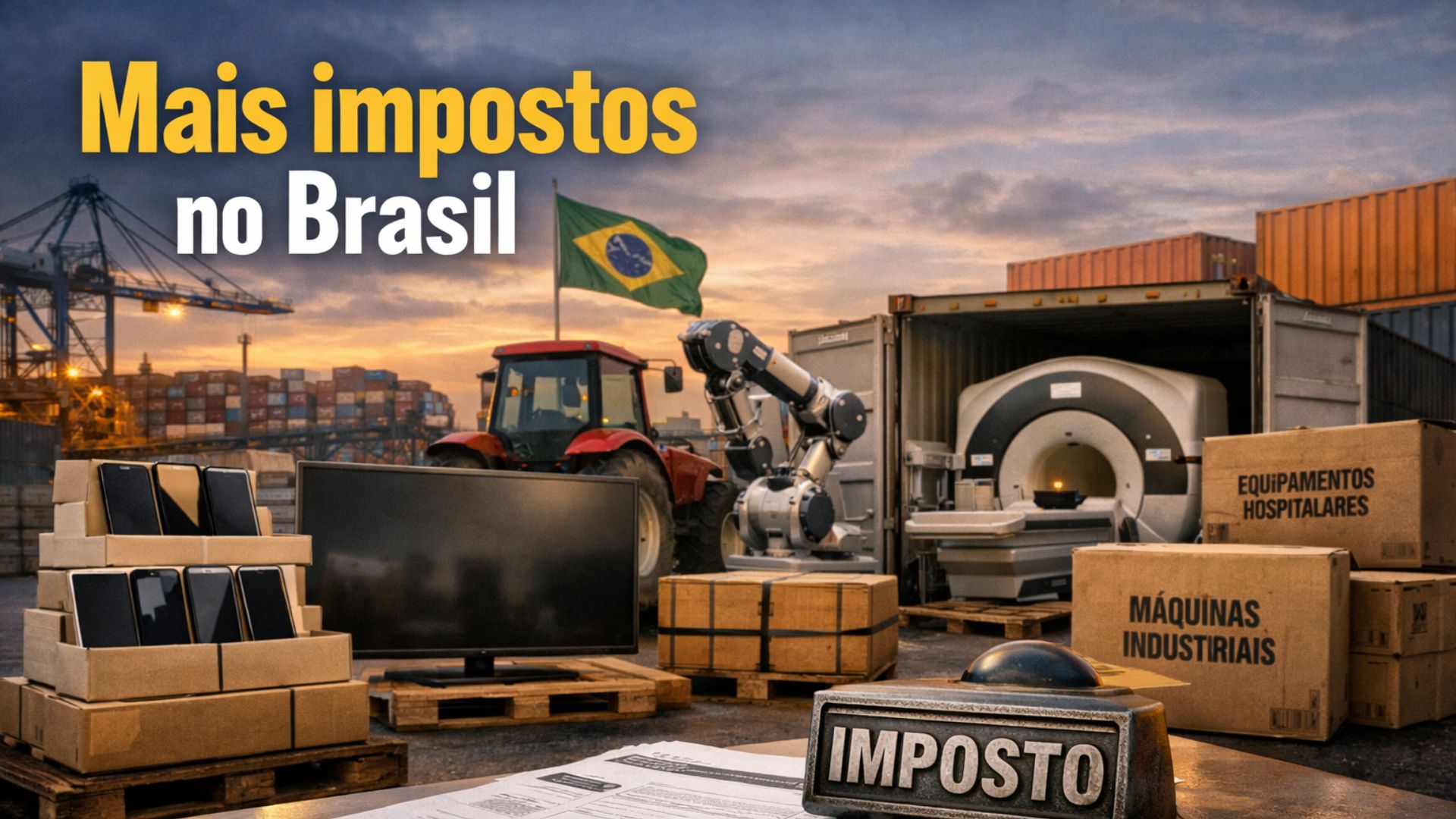

Import Tariff Increases Affect Electronics, Machinery, and Medical Equipment Amid Record Growth of Foreign Products in Domestic Consumption and Rekindle Debate on Industry, Competitiveness, and Consumer Prices.
The federal government increased, at the beginning of this month, the import tax on more than a thousand foreign products, including capital goods and IT and telecommunications items.
The rates rose by up to 7.2 percentage points, directly affecting products such as smartphones, industrial machines, and medical equipment.
The decision comes after imports in these segments accumulated a growth of 33.4% since 2022 and reached a share exceeding 45% of national consumption, according to the Ministry of Finance.
-
Brazil to Issue “Panda Bonds” in China, Aiming to Raise Up to 5 Billion Yuan at Lower Interest Rates Than Dollar Debt
-
NATO Faces Internal Tensions as U.S. Pushes for Increased Defense Spending, Targeting 5% of GDP by 2035, with Warnings for Countries Near 2% Level

-
Brazil to Introduce B16 Diesel with Increased Soybean Oil Content for Trucks by 2026
-
Brazil’s July Bolsa Família Payments May Include Extra $150 and $50 for Families with Children, Pregnant Women, and Updated CadÚnico Registration


The measure has already come into effect for some items and will have new phases implemented throughout March.
Consumers and companies that rely on imported technology are among the most affected.
Government Points to Risk to National Industry and Defends Sector Protection
According to the Ministry of Finance, the increase in the presence of imported products in the domestic market has surpassed a level considered critical.
In December of last year, the penetration of these goods exceeded 45% of national consumption, a level that, according to the ministry, can compromise strategic links in the Brazilian production chain.
The central argument is that the accelerated expansion of external purchases threatens domestic productive capacity and may lead to technological and industrial regression that is difficult to reverse.
Furthermore, according to the government, the increase in tariffs would be a “moderate and focused” response, aligned with the trend observed in other economies that adopted sector protection measures or anti-dumping instruments.
Over the past year, the main countries of origin for imports in these segments were the United States, with US$ 10.18 billion (34.7% share), followed by China (US$ 6.18 billion; 21.1%), Singapore (US$ 2.58 billion; 8.8%) and France (US$ 2.52 billion; 8.6%).
Despite the widespread increase, the government has opened a temporary exception.
Companies can request a reduction of the rate to zero until March 31, provided that it concerns previously benefited products with no equivalent production in the country.
The provisional grant could last for up to 120 days.
List of Products Affected by the Increase in Import Tax
The new round of tariffs affects a broad range of sectors.
Among electronics and telecommunications items are smartphones, panels with LCD and LED technology, printed circuits, and editing controllers.
In the health sector, MRI machines, computed tomography scanners, and dental equipment are also on the list.
In heavy industry, the increase reaches industrial robots, forklifts, ovens, turbines, and gas generators.
Agribusiness will also be impacted, with increases on tractors, fertilizer distributors, and cotton gin machines.
There are also adjustments for machines used in the manufacture and maintenance of footwear, textile equipment, freezers, ink cartridges, and specialized cameras.
Although the debate over the taxation of imported electronics is not new, the new decision reignites discussions on competitiveness and access to technology.
Previous proposals went so far as to advocate for tax exemption on laptops brought from abroad, reflecting social pressure for lower costs on these items.
Companies Warn of Impact on Modernization and Prices
Industry representatives reacted with criticism.
Mauro Lourenço Dias, president of Fiorde Group, a company that works with raw material importation and logistics, claims that a significant portion of the Brazilian industrial park operates with equipment over 20 years old.
According to him, the national industry cannot fully meet the demand for cutting-edge machines and technology.
The increase in rates, he says, raises the costs of modernization projects and may compromise investments.
For the executive, the elevated costs are likely to affect not only importing companies but also the end consumer.
The group estimates that the repercussions may show up in the price of televisions and household appliances, the maintenance costs of hospital equipment, the value of medical exams, and infrastructure projects such as subways and mining projects.
Everyday items, such as gate motors in condominiums, could also see price adjustments.
Ministry Projects Low Inflationary Impact and Effect on External Accounts
On the contrary, the Ministry of Finance argues that the impact on inflation will be “low and lagged.”
The justification is that most of the affected products are production goods, used in the manufacture of other items, and that special regimes and exceptions reduce the effective scope of the measure.
Additionally, the government expects that the slowdown in imports will help improve the current account balance by reducing the outflow of dollars from the country.
The strategy combines protection for the industry with an attempt to balance external accounts.
International Context Expands Debate on Protectionism
The global scenario also influences the decision.
In the United States, President Donald Trump had implemented a broad increase in tariffs on imports from various trading partners, a measure dubbed the “tariff hike.”
Later, the American Supreme Court overturned part of these actions, recognizing that there was an overreach of authority.
Brazil publicly criticized the barriers imposed by the Americans and sought to reverse impacts through diplomatic means.
Still, the international environment has been marked by greater use of protectionist instruments, especially in sectors deemed strategic.
A study from the Center for Public Policy Debate (CDPP), released last year, indicates that although the degree of Brazilian trade openness has increased in recent years, the country remains relatively closed compared to similarly sized emerging economies.
This fact reinforces the polarization around the issue: on one side, the defense of the national industry; on the other, the argument that high tariffs raise technology costs and reduce competitiveness.
Amid this clash, consumers and businesses await the practical effects of the measure in the coming months.
Will the tariff policy be sufficient to strengthen the Brazilian industry, or could it increase costs and pressure prices in an already challenging economic growth scenario?







