






 Portuguese
  Spanish
  4 min of reading
  0 comments


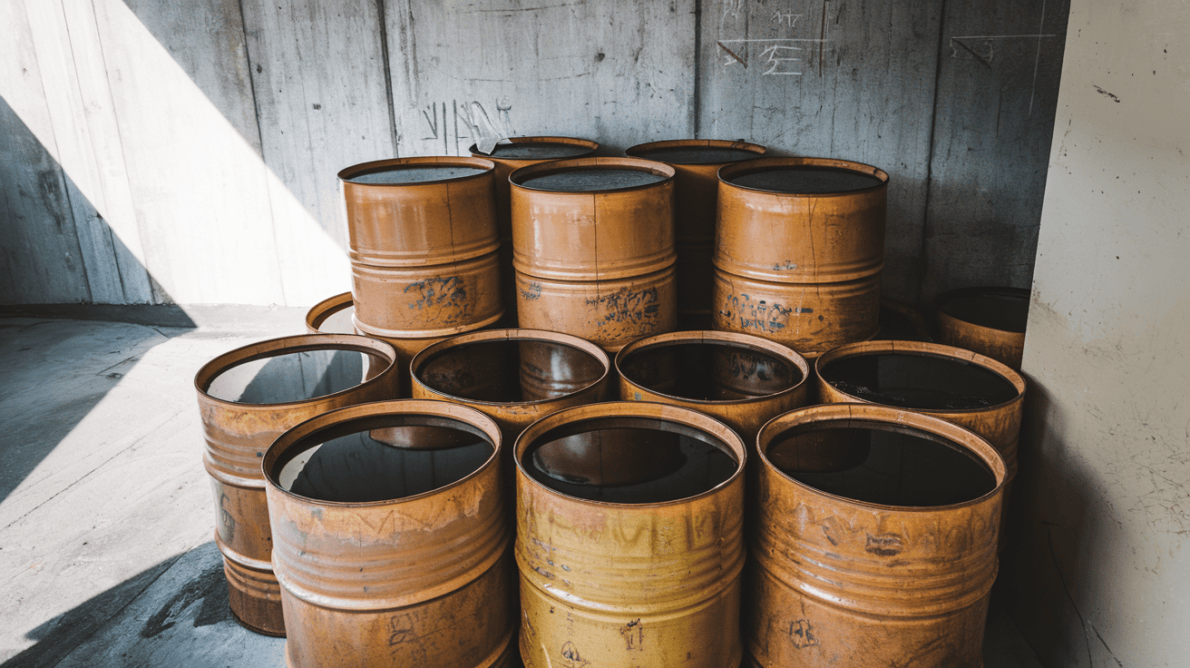
Understand How Oil Barrels Are Calculated Today and Why Oil Is Measured in Barrels. Stay Up to Date on All About This Natural Resource Fundamental to the World.
Many people have heard of oil barrels in the news, but almost no one understands what that really means. After all, why is oil measured in barrels? And how does this calculation work? In this text, you will understand everything in an easy and straightforward way, even without having studied the subject before. It’s information worth knowing because oil is still one of the most used energy sources on the planet and even influences the price of the fuel we put in our cars.
Where Does It Come From and Why Is Oil Measured in Barrels?


To begin with, oil is not made in laboratories. It comes from nature, from beneath the ground or the sea floor. The places where it is found are called sedimentary basins — which are like layers formed by sand, mud, and other materials over millions of years. In these layers, oil is trapped until it is extracted with the help of large machines called oil rigs.
These rigs drill the ground until they reach pockets where the oil is stored. And it’s not easy. This process is expensive, complicated, and takes time. But it’s worth it because this dark oil is used to make gasoline, diesel, kerosene, plastics, paints, lubricants, among many other products that we use in our daily lives.
-
NASA captured by satellite an underwater volcano erupting in the Bismarck Sea, in the Pacific, and now scientists are waiting to see if a new island will be born there in front of the cameras, a very rare phenomenon to witness live from space.

-
The Atacama Desert, the driest place on Earth, was covered in flowers and turned into a colorful carpet with more than 200 species in the phenomenon called “desert bloom,” when atypical rains awaken seeds that had remained dormant in the soil for many years.
-
Petrobras is expected to complete the drilling of the Morpho well in the Foz do Amazonas in August 2026, the first well in the Equatorial Margin, an oil frontier that the ANP estimates at more than 30 billion barrels and could redraw the map of Brazil.
-
The Caspian Sea, the largest lake in the world, is drying up due to climate change and no one can stop the loss: evaporation could lower the level by up to 21 meters this century and turn ports in Kazakhstan, such as Aktau, into desert.



And Why Is Oil Counted in Barrels?
Back in the 19th century, when oil started to be used more commercially in the United States, there wasn’t a proper way to measure how much oil there was. Workers would put the liquid in any container they had on hand. Things were a bit chaotic, so they needed to choose a standard measure. That’s when they decided to use the old wine barrels, which were easy to find at the time.
These barrels had a capacity of 42 American gallons, which is about 159 liters. And to this day, even with all the technology, this measure is still used. So, when you hear that Brazil produces 3 million barrels a day, it means they are extracting about 477 million liters of oil from underground each day. That’s a lot!
Those who want to understand better how the oil market works and how the barrel became the standard measure can dive deeper into this book The Oil: A Global History of Achievements and Conflicts” or “The Price of Tomorrow.
How Does the Calculation of a Barrel Work?
One barrel of oil is not just used to make gasoline. It is fully utilized, like that rotisserie chicken from the bakery that we use until the last bone. A barrel, after being refined, turns into several different products:
- Approximately 51% will become gasoline, which is the fuel that most cars use.
- About 15% is transformed into diesel, used by trucks, buses, and some cars.
- About 12% becomes jet fuel.
- The remainder is divided among cooking gas, heating oil, asphalt, lubricants, and other things.
And there’s more: during the refining process, other elements are added that make the volume increase. Therefore, the final total of products that comes from a barrel may be greater than the initial 159 liters. It’s engineering!
What Is BOE? And Why Is It Important?
In the midst of news about oil, you may see the acronym “boe” — which means “barrel of oil equivalent” (in Portuguese, barril equivalente de petróleo). This is used to compare different energy sources. For example: natural gas, electricity, and even ethanol have different amounts of energy. The boe helps standardize all this, as if it puts everything in the same “bag” to make the calculations easier.
This comparison is important because not all energy comes from oil. But since oil is still the main reference, the boe helps governments, companies, and experts better understand how much energy is being produced, sold, or used.
Knowing how oil measurement in barrels works is important for everyone. This type of information helps to better understand fuel prices, government decisions, energy investments, and even the value of currencies in the market. Now that you know that a barrel of oil has about 159 liters and that several useful products come from it, it’s easier to understand the news and discuss this topic with more confidence.






Be the first to react!