






 Portuguese
  Spanish


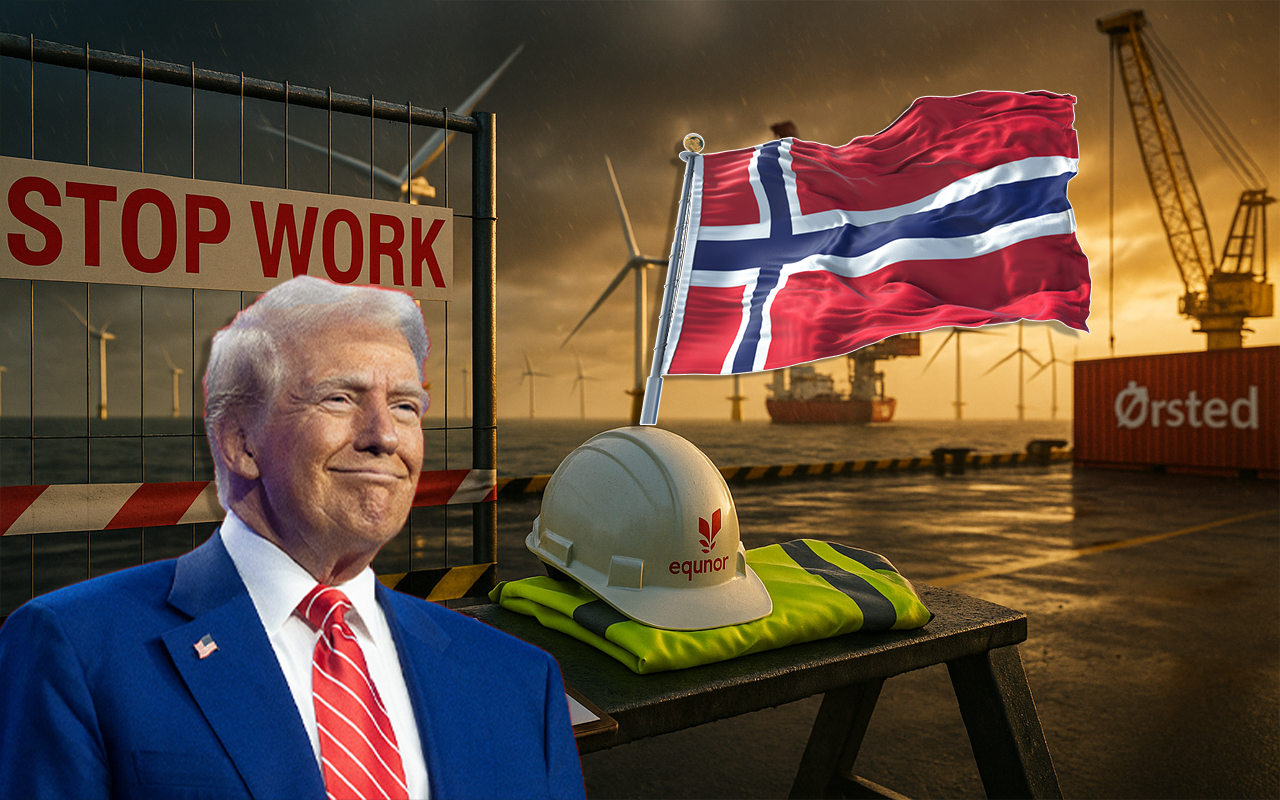


Equinor Will Participate in Ørsted’s DKK 60 Billion Rights Issue to Maintain 10% Stake and Nominate a Board Member. The Announcement Comes Days After the Trump Administration Withdrew US$ 679 Million from Offshore Wind Projects.
The Norwegian Equinor announced it will participate in Ørsted’s rights issue, estimated at DKK 60 billion (about US$ 9.4 billion), to preserve its 10% stake in the Danish company. The company also indicated that it intends to nominate a member to the board of Ørsted in the next corporate cycle. The move was interpreted by the market as a vote of confidence in the long-term offshore wind business, even in a more hostile political environment in the U.S.
According to Reuters, Equinor has committed to subscribe for up to DKK 6 billion (almost US$ 1 billion) in new shares, reducing uncertainties regarding the execution of Ørsted’s capital increase. The operation aims to strengthen the balance sheet after a series of regulatory setbacks in the American market.
Reports from financial media indicate that the announcement prompted relief in Ørsted’s shares during today’s trading, although the company remains well below 2021 levels. The prevailing view among analysts is that Equinor preferred to avoid dilution while simultaneously gaining influence in governance to navigate the industry’s critical phase.
-
Northern Brazilian ports surpass the South as the country’s largest grain corridor amid record harvest

-
Amazon launches its own brand in Brazil a week before Prime Day, following a $3.7 billion investment and the establishment of over 300 distribution centers nationwide by 2025.

-
Trump’s 50% Tariff on Brazilian Goods Cuts U.S. Exports by 30%, Brazil Sets Records in 42 Countries and Germany Becomes Top Coffee Buyer
-
Brazil Harvests Record 358 Million Tons of Grain but Lacks Storage for 134 Million Tons


In addition to Equinor’s participation, the Danish government — the controlling shareholder — and the Norwegian sovereign fund have signaled support for the operation. The extraordinary meeting that is expected to endorse the capital increase is scheduled for September 5, 2025, in Gentofte (Denmark).
Trump Hardens Stance on Offshore Wind, DOT Cancels US$ 679 Million for Ports and Logistics
On Friday, August 29, 2025, the U.S. Department of Transportation (DOT) announced the withdrawal/cancellation of US$ 679 million in federal funding previously allocated to 12 projects associated with the offshore wind energy infrastructure chain. The statement, signed by Secretary Sean P. Duffy, states that the funds will be redirected to “real infrastructure” and for maritime reindustrialization. The decision reinforces the regulatory and budgetary tightening of the Trump administration on the sector.
Specialized publications such as WorkBoat detailed that the cuts affect initiatives in ports and wind hubs across various states, impacting critical stages of storage, pre-assembly, and shipment of wind turbine components. The measure increases uncertainty regarding timelines and costs of deployment along the American coast.
The political reaction came from local authorities relying on the projects for jobs and revenue, while investors began to reprice the regulatory risk in the region, an element that also motivated Ørsted to seek new capital.
BOEM Imposes Stop-Work on Revolution Wind and Disrupts Ørsted’s Timelines
On August 22, 2025, Ørsted informed that the Bureau of Ocean Energy Management (BOEM) issued a stop-work order for the Revolution Wind project, instructing suspension of activities on the Outer Continental Shelf. The company stated that it is complying with the mandate and taking measures to ensure the safety of workers and the environment.
BOEM itself published the formal order, pointing out the need for time to address concerns raised during the implementation process. The interruption comes at an advanced stage of the project and adds deadline and cost pressure to Ørsted’s U.S. portfolio.
Sector analyses remind us that the stop-work order heightened the perception of regulatory uncertainty in the U.S., a factor expressly considered in the scaling of the rights issue announced by Ørsted to strengthen the capital structure and preserve the business plan.
Market Reaction, Regulatory Risk, and Analysts’ Reading
Since the announcement of the rights issue on August 11, Ørsted’s shares hit historic lows, reflecting regulatory shock and the need for capital. With the support from Equinor confirmed today, there was intraday recovery, but the stock still accumulates significant losses compared to the peaks of 2021.
For analysts, Equinor’s decision is a calculated risk; protecting the stake avoids dilution and opens room for strategic influence in Ørsted’s capital allocation; on the other hand, it increases exposure to American projects at a time of uncertain political support. This perspective appears in notes from banks and industry publications.
Still, Equinor’s signaling was interpreted as a “vote of confidence” in the long-term competitiveness of offshore wind, especially in markets with regulatory visibility and long-term contracts. A board seat could strengthen coordination between the two companies in portfolios and partnerships.
What Changes for Offshore Wind Energy in Brazil and Worldwide
The Ørsted–Equinor case exposes the realignment phase of offshore wind, where public policy, logistics chain, and cost of capital weigh as heavily as technological curve. In the U.S., funding cuts and stop-work orders create a execution gap that could delay the maturation of the chain, increasing project costs and shifting investments to regions with stable rules.
In Europe, governments and investors remain vigilant to the “domino effect.” Equinor’s participation in the issue suggests that strategic capital is still willing to support essential assets of the wind ecosystem, provided there is revenue visibility and regulatory predictability. The presence of state shareholders, Denmark in Ørsted and Norway in Equinor, also serves as a confidence anchor in the sector.
Offshore wind remains relevant in the energy transition, but political cycles reorder speeds and priorities. Projects require robust contracts, predictable licensing, and adequate port infrastructure. The outcome of the September 5 meeting and the upcoming decisions from the U.S. government will be guiding signals for prices, timelines, and investor appetite worldwide.






Assinei esse abaixo assinado meses atrás mas sempre que abro essa página ele aparece e tenho que esperar para poder ler o artigo.