






 Portuguese
  Spanish


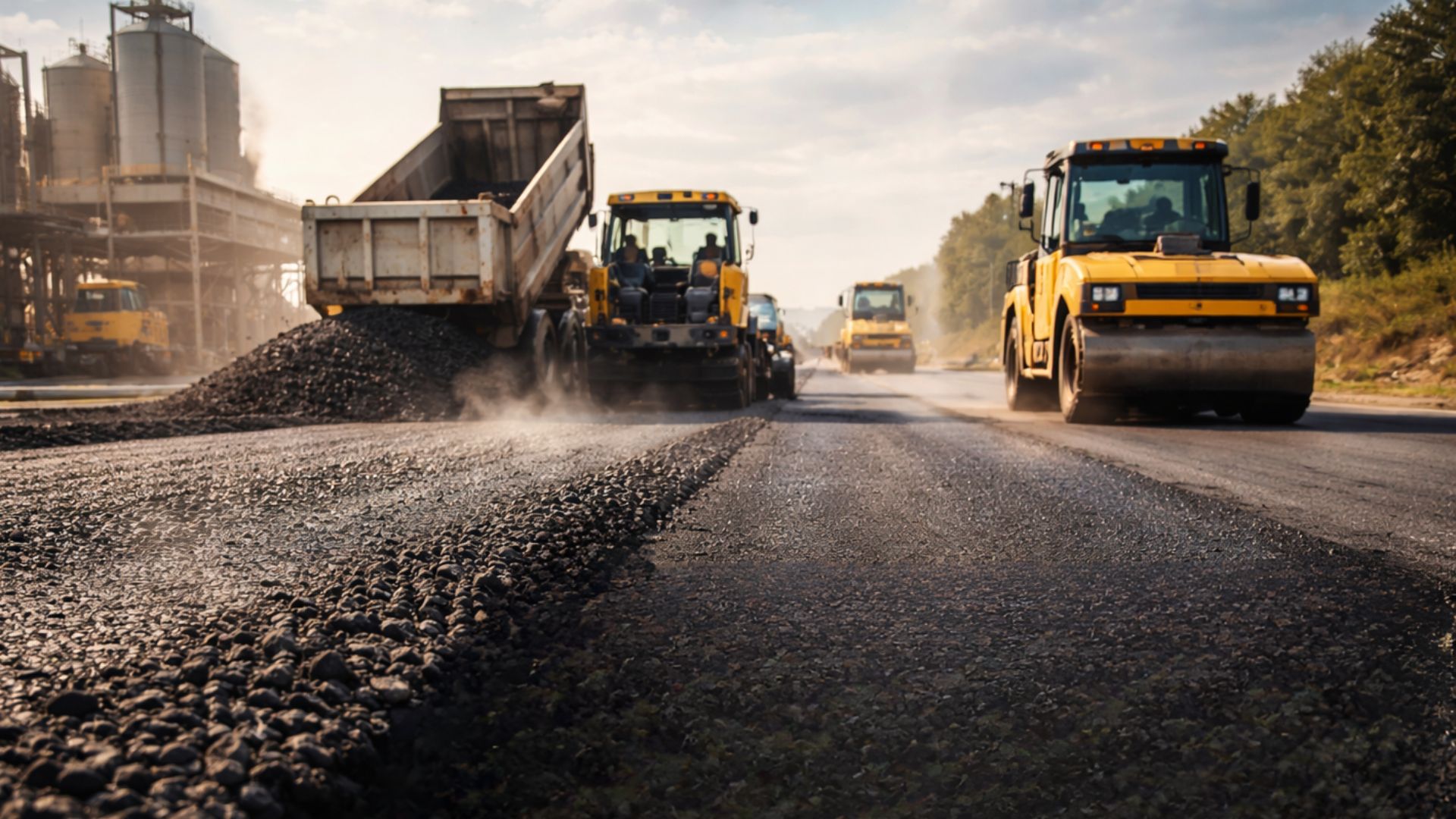


Paving Technology Incorporates Industrial Sulfur Into The Binder To Reduce Bitumen Use And Enhance Asphalt Resistance To Extreme Heat And Heavy Traffic, Without Changing The Appearance Of The Pavement. Track And Laboratory Tests Evaluate Performance, Costs, And Operational Requirements For Application.
A subtle change in the binder, the part that “glues” stone and sand in the mix, has put industrial sulfur at the center of paving tests focused on intense heat and heavy traffic.
The proposal of sulfur-extended asphalt is to replace part of the petroleum-derived bitumen, aiming to reduce asphalt binder consumption and increase stiffness at high temperatures, focusing on resistance to wheel path.
Behind the name, there is no new visible layer or different coating for drivers, because the alteration occurs within the binder matrix and not on the surface finish of the track.
-
In the Caucasus Mountains, a Community Preserves a Language So Rare Few Outsiders Can Understand It

-
Slovakia’s Ice Cave Holds Over 110,000 m³ of Frozen Wonders, Boasts Walls Up to 27 Meters Thick, and Was Among the First Electrified Caves Globally

-
Street Cleaner Accidentally Receives $200,000 Transfer, Returns Unexpected Fortune to Rightful Owner
-
Australian Space Agency Investigates Six Mysterious Metal Spheres Found on Queensland Beach, Isolating Area Over Possible Space Debris Risk



At the plant, sulfur is incorporated under controlled conditions to act as an extender and, in some formulations, also as a modifier of the asphalt mixture, without changing the pavement’s appearance.
The attention to this topic has grown during cycles of high binder prices, when project managers seek alternatives to maintain performance without solely relying on bitumen.
Additionally, sulfur is often available on a large scale as a byproduct of industrial processes associated with oil and gas, which opens up opportunities for technical reuse, provided there is production control and safety.
How Sulfur Changes The Binder And The Asphalt Response


In practice, conventional asphalt needs to balance two conflicting demands, as it must be flexible to handle thermal variations while being rigid enough not to deform under repeated truck passes.
When altering the binder, you modify the “heart” of the mix, changing rheological responses that influence permanent deformation, fatigue, and behavior across different temperature ranges.
On the other hand, the idea is not to treat sulfur as a separate “coating,” but as a component that participates in the binder system in planned proportions.
A consequence highlighted in technical reports is the potential for increased modulus and reduced deformations under heat, which helps explain the interest in extreme summer scenarios and load corridors.
Wheel Path, Heat Above 50 °C And Heavy Traffic
This effect is especially observed when the discussion turns to the wheel path, the groove that appears on heavily trafficked lanes.
Tests used in the area typically evaluate mixes at high temperatures, such as 50 °C, to replicate critical service conditions, and research centers relate this type of measurement to actual performance on the track.
Shell Thiopave And Sulfur Extended Asphalt
Among the commercial technologies associated with the concept is Shell Thiopave, described in NCAT documents as a material that acts simultaneously as a binder extender and mixture modifier.
Reports from the center note that the manufacturer attributes to the product the potential to improve the performance of sulfur mixes, reduce construction costs, and allow for more favorable production conditions than older approaches.
Nevertheless, technical literature avoids making universal promises and treats the topic as an alternative that depends on design, execution, and quality control.
Review studies and academic syntheses record typical applications with relevant mass replacement proportions of the binder, emphasizing that the decision is based on performance criteria, climate and traffic, in addition to compatibility with work procedures.
Another point that often enters the analysis is operation at the plant and the behavior of the material over time.

A NCAT report on Thiopave mixes notes, for example, that some properties depend on the development over the days, related to the crystallization of sulfur in the mixture, which affects sampling routines and result interpretation in the laboratory.
NCAT Test Track And Field Evaluations
NCAT, affiliated with Auburn University, is known for operating an accelerated test track that allows comparisons of solutions under controlled construction and traffic conditions.
In this setup, experimental sections receive repeated loads so that researchers can track deformations, cracking, and other indicators in an environment closer to actual use than pressing and compaction tests.
Reports from sections with Thiopave in the NCAT circuit note the context that drives this type of alternative, citing high binder prices as a factor that renews interest in replacement with sulfur.
The same technical material describes the potential of sulfur to increase the modulus of asphalt concrete and, as a result, reduce deformations and improve performance under high demand situations.
As the transition from “concept” to the track occurs, the documents also make it clear that the main question is not just whether the mix works, but under what conditions it performs equivalently or superiorly to conventional asphalt.
A NCAT study, for example, aimed to verify if a section with a warm mixture modified with sulfur exhibited performance equivalent to a control with a hot mix, using multiple sets of field and laboratory data.
Even when results are described as positive, caution remains because pavement does not fail for a single reason.
An additional technical report from NCAT discusses variables such as moisture resistance and evaluation procedures, showing that the comparison involves more than the wheel path and includes production effects, compaction, curing, and binder durability throughout the service cycle.
Bitumen Economy, Technological Control And Limits Of Application
The economic appeal of sulfur-extended asphalt lies in the possibility of reducing the volume of bitumen per ton of mixture, which impacts costs and logistics in large-scale works.
In parallel, the sought gain from a performance perspective appears in greater rigidity at high temperatures, with an expectation of lower permanent deformation where heavy traffic is dominant.
However, adoption requires design criteria that maintain pavement balance in other thermal ranges, in addition to control routines to ensure consistent behavior across batches.
Therefore, reference documents treat the solution as an engineering alternative to be specified according to context, rather than as an automatic substitute for polymers, binder classes, or granulometric adjustments.


