






 Portuguese
  Spanish


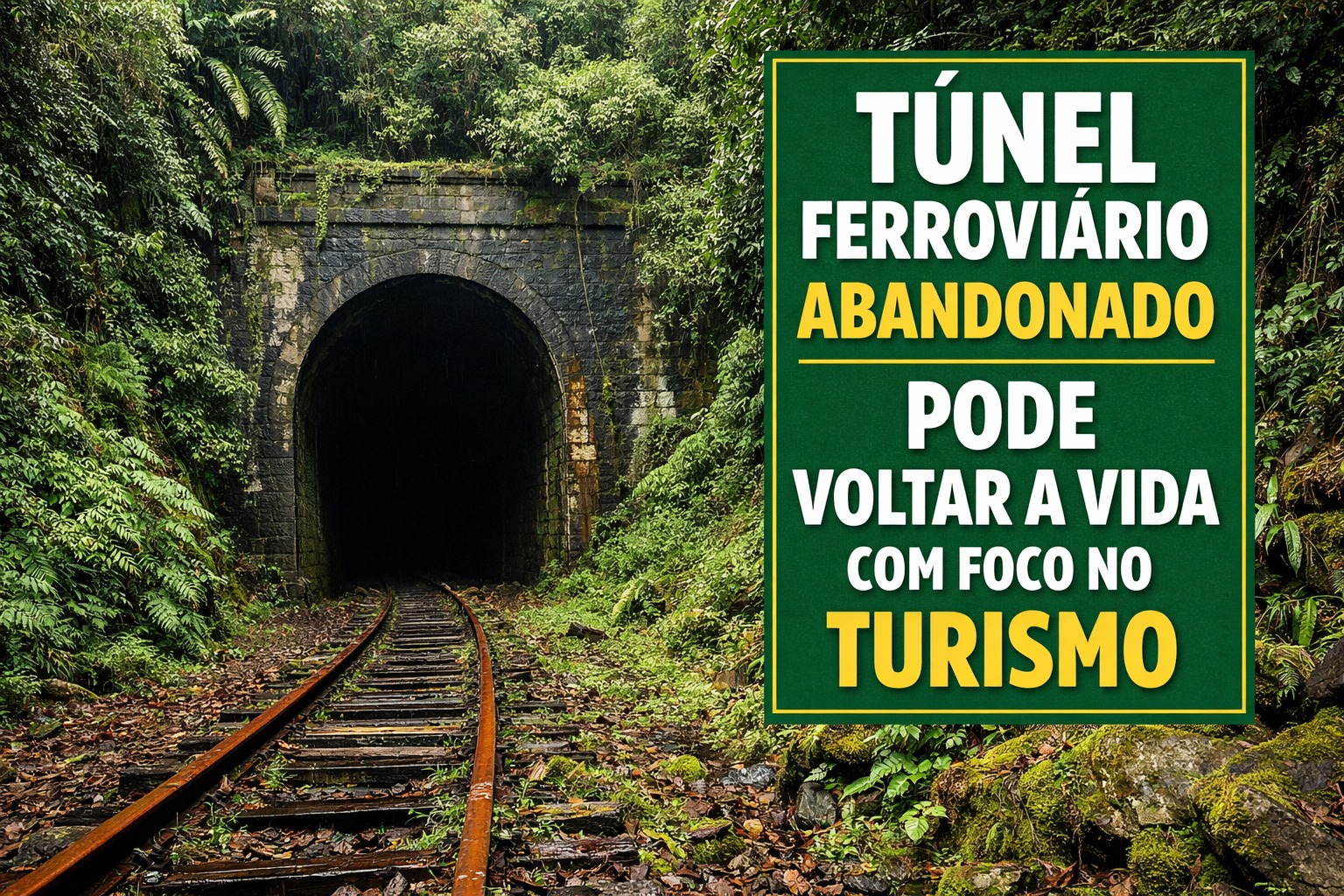


Reopening of the Largest Railroad Tunnel in Santa Catarina, in Apiúna, Recovers Work from 1954 with 260 Meters, Deactivated in 1971, Strengthening Historical Memory, Regional Tourism and Valorization of State Railway Heritage
Apiúna, in the Itajaí Valley, rescues a forgotten railway landmark by reopening the largest railroad tunnel in Santa Catarina, measuring 260 meters, abandoned for about 50 years after 1971, now revitalized for tourism and historical memory.
Historical Importance of the Largest Railroad Tunnel in Santa Catarina
With a length of 260 meters, the railroad tunnel in Apiúna has established itself as a strategic point for rail transport in the Itajaí Valley during decades of regional operation.
Opened on November 13, 1954, the tunnel was designed to overcome a steep incline in the railway section, ensuring greater operational stability and reducing the mechanical effort required from locomotives.
-
Lost Page from Archimedes Palimpsest Resurfaces in French Museum After Decades, May Reveal Hidden Mathematical Calculations with X-ray and Multispectral Imaging

-
Brazilian Education Ministry Announces Tech Benefits for Teachers, Providing Smartphones, Notebooks, and Tablets to Enhance Digital Learning and Professional Development
-
Woman Stranded for Six Months in Brazilian Airport After Losing Passport and Ticket, Faces Agonizing Wait to Reunite with 15-Year-Old Son at Age 56.

-
Brazilian Man Amputates Own Foot in Attempt to Claim $300,000 Insurance Payout, But Key Evidence Found Nearby Exposes the Fraud.




The underground solution created a smoother route, reducing risks in steep areas and increasing the safety of rail traffic in a region marked by rugged terrain.
Between 1954 and 1971, the operational period of the Santa Catarina Railway, the tunnel connected communities, industries, and commercial centers in the Itajaí Valley.
The railway facility integrated regional production chains, allowing regular circulation of goods and strengthening the local economy supported by rail transport.

Context of Abandonment After Railway Deactivation
The deactivation of the Santa Catarina Railway in 1971 removed the tunnel’s function, initiating a long period of abandonment and structural isolation.
Without regular maintenance, access became difficult, vegetation advanced over the route, and the tunnel was completely removed from the daily paths of the population.
For about 50 years, the space was known only to old residents and researchers dedicated to the regional railway history.
The physical isolation contributed to the loss of public visibility, despite the historical and symbolic relevance of the structure for Santa Catarina.
Current Project for Revitalization of the Tunnel in Apiúna
The revitalization is led by the Department of Industry, Commerce, Tourism, and Culture, linked to the City Hall of Apiúna, focusing on safety, access, and preservation.
The project includes structural and landscaping interventions that respect the historical heritage, preparing the site to receive visitors in an organized manner.
Among the ongoing actions is the complete cleaning of the area, removing excessive vegetation and accumulated waste over decades.
Access routes to the tunnel are also being opened, ensuring safer circulation for residents, tourists, and maintenance teams.
Planned Infrastructure and Access for Visitation
The macadamization of the route is one of the measures adopted to facilitate travel to the tunnel, especially in periods of higher humidity.
Two new access points are being implemented to organize visitor flow, avoiding concentrated impacts at a single point.
The planning seeks to balance historical preservation with controlled public use, reducing risks of accelerated degradation of the structure.
These interventions create conditions for regular visits without altering the original layout or compromising historical construction elements.

Documentary Research and Heritage Education
The revitalization includes documentary research to reconstruct the history of the tunnel and the railway, gathering records, accounts, and available historical materials.
The gathered content will serve as a basis for informative panels, guided tours, and interpretive materials aimed at visiting audiences.
These actions strengthen heritage education, allowing for a broader understanding of railway engineering and regional development in the 20th century.
The educational approach also values collective memory, connecting current generations to the industrial history of the Itajaí Valley.
Touristic and Cultural Potential of the Railroad Tunnel
The municipal expectation is to transform the tunnel into the main attraction for historical and cultural tourism linked to Santa Catarina’s railway memory.
The combination of industrial heritage, natural landscape, and local history creates experiences focused on gentle trails, photography, and family visits.
The tunnel can integrate circuits related to the former EFSC, extending the length of stay for tourists in the region.
With increased visitor circulation, services such as accommodation, food, and local guides are expected to be gradually stimulated.
Economic and Image Impacts for the Region
The valorization of railway heritage reinforces regional historical identity and rescues forgotten narratives of Santa Catarina’s development.
Cultural and educational tourism attracts schools, researchers, and history enthusiasts, diversifying the visitor profile.
Experiences that unite nature and historical engineering offer immersive experiences, differentiating Apiúna in the state tourism scene.
Integrated routes with old tracks and stations expand existing circuits while small local businesses can generate indirect income.
Reconnection with Memory and Final Steps of the Project
The revitalization reconnects the tunnel to the city, restoring visibility to a structure essential for the regional economic formation.
Public archives and memorialists played a central role in preserving records, allowing the recovery of fundamental information about the tunnel.
The process highlights how forgotten heritage can be reintegrated into urban daily life, strengthening ties between past and present.
With the completion of the initial stages, Apiúna repositions a historical landmark, transforming prolonged abandonment into a lasting cultural opportunity, albeit with minor planned operational adjustments.
With information from Terra Brasil Noticias.


Já atravessei um túnel aqui em BhteMG de moto várias vezes indo para, Nova Lima. Através da Serra do Curral há uns 20 anos…
Aqui em BHte MG tem um também na Serra do Curral indo para Nova Lima .
Concordo com o Luciano pois no município de Monte Castelo tem pelo menos 5 túneis maiores que este, sendo que um deles passa de 1500 m de comprimento.