






 Portuguese
  Spanish


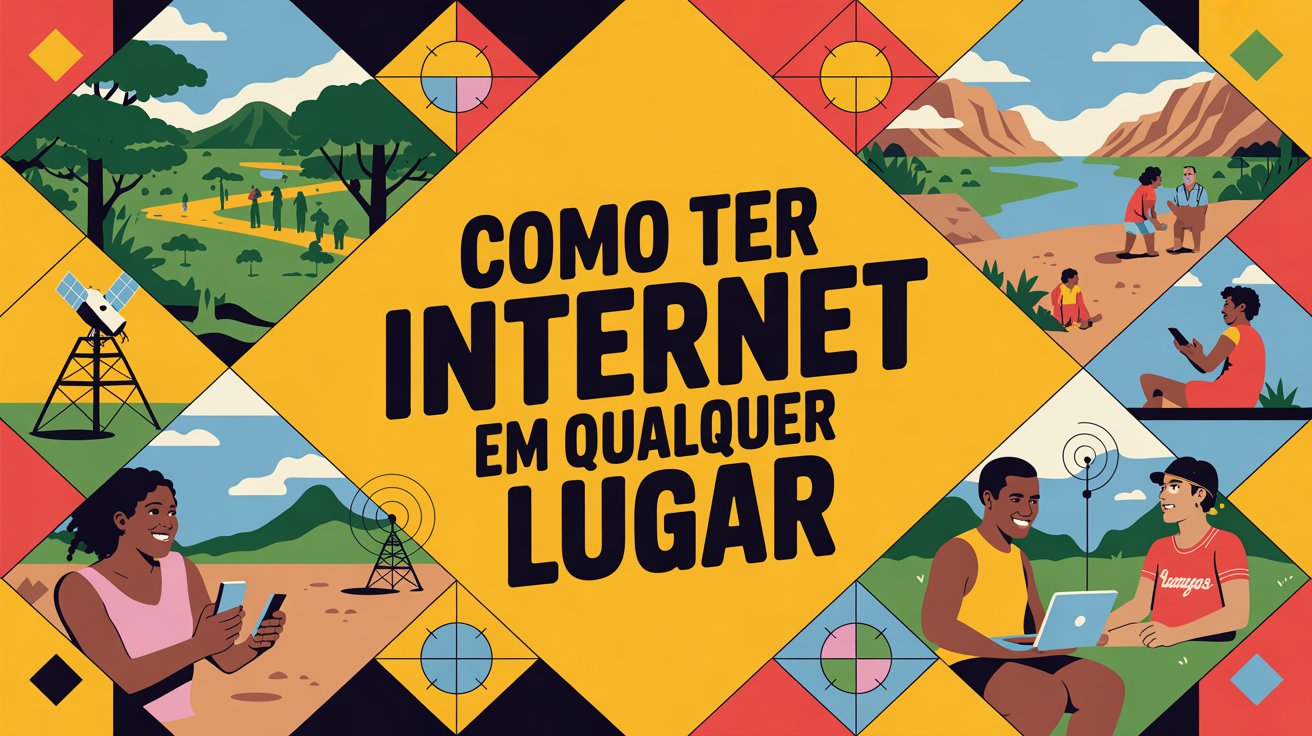

Various Innovative And Accessible Solutions Are Transforming Internet Access In Isolated Regions Of Brazil, Challenging Geographical And Technological Barriers That Once Limited Communication And Connectivity For These Remote Communities.
Connecting to the internet in remote areas of Brazil is still a challenge, but creative and accessible solutions have changed this scenario.
With the advancement of technology and local initiatives, residents of isolated regions are finding effective alternatives to ensure access to the worldwide web.
According to data from IBGE in 2023, 81% of rural households in Brazil now have internet access, a significant increase from the 35% recorded in 2016.
-
Brazilian Politician Goes Undercover as Garbage Collector to Investigate Delays in Waste Collection Services

-
The Story of Jesús Malverde: The Legendary Mexican “Saint of Drug Traffickers” Known as a Robin Hood Figure

-
German Man Sells Everything, Embarks on 5,000 km Jet Ski Adventure Across 13 Countries with Girlfriend and Dog, Spending Over 7,000 Euros on Fuel

-
To Aid Mars Missions, 12 Volunteers to Spend 60 Days in Bed Without Getting Up, Earning €18,000 in Study Starting 2026




Despite this progress, about 5.9 million families are still disconnected.
Mainly due to a lack of knowledge about internet use (33.2%) and the high cost of the service (30%).
Regional Operators: Connecting The Interior Of Brazil
Regional operators have played a crucial role in expanding internet access in areas where major companies do not reach.
Companies like Brisanet, present in nine states in the Northeast, and Unifique, operating in the South of the country, offer fixed broadband plans at affordable prices, often below R$ 100 monthly.
These companies invest in FTTH technology (fiber to the home), providing high-speed connections even in remote locations.
In 2023, regional providers led the fixed internet market in over 5,000 Brazilian cities, serving 25.5 million customers.
This number surpasses the total users of major operators, which reached 22.4 million in the same period.
Signal Amplifiers And Antennas: Strengthening The Connection
In areas where cell signal is weak or nonexistent, signal amplifiers and external antennas are valuable allies.
Devices like the Haiz HZ-300M and TP-Link RE200 capture 3G or 4G signals at elevated points and distribute them inside homes.
Significantly improving the stability and coverage of the connection.
These solutions are especially useful in mountainous or densely wooded areas, where natural obstacles interfere with signal quality.
Additionally, the installation of these devices is relatively simple and can be performed by local technicians.
Boosting the local economy.
Community Networks And Internet Via Radio: Collective Connectivity
Community networks represent an effective alternative for communities seeking collective internet access.
In these networks, residents share a single connection.
Splitting costs and expanding the service’s reach.
Initiatives like the Wi-Fi Brazil program have already installed free access points in over 25,000 locations, including schools and health units.
An additional viable option is internet via radio, which uses transmission towers to send signals directly to homes.
With plans starting at R$ 30, this technology is easy to install.
It has proven effective in regions where cable infrastructure is nonexistent.
However, it is important to highlight that the quality of the connection can be affected by adverse weather conditions.
The Role Of Mobile Technology And Satellites
Mobile telephony continues to be one of the main ways to access the internet in Brazil.
In 2023, 83.3% of households used mobile broadband.
While 86.9% had fixed broadband.
The advancement of 4G and 5G networks has contributed to improving connectivity, especially in urban areas.
Regarding satellite access, companies like Starlink offer services in remote regions.
However, this technology represents only 1% of broadband connections in the country.
Serving about 224.7 thousand customers.
Moreover, the high cost and the need for specific equipment limit its large-scale adoption.
Overcoming The Challenges Of Digital Inclusion
Despite advances, digital inclusion in Brazil still faces significant obstacles.
In addition to technical and financial issues, a lack of knowledge about internet use prevents many families from enjoying the benefits of connectivity.
Training and digital literacy programs are essential to ensure that everyone can navigate safely and efficiently.
The federal government, through initiatives like Wi-Fi Brazil and partnerships with regional operators, has sought to expand internet access in underserved areas.
These actions, combined with efforts from local communities, have the potential to transform the reality of millions of Brazilians.
Promoting social and economic development. And you, do you know of any local initiative that has made a difference in the connectivity of your region? Share your experience in the comments!


