






 Portuguese
  Spanish


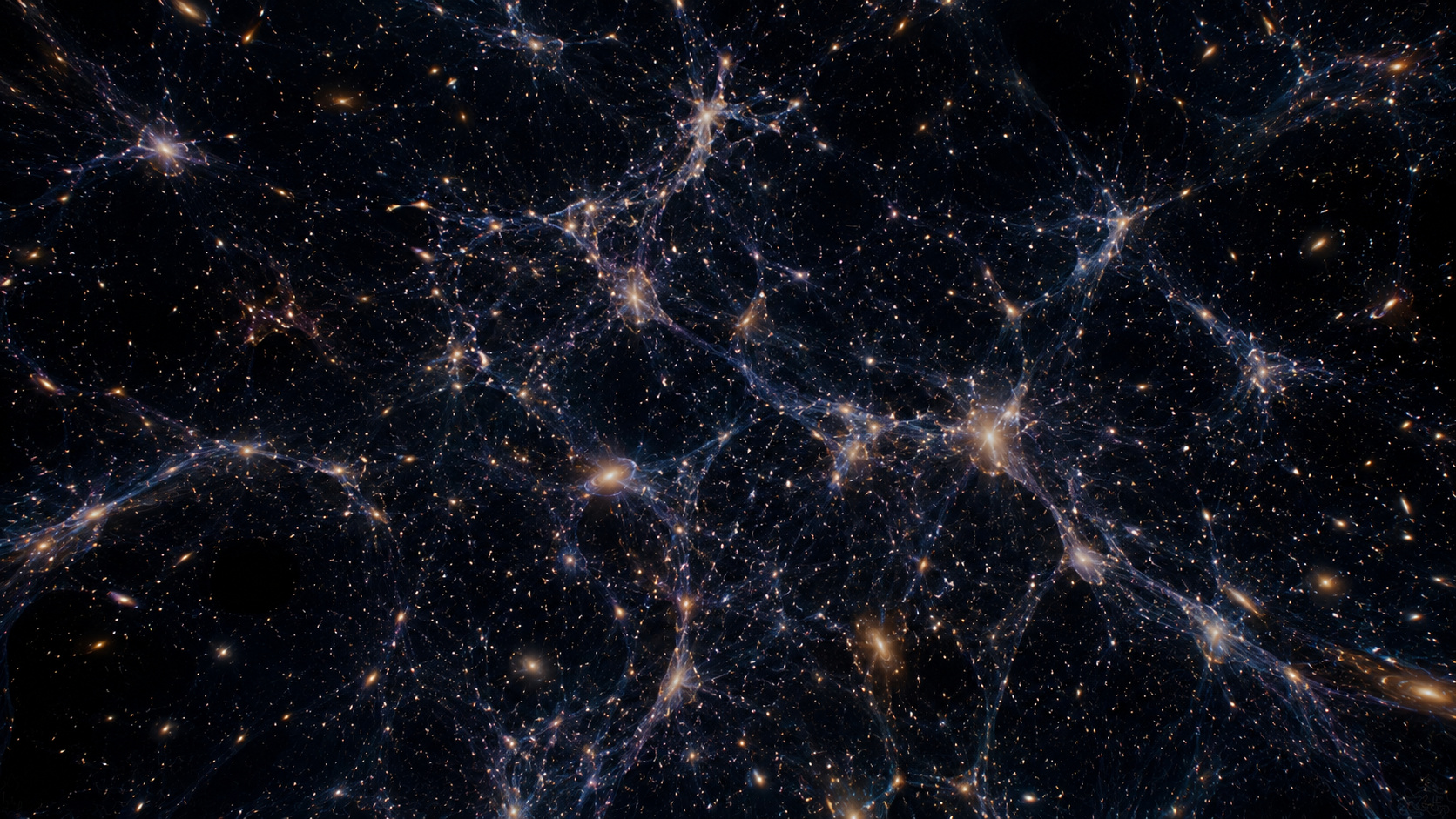

An impressive discovery has just changed the way scientists observe the universe. Astronomers have released an unprecedented map of the so-called “cosmic web,” a gigantic structure that organizes galaxies, gas, and dark matter over billions of light-years.
The information was released by “VEJA,” based on an international study published in the scientific journal The Astrophysical Journal on the 6th of this month. Additionally, researchers from various countries participated in the scientific investigation that used the James Webb telescope to reveal details never observed before.
The scientists cataloged 164,000 galaxies during the survey. At the same time, the team managed to analyze fragments of the universe from a time when the cosmos was only 1 billion years old.
-
ChatGPT Alerts FBI to Prevent Planned Murder of 8-Year-Old in Brazil’s Espírito Santo

-
Scientists Discover 125-Million-Year-Old “Pregnant Fossil” with Preserved Embryos and Microscopic Larvae Inside Mollusk in England

-
17-Year-Old Justin Bernstein Develops Bacteria to Produce Glass on Arctic Ice to Reflect Sunlight, Wins $50,000 U.S. Scholarship

-
The 19-Meter Rocket-Helicopter: A Private Industry Prototype That Challenged Space Race Logic



In practice, the researchers observed the “past” of the universe. This happens because the light emitted by extremely distant galaxies takes billions of years to reach Earth. Therefore, by analyzing these structures currently, astronomers see how they existed a long time ago.
James Webb reveals invisible structures of the cosmic web
The University of California, Riverside (UCR), in the United States, led the study. Additionally, scientists from Germany, Chile, Denmark, France, and Japan also participated in the research.
The main highlight involves the level of detail obtained by the James Webb telescope. Unlike previous technologies, the equipment managed to identify invisible structures in old observations.
The cosmic web represents how matter is distributed in the universe. Galaxies are not randomly scattered through space. On the contrary, they follow enormous three-dimensional structures composed of gas and dark matter.
These gigantic structures span billions of light-years and form a kind of cosmic network. Additionally, James Webb managed to identify smaller arrangements hidden within these formations.
Consequently, researchers discovered galaxies that previously went unnoticed. This significantly expanded the understanding of the organization of the universe.
According to NASA, the James Webb telescope was created to study all phases of cosmic history. The space agency launched the equipment on December 25, 2021. After that, the telescope officially began its operations in 2022.
Now, the survey released in 2026 already represents the largest data set produced by James Webb since the beginning of its mission.
Scientists manage to observe the universe when it was still young
The new map drew attention because it shows the universe extremely young. The fragments analyzed belong to a period when the cosmos was only 1 billion years old.
Currently, scientists estimate that the universe is approximately 13.8 billion years old. Therefore, the study acts as a true journey to the cosmic past.
The farther a galaxy is from Earth, the older the light captured by telescopes. In this way, researchers can analyze extremely remote periods of the universe’s history.
Additionally, the James Webb has technology capable of capturing infrared images. Because of this, the equipment penetrates clouds of cosmic dust that previously prevented deeper analyses.
Consequently, scientists can identify ancient galaxies that other telescopes could not detect.
Researchers explain that old images showed regions that appeared simple and isolated. However, the new survey revealed smaller structures hidden in these areas, as well as several unknown galaxies.
Thus, the study expands knowledge about galaxy formation and the evolution of the universe over billions of years.
Discovery may transform studies on dark matter and the origin of the cosmos
The new research already ranks among the most important surveys conducted with the James Webb telescope. Besides expanding the number of known galaxies, the study helps scientists better understand the role of dark matter in the universe.
Although no one can directly observe dark matter, it exerts enormous gravitational influence on galaxies and cosmic structures. Therefore, analyzing the cosmic web helps specialists understand how the universe organized itself after the Big Bang.
Furthermore, the study reinforces the importance of the James Webb for modern astronomy. The telescope has already revolutionized research related to the origin of stars, galaxy evolution, and deep space behavior.
Experts believe that even more detailed surveys will emerge in the coming years. After all, the evolution of space technology continues to allow discoveries that seemed impossible not long ago.
Now, with the cosmic map available for free on the internet, researchers worldwide will be able to deepen investigations into the origin and structure of the universe.
Do you believe that one day humanity will be able to completely discover how the universe originated?


