






 Portuguese
  Spanish





Popular Expressions Used Between The 1960s And 1980s Reveal Deep Cultural And Linguistic Changes In Brazil, While Preserving Collective Memories Of Previous Generations.
Many expressions used in the 60s, 70s, and 80s have ceased to appear in daily life, supplanted by more contemporary terms or simply falling out of use.
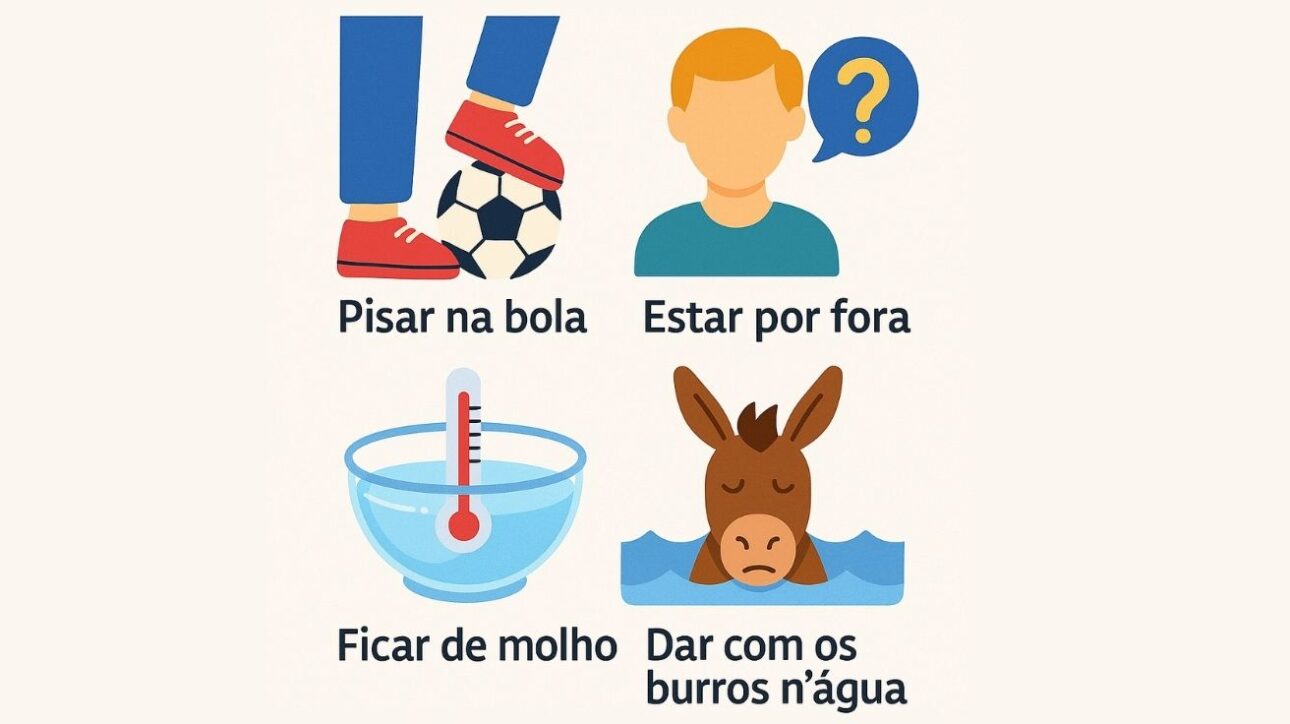
Although still understood by older generations, words like “to miss the mark”, “to be out of the loop”, and “to be laid up” are no longer part of common speech — a sign that language reflects the cultural, technological, and social changes in the country.
Origin And Meaning Of Old Expressions
“To miss the mark” originates from the Brazilian hinterland in the 18th century, when muleteers, while crossing rivers and streams on their journeys, lost pack animals or goods if the mules got stuck or drowned.
-
Award-Winning Japanese Restaurant Reveals It Has Preserved Part of the Same Frying Oil for 66 Years

-
American Youth Transforms from Severe Obesity to U.S. Air Force Enlistment, Losing 90 Kilograms in Two Years
-
11-Year-Old Entrepreneur Sells 60 Homemade Sweets Daily, Mastering Cost Calculation, Social Media Promotion, and Client Negotiation Since Age 7

-
Peruvian Mountain’s 5,200 Aligned Holes May Unveil Ancient Indigenous Market for Corn and Cotton


The image of the animals literally “missing the mark” mirrored the failure of endeavors, establishing the term as a synonym for failure or frustrated outcome.
“To miss the mark”, widely used, meant to let someone down or make a mistake — a realm of spoken language that, although still comprehensible, has lost frequency, especially among young people.
“To be out of the loop” indicated ignorance of a relevant subject.
Today, it is often replaced by “not being in the know” or even by anglicisms like “to be out of the loop”.
“To be laid up” applied when someone needed to rest, usually due to flu or fever.
It is still used in the rural areas of the country, but with less intensity in large cities.
“Dude”, in the past, was an informal nickname among friends — quite common among young people in the 1970s.
The term has gained popularity among younger generations, who adopted “guy”, “bro”, and influences from English like “bro”.
What Motivated The Disappearance Of These Expressions?
As new realities emerged — television, internet, anglicisms — the popular vocabulary adapted.
The spoken language directly reflects our experiences and culturally changing references.
Each generation incorporates slang and expressions that identify them.
The use or forgetting of certain terms can reinforce the sense of belonging to an age group.
Terms that fall out of everyday use come to be seen as archaisms — old words or expressions maintained only in classic or regional texts.
Expressions That Resist, But Are Fading
Although rarer, some of these expressions still persist in rural areas or among specific social groups.
“To miss the mark” is maintained in formal or literary contexts related to the hinterland.
“To be laid up” remains present in colloquial speech, especially among older people.
“To miss the mark” and “to be out of the loop” are still heard in certain regions, although with less frequency.
Collective Memory In Popular Language
Expressions like “to miss the mark” or “to miss the mark” carry fragments of Brazil’s rural history, providing clues about old ways of life and preserving cultural records that go far beyond the words.
Old expressions bring collective memories, even when the context that gave rise to them has already been replaced by drivers, truckers, and digital natives.
Reminding them reinforces the idea that language is dynamic: some terms disappear, others transform, and new ones are invented.


Can They Make A Comeback?
Linguistics experts claim that some expressions can return to usage, especially if reinforced by media, music, or social networks — although this phenomenon is rare.
In general, these terms are revived as curiosities or cultural rescues, but do not regain prominent positions in the current vocabulary.
Without published official statistics on the frequency of use of the older terms, it is not possible to accurately measure which returns are truly happening.
Do you remember any of these expressions? Do you think they will become part of speech again? Share in the comments!


Creio que devo concordar com quem está no comentário abaixo, eu sei que “se não gosta, não consuma”, mas é impulsivo…
Meio que mágoa ser considerado parte de um todo quando não é bem assim, ser “uma agulha no palheiro” é difícil…
Algumas vezes, é como se tivesse que nadar contra uma correnteza.
Detesto quando generalizam a geração Z
A geração Z e de 1995 a 2010 respectivamente, nem todos da geração Z se encaixam nestas notícias, como está que fala que a geração Z não sabe disso ou daquilo.
Pelo ao contrário isto é um público muito seleto da geração Z, eu diria que está mais para os nascidos de 2007 para frente que por ventura possam se encaixar neste quesito.
Não é porque muitos de nós nascemos com a “sigla” de geração Z que temos que se encaixar nesses parâmetros.
Parece que ser da geração Z da a sensação de ser “perseguido” com a fama de ignorante, ou de alguém que não deu certo falido moralmente sem perspectiva sem espaço ou algo dentro deste contexto.
Triste realidade
“Quebrou a cara” – “Santinho do **** oco” – “**** mandado” – “Fulana é uma sirigaita”.