Portuguese
  Spanish


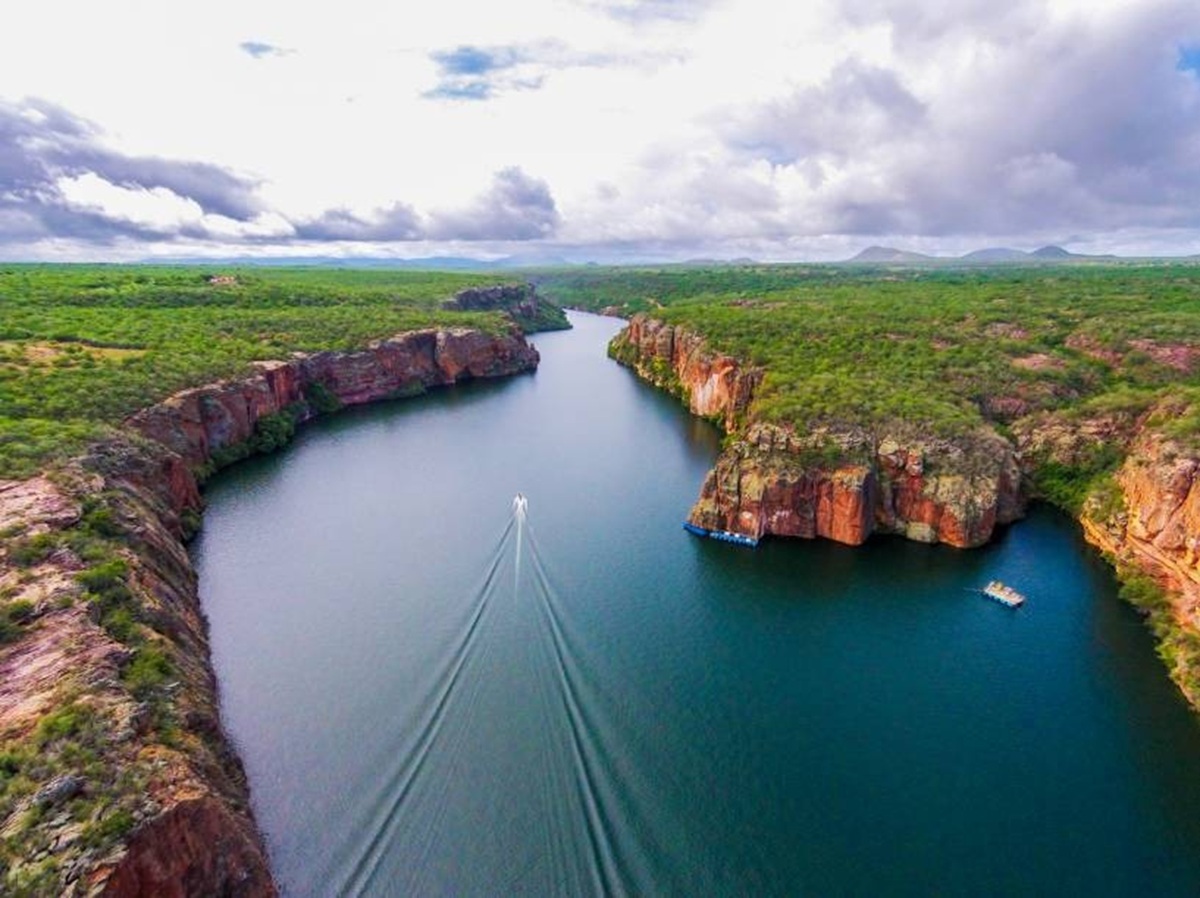


Between Alagoas, Sergipe and Bahia, the Xingó Canyon Reveals Secrets that Combine History, Adventure and Landscapes Formed by the São Francisco River.
Who wouldn’t want to visit the impressive Xingó Canyon? This destination attracts thousands of tourists every year, enchanted by the rocky cliffs surrounding the São Francisco River. But what many don’t know is that the location hides little-known curiosities.
Throughout this article, you will discover five secrets about this natural giant that will certainly increase your desire to visit it.
Where the Xingó Canyon Is Located
The Xingó Canyon is located between Alagoas, Sergipe and Bahia. The scenery is formed by large sandy cliffs along the banks of the São Francisco River.
-
Former Atacadão Employee Turns Online Cake-Baking Lessons into a Confectionery Brand with Factory, Store, Delivery, and Nearly $400,000 in Revenue

-
Brazilian Startup Sells Nearly 9 Million Surprise Bags of Near-Expiry Food, Prevents Thousands of Tons of Waste, Aiming for $42 Million Revenue by 2026
-
How to Prevent Brown Recluse Spider Bites: Common Hiding Spots and Free Tips to Reduce Risks

-
Natto: The Unusual Japanese Superfood Gaining Popularity on Social Media and Driving Record Exports




To get there, visitors can leave from cities such as Piranhas, Olho D’Água do Casado, Delmiro Gouveia or Canindé de São Francisco.
All offer good accommodation options to rest before the tour.
An Unexpected Human Creation
The first secret may come as a surprise. Despite its ancient appearance, the Xingó Canyon emerged only in 1994, with the construction of the Xingó Hydroelectric Plant.
The dam caused the river to expand and flooded the old fissure between mountains. What is now a postcard image was born from a recent transformation.
One of the Largest in the World
The second secret lies in its impressive dimensions. The canyon has a depth of 170 meters, a length of 65 kilometers and a width that varies between 50 and 300 meters.
These measurements place it among the largest navigable canyons on the planet.
Visitors can traverse it in catamarans or small boats, enjoying music, barbecue, and drinks during the trip.
Hidden Archaeological Site
Another little-discussed detail is the presence of archaeological remnants. Besides formations like the Eagle Rock and the Japanese Rock, the Xingó Canyon holds rock paintings and utensils that are around eight thousand years old.
This is proof that the region was occupied by ancient peoples, revealing historical and cultural value beyond the natural beauty.
Much More than Catamarans
The catamaran tour is not the only attraction. At the end of the route, tourists can swim in natural pools of the river.
It is also possible to pay extra for a boat ride to the Paradise of Talhado, a narrow corridor of rocks with green waters, statues of Saint Francis and impressive reflections. Therefore, it is advisable to bring extra cash.
The fifth secret appeals to those seeking adrenaline. The Xingó Canyon allows for sports such as climbing, rappelling, trekking, and zip-lining.
The activities offer direct contact with the rocky cliffs and complete the experience in one of Brazil’s most remarkable destinations.