Portuguese
  Spanish


Promised as a Legacy of the 2014 World Cup, the VLT of Cuiabá Consumed Over R$ 1 Billion of Public Funds. A Decade Later, the Project Remains a Symbol of Waste, Unfulfilled Promises, and Abandonment.
The Light Rail Vehicle (VLT) of Cuiabá was an ambitious public transportation project planned to serve the Metropolitan Region of Cuiabá and Várzea Grande in Mato Grosso.
Initially conceived for the 2014 FIFA World Cup, it aimed to modernize mobility between key points in the region, but ended up becoming an example of an unfinished project and public controversy.
Context and Original Scope
The VLT is planned to have about 22.2 km in length, with 32 stations distributed across two lines: one connecting the Marechal Rondon International Airport in Várzea Grande to the Political and Administrative Center (CPA) of Cuiabá (15 km and 22 stations); and another connecting the South Center to Coxipó in Cuiabá (7.2 km and 11 stations).
-
The Hidden Function of the Hole in Nail Clippers Reveals a Smarter Design Than You Might Think

-
A Simple Finger Movement Gains Attention for Its Potential Role in Alzheimer’s Prevention
-
World’s Tallest Ferris Wheel Opens in Dubai, Offering Thrilling Heights Over the Persian Gulf

-
Northern Lights May Be Visible in 19 U.S. States Tonight as Solar Ejection Approaches Earth, Potentially Triggering Geomagnetic Storm



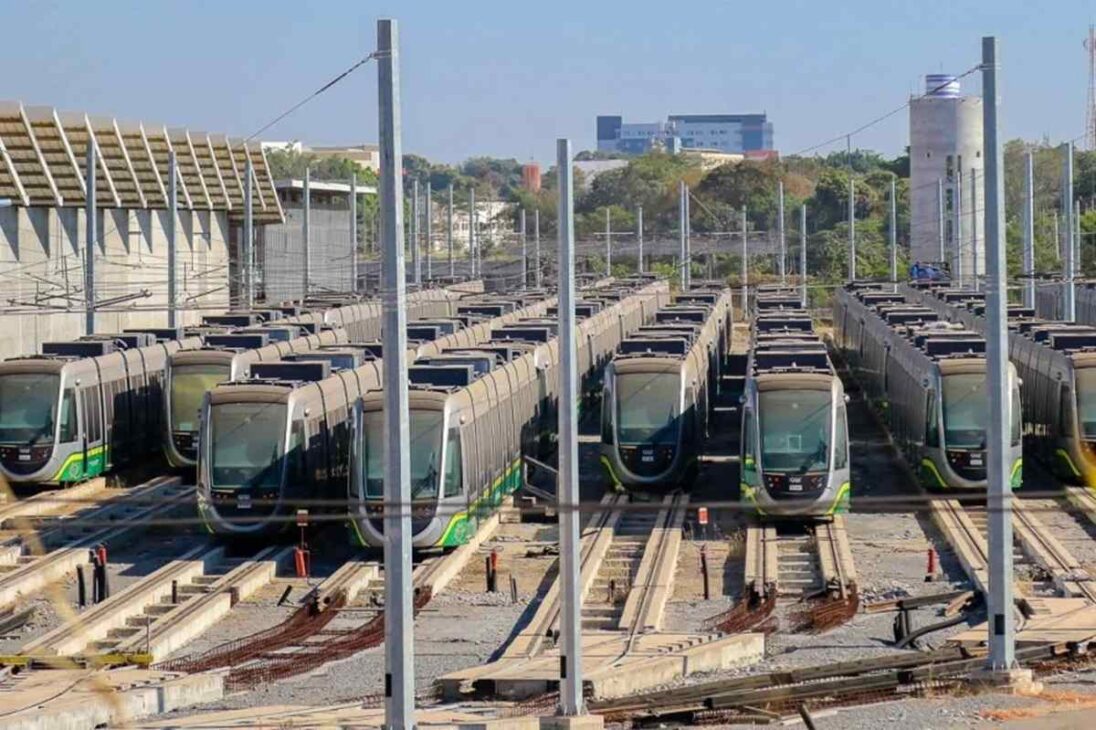
The project involved 40 CAF Urbos trains, each 44 meters long, with a capacity for 71 seated passengers, designed to operate at three-minute intervals during peak hours, transporting up to 8,000 passengers per hour.
The initially projected budget was R$ 1.4 billion, but the works consumed over R$ 1.06 billion by 2016, when they were completely halted.
Started in 2012, the works were suspended in 2015 by court order due to suspicions of irregularities in the bidding process and lack of adequate executive designs.
Alternatives and Change of Course
The State of Mato Grosso decided to abandon the completion of the VLT, opting to implement a BRT (Bus Rapid Transit) system with a dedicated corridor for electric buses.
The proposal emerged in a public consultation in 2021, when the modal switch was evaluated for technical and financial reasons.
The structures of the VLT began to be dismantled in 2022–2023, giving way to BRT construction, even in the face of resistance from the municipality of Cuiabá determined to resume the rail system.
The political fragmentation deepened the impasse between state and municipal levels, especially after the state government sold the trains to the State of Bahia in 2024 for R$ 793.7 million.
Destination of Rolling Stock
Of the 40 CAF Urbos trains, 7 were relocated in mid-2025 to Hortolândia (SP), where they will undergo maintenance before heading to Salvador (BA) for integration into the new local VLT.
The negotiation was facilitated by the TCU and by the party consortium, sealed in an agreement involving Mato Grosso, Bahia, and CAF.
The VLT of Cuiabá has become an emblematic case study in managing large urban projects in Brazil.
Designed to transform urban mobility before 2014, it became a symbol of the complexity of integrating planning, bidding, public management, and economic viability in metropolitan territories.
With over R$ 1 billion already invested, the abandonment and conversion to BRT point to a lesson on fiscal and technical realism, though they also provoke collective frustration.
The sale of the trains and their use in Salvador may mitigate financial losses.
However, the debate about the future of mobility in Cuiabá remains open: BRT or, who knows, one day, again, the VLT on the city’s tracks.