






 Portuguese
  Spanish
 5 min of reading
  0 comments


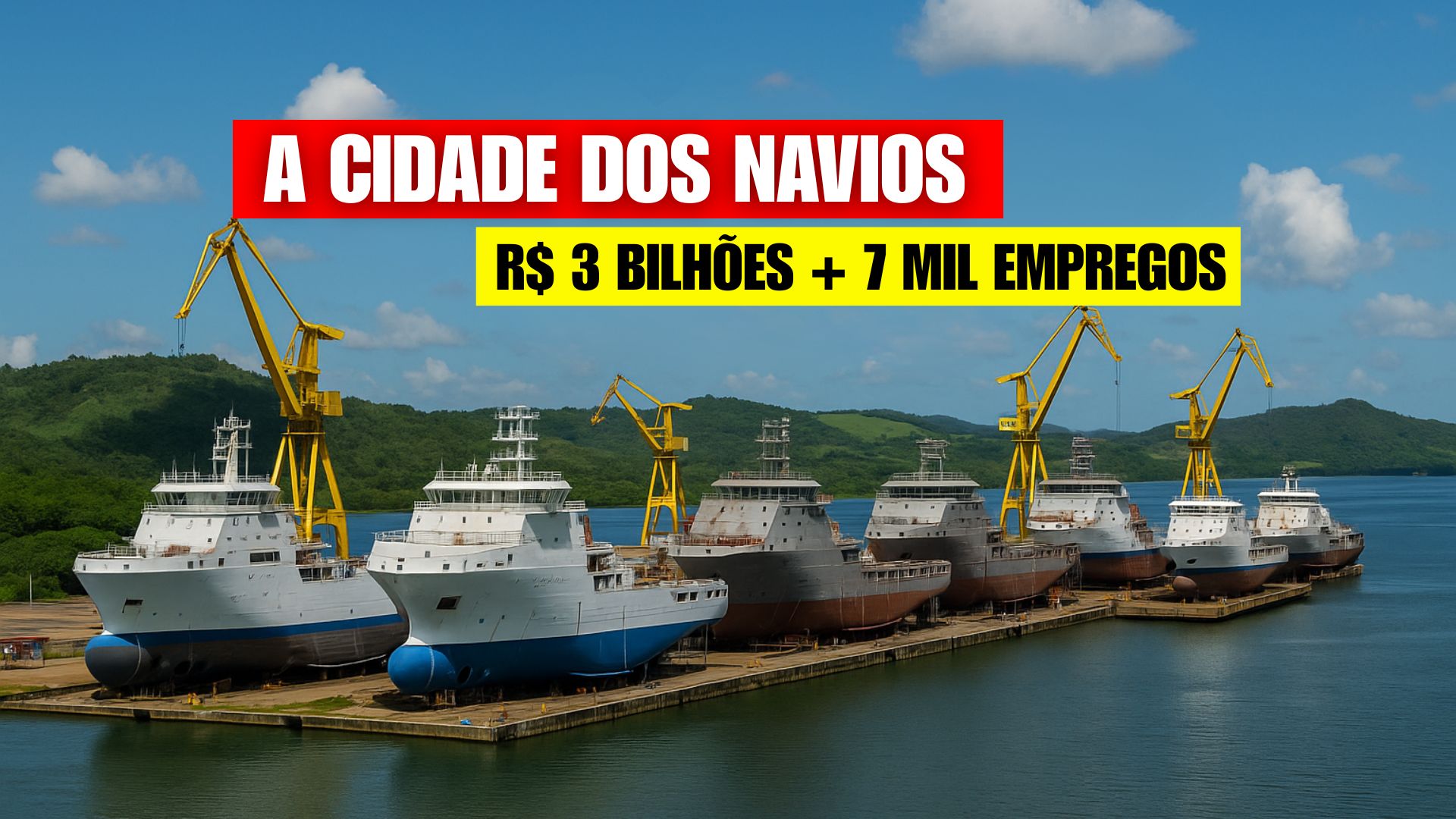
Shipyard in Bahia to Receive Billion-Dollar Investment to Build Ships to Combat Oil Spills, Boosting the Brazilian Naval Industry and Creating Thousands of Direct Jobs in the Recôncavo Region.
The Ministry of Ports and Airports, through the Board of the Merchant Marine Fund, approved funding priority of R$ 2.97 billion for the construction of six oil spill response vessels at the Enseada Shipyard in Maragogipe (BA).
The initiative, which foresees 6,795 direct jobs, is part of a package of R$ 4 billion for 14 projects in six states and has Bahia as the main beneficiary, with more than half of the resources.
What Was Approved and Why It Matters
The collegiate decision establishes the priority allocation of funds from the Merchant Marine Fund for the batch of six specialized vessels, a step preceding the effective release of credit.
-
Brazilian Joins Homeownership Consortium, Faces Decade of Dual Payments Totaling $141,000, Surpassing Traditional Mortgage

-
Land Rover to Halt Production in July, Putting 371 Jobs at Risk, as Chinese Automaker Negotiates to Convert Factory to 100,000 Vehicles Annually by 2027

-
Mexican Pest Threatens U.S. Cattle Herds at Historic Lows, Potentially Boosting Brazilian Beef Exports as Burger Prices Soar

-
Brazilian Freight Bill Progresses in Congress with $5,000 Minimum Wage, 70% Advance Payment, and Fines Up to $1 Million, as Agriculture and Industry Warn of Rising Costs and Legal Uncertainty


These units will be used to renew the fleet chartered by Petrobras, raising the environmental safety standard in offshore operations and strengthening the naval supply chain in the country.
Jobs and Regional Impact
The expectation is for 6,795 direct job positions during the project’s execution, according to the Bahia Secretary of Labor, Employment, Income, and Sports.
Hiring should prioritize workers from Maragogipe and surrounding municipalities, in line with labor intermediation agreements and qualification actions carried out by SineBahia.
The generation of jobs places the Recôncavo region back on the map of the naval industry, impacting income, services, and local revenue.
Who Demands and Who Pays
The resources were requested by Compagnie Maritime Monégasque (CMM), an offshore operator operating in Brazil.
In the FMM model, the approval of priority allows the company to obtain financing from accredited financial agents and, subsequently, access funds for construction.
This is a standard process for the fund: first prioritization, then the signing of the construction contract, the hiring of credit, and finally, the release of funds under the negotiated conditions.
Technology and Specification of the Vessels
The six units are focused on combating oil spills and should incorporate solutions for energy efficiency and hybrid systems, a trend in new projects for offshore support in Brazil.
Maritime technology manufacturers linked to the program have been announcing designs with hybrid propulsion and oil spill recovery capability, in addition to the possibility of upgrades for the use of ethanol as fuel, focusing on reducing emissions without compromising performance in open seas.
This combination aligns environmental, operational, and cost requirements throughout the vessels’ life cycle.
Why the Enseada Shipyard
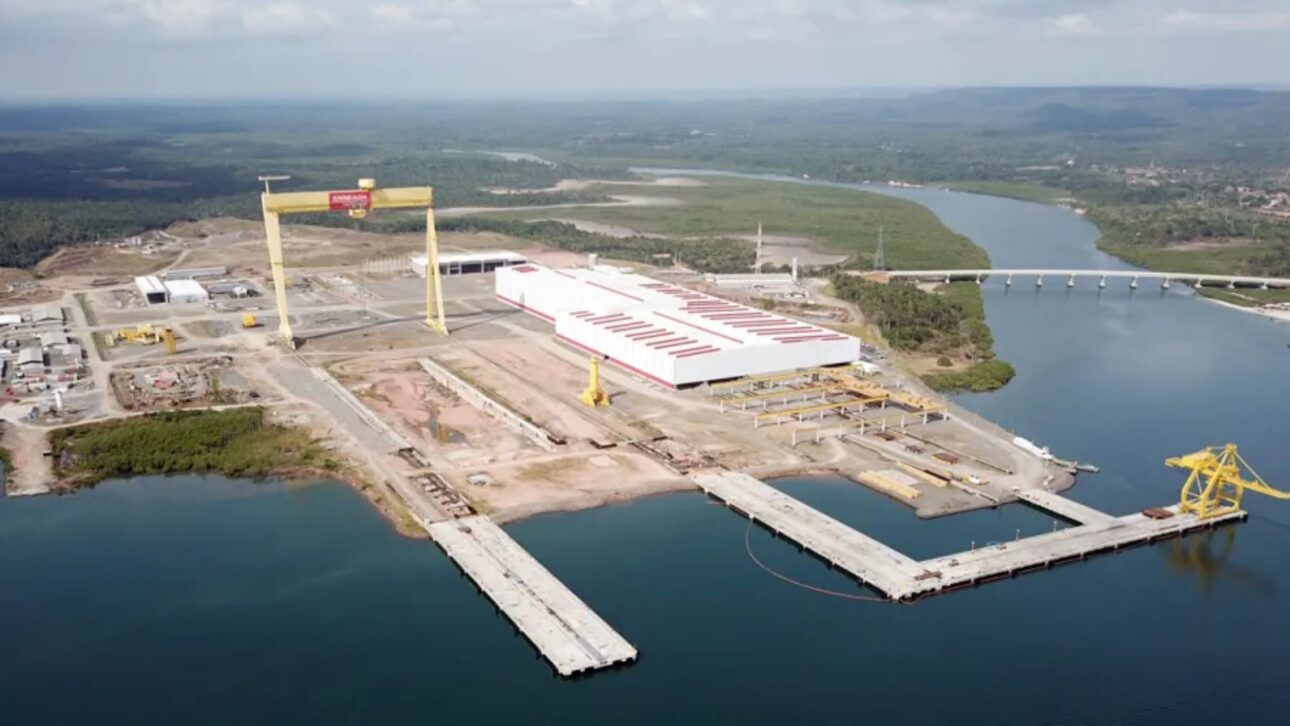
The CMM chose the Enseada Shipyard for its fifth generation infrastructure, capacity for large series, and strategic location on the banks of the Paraguaçu River, which facilitates the logistics of materials and the flow of finished units.
The industrial park of Enseada was designed to meet both domestic demands and international contracts, with manufacturing space, docks, and high-capacity equipment, in addition to a history of integrating complex systems typical of the oil and gas industry.
Role of Petrobras and Fleet Renewal
The spill response vessels are part of the operational safety framework required for exploration and production activities.
In Brazil, this fleet is chartered by Petrobras and distributed in sensitive areas according to emergency plans.
With the renewal, the oil company will have more modern vessels, prepared for stricter environmental standards and with greater autonomy, reducing risks and improving response times to incidents at sea.
States Covered and Focus on Bahia
Of the total R$ 4 billion approved for 14 projects, the resources are distributed across six states.
Bahia accounts for more than 50% of this amount, reflecting the strategy for the revival of the naval industry in the state.
Also included are Pará, Santa Catarina, Amazonas, Rio de Janeiro, and Pernambuco, with initiatives covering the construction of new vessels, modernization of assets, and naval infrastructure works.
This focus confirms Bahia as one of the most dynamic hubs in the current investment cycle.
Next Steps and Timeline
The next stage involves the signing of contracts between CMM and the shipyard, followed by the formalization of financing with the FMM financial agent.
Only after these stages are the prioritized funds effectively disbursed, according to contractual milestones and the physical-financial schedule of the work.
From there, the shipyard can proceed with the ordering of materials, mobilization of teams, and the start of hull construction.
What the State Government Says
According to the Secretary of Labor, Employment, Income, and Sports of Bahia, Augusto Vasconcelos, the project symbolizes the revival of the naval industry with national content and utilization of local labor.
In a statement released by the department, he highlighted: “The FMM approved an investment of nearly R$ 3 billion so that six vessels intended to address potential oil spills can be built at the Enseada Shipyard, generating more than 6,000 direct jobs in this venture.”
This positioning emphasizes the focus on technology, value-added generation, and impact on industrial production.
Relevance to the Oil and Gas Supply Chain
In addition to the social dimension, the order strengthens suppliers of naval steel, propulsion systems, pollution control equipment, and electronic integration, segments that benefit from construction series.
At the same time, it creates scale for technical training programs, essential to achieve productivity and quality goals in the assembly of highly specialized vessels.
Sector Outlook
The prioritization of projects by the FMM signals a cycle of investments where offshore support vessels and environmental response units gain prominence.
The R$ 4 billion package, combined with recent long-term chartering decisions, tends to keep active order books in domestic shipyards.
With the batch of six vessels in Maragogipe, Bahia establishes itself as a core of this industrial reactivation and expands its participation in the production lines related to pre-salt.
With the advancement of these stages and the mobilization of work fronts, will Bahia be able to turn the priority into ready vessels within the expected timeframe and with the projected job impact?





-

-

-

-

-

-

209 people reacted to this.