






 Portuguese
  Spanish
 4 min of reading
  25 comments


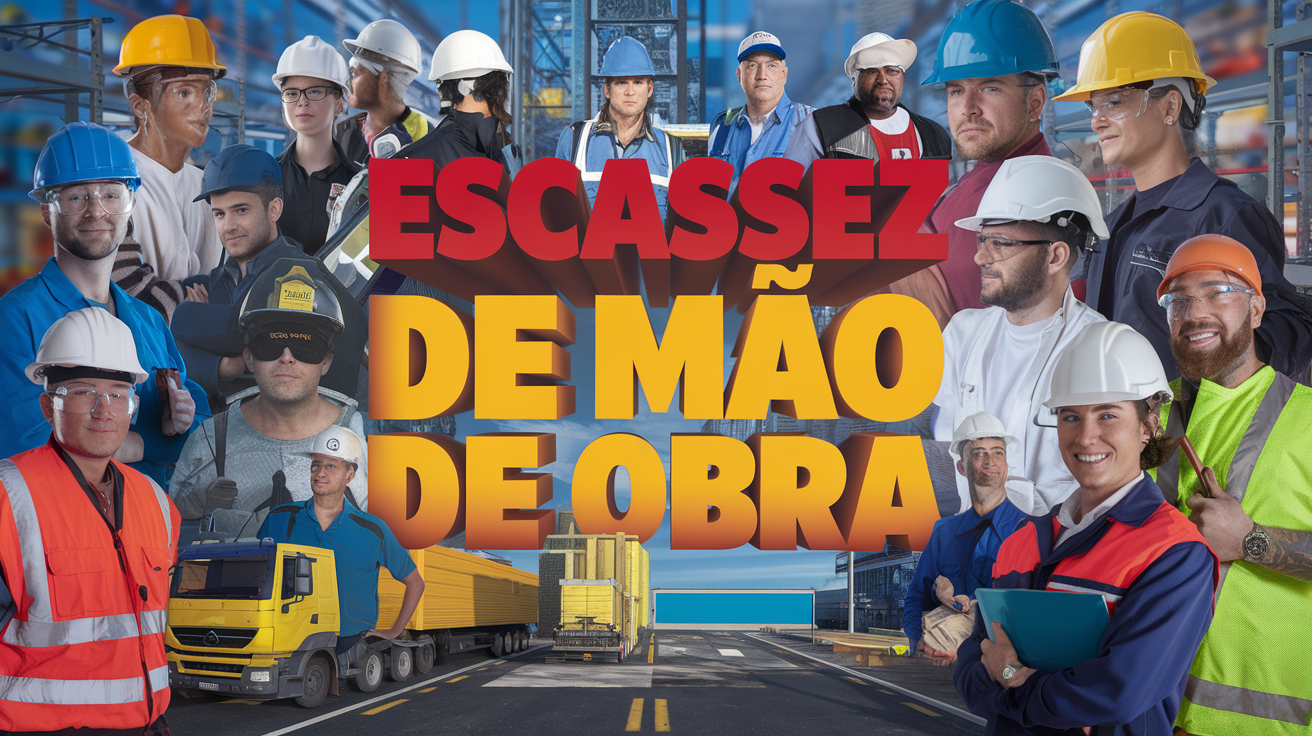


State Faces A Historic Challenge In Industrial Qualification. From 2025 To 2027, 574 Thousand Qualified Workers Will Be Needed. Sectors Such As Logistics Lead The Demand.
Bahia is at a decisive moment for the future of its industrial economy.
The state, known for its importance in the sector, faces a challenge that could compromise its growth in the coming years: the lack of qualified labor.
Behind this need lies a crucial issue that could dictate the course of regional development.
-
Brazilian Joins Homeownership Consortium, Faces Decade of Dual Payments Totaling $141,000, Surpassing Traditional Mortgage

-
Land Rover to Halt Production in July, Putting 371 Jobs at Risk, as Chinese Automaker Negotiates to Convert Factory to 100,000 Vehicles Annually by 2027

-
Mexican Pest Threatens U.S. Cattle Herds at Historic Lows, Potentially Boosting Brazilian Beef Exports as Burger Prices Soar

-
Brazilian Freight Bill Progresses in Congress with $5,000 Minimum Wage, 70% Advance Payment, and Fines Up to $1 Million, as Agriculture and Industry Warn of Rising Costs and Legal Uncertainty


According to the Industrial Labor Map, developed by the National Industry Observatory (ONI) of the National Confederation of Industry (CNI), the industrial sector in Bahia will need to train 574 thousand professionals between 2025 and 2027.
Of this total, 97 thousand will need initial training to meet economic expansion and fill market gaps.
In the meantime, 477 thousand workers already employed will need to update their skills to keep up with rapid technological transformations and new production processes.
Logistics: One Of The Pillars Of The Transforming Industry
Among the sectors that will require the most qualification is logistics.
This area goes far beyond the transportation of goods, encompassing activities such as storage, distribution, route planning, and technology management.
As Bruno Almeida, a supply chain management specialist, explains, logistics is essential for the success of any production chain.
“Today, without efficient logistics, products do not reach the final consumer, and companies lose competitiveness,” notes Almeida.
The growth of e-commerce has also driven the demand for qualified professionals in the sector, requiring swift deliveries and modern processes.
Additionally, technological advancements and infrastructure investments have transformed logistics into one of the most strategic segments of the economy.
Tools such as supply chain management (SCM) systems and inventory management (IM) systems are increasingly indispensable to optimize resources and reduce costs.
Technical Education As An Emergency Solution To The Lack Of Labor
To tackle these challenges, Senai Bahia has played a crucial role.
The institution has opened registrations for a technical course in logistics, with 447 vacancies distributed among units in Salvador, Camaçari, Feira de Santana, Lauro de Freitas, and Alagoinhas.
Among these vacancies, 55 will be free scholarships for low-income students who have achieved at least 500 points on the ENEM between 2019 and 2023.
Registrations, which are free, can be made until December 19, 2024, on the site tecnicosenai.com.br or in person at Senai units.
For those who do not meet the criteria for free tuition, the institution offers a 40% discount on the first monthly fee for both face-to-face and hybrid modes.
According to Antonio Carlos Barbosa Bacelar, a master in Systems Engineering and a Senai professor, this technical training is an entryway to promising and strategic careers in the market.
High-Demand Technical Skills
The market looks for more than basic training. Technical skills are an indispensable differentiator, especially in the logistics sector. Bacelar highlights some competencies that have gained prominence:
- Mastery of inventory and supply chain management systems.
- Route planning and use of optimization tools.
- Knowledge of industry norms and regulations.
- Data analysis capabilities and use of business intelligence tools.
“With globalization and an emphasis on operational efficiency, companies have begun to prioritize logistics as a key component of their operations,” affirms Bacelar.
Technological evolution demands that professionals stay updated on trends to stand out in the market.
Continuous Update: An Essential Requirement
For workers already in the market, continuous update is fundamental to maintain employability.
Participating in events, seeking certifications, and keeping up with trends are some strategies that help broaden professional horizons.
Bruno Sant’ana, a lawyer and expert in technology applied to law, warns of the speed of technological changes.
“Every year, new tools emerge, and those who do not adapt quickly become outdated,” he points out.
This reality of labor shortages reinforces the need for continuous learning integrated with the new demands of the market.
The Future Of The Industry In Bahia
Without decisive actions to qualify and requalify its workforce, Bahia risks compromising its industrial competitiveness.
The modernization and expansion of sectors depend directly on workers capable of handling advanced technologies and innovative processes.
The scenario presents challenges but also opportunities. The industrial sector, especially areas like logistics, can become even more strategic with proper training.
What remains to be seen is: will Bahia be able to turn this labor shortage challenge into an opportunity for sustainable growth?





Escacez de mão de obra porque não tem salários decentes, o brasileiro aprendeu ser empreendedor que ganha muito mais.
Estado? Estado só emprega funcionários públicos. Quem emprega é o Mercado. Por isso que, enquanto a mentalidade impregnada na mente do brasileiro não mudar, o país não irá pra frente.
Quer pagar uma miséria, agora todos estão trabalhando por conta própria principalmente nos app 99 Uber.