






 Portuguese
  Spanish
  3 min of reading
  38 comments


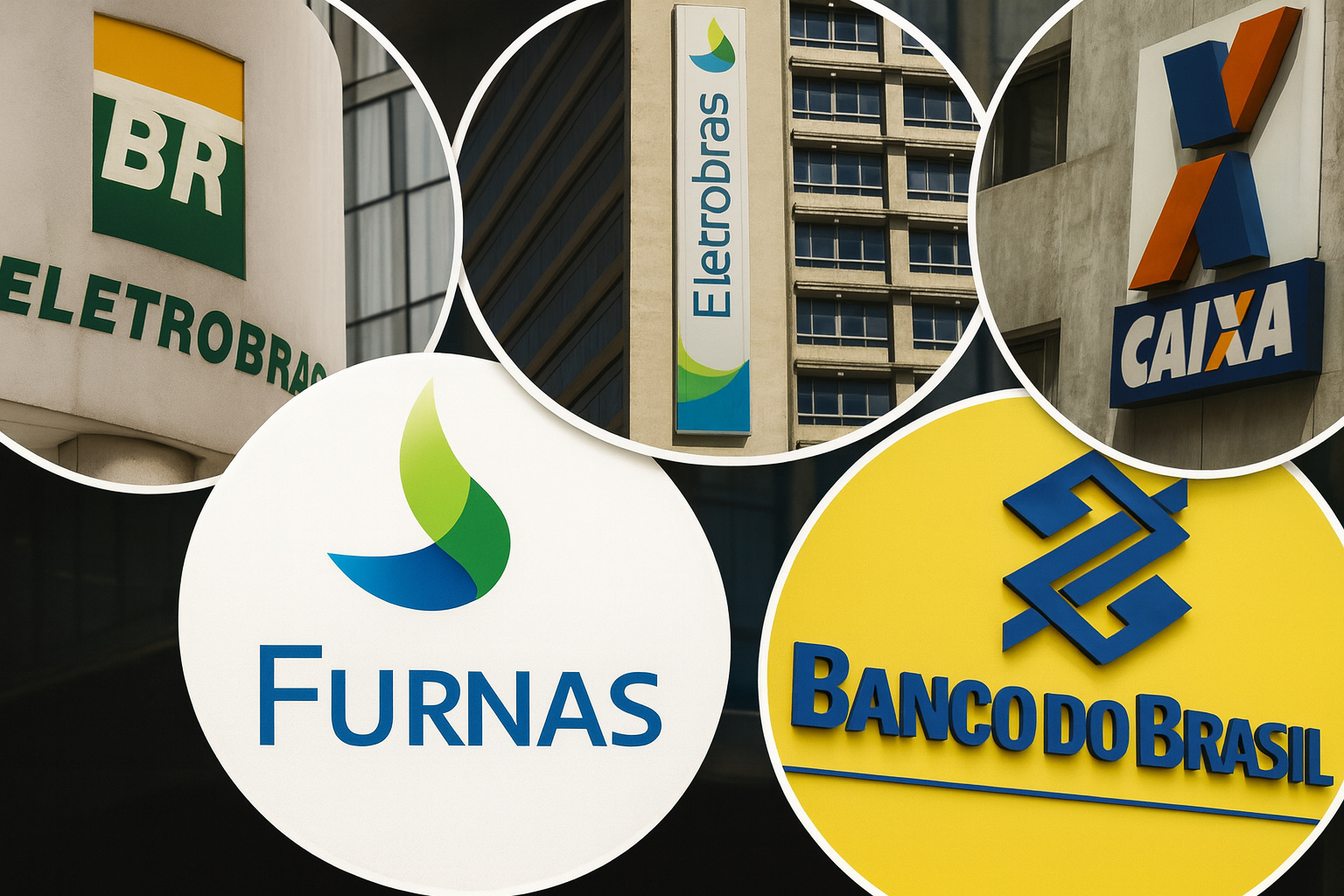


Official MGI Report Exposes Historical Performance, Impact on GDP, and Billion-Dollar Distribution of Dividends Amid Challenges and Advances
The Brazilian federal state-owned companies achieved in 2024 a record revenue of R$ 1.3 trillion, establishing themselves as strategic pieces of the national economy. This data is included in the 2024 Aggregate Report of Federal State-Owned Companies, released on August 22, 2025 by the Ministry of Management and Innovation in Public Services (MGI).
The official document also showed that assets totaled R$ 6.7 trillion, with annual advances of 4.9% in revenue and 10.9% in assets, figures that reinforce the financial robustness of the sector.
Falling Profits with Petrobrás, but Growth in Other Areas
Despite the significant result, the consolidated net profit for 2024 was R$ 116.6 billion, a value that represents a 41% decrease compared to 2023. According to the government, this decline occurred due to a reduction in Petrobrás’ earnings.
-
Brazilian Joins Homeownership Consortium, Faces Decade of Dual Payments Totaling $141,000, Surpassing Traditional Mortgage

-
Land Rover to Halt Production in July, Putting 371 Jobs at Risk, as Chinese Automaker Negotiates to Convert Factory to 100,000 Vehicles Annually by 2027

-
Mexican Pest Threatens U.S. Cattle Herds at Historic Lows, Potentially Boosting Brazilian Beef Exports as Burger Prices Soar

-
Brazilian Freight Bill Progresses in Congress with $5,000 Minimum Wage, 70% Advance Payment, and Fines Up to $1 Million, as Agriculture and Industry Warn of Rising Costs and Legal Uncertainty


However, the MGI highlighted that, excluding the oil company, performance was positive: profit reached R$ 79.6 billion, a growth of 9.4% compared to the previous year.
The report also pointed out that state-owned companies are responsible for over 440,000 direct jobs and account for 5.4% of the Gross Domestic Product (GDP). Additionally, R$ 96 billion was invested in strategic areas throughout the year.
Billion-Dollar Dividends Reinforce Return to the Treasury
In 2024, state-owned companies distributed R$ 152.5 billion in dividends and interest on own capital. Of this amount, R$ 72.1 billion (47%) were allocated to the federal government and R$ 80.4 billion (53%) to other shareholders.
The report emphasized that for every R$ 1 invested by the federal budget, R$ 2.51 returned to public coffers in dividends and interest on own capital, highlighting the economic efficiency and positive impact on revenue.
State-Owned Companies as the Axis of National Strategy
The Minister of Management, Esther Dweck, emphasized in the report that public companies are “central pieces” in the policy of President Luiz Inácio Lula da Silva. She highlighted the relevance of state-owned companies in housing credit, agricultural credit, credit to small and medium enterprises, and micro-entrepreneurs.
According to Dweck: “Public companies are part of our long-term sustainable development strategy. We will continue to strengthen and modernize their governance structures”.
Deficits and Surpluses Under Analysis by the Central Bank
According to the Central Bank (BC), which monitors 20 non-dependent state-owned companies (excluding Petrobrás and financial institutions), the results of 2024 revealed an operating profit of R$ 1.7 billion.
However, 11 state-owned companies recorded a primary deficit, totaling R$ 6.7 billion. Nevertheless, the MGI highlighted that only Correios and Infraero reported actual losses. The others recorded a combination of deficits and profits, often linked to investments made with resources from previous fiscal years.
The ministry explained that understanding the difference between primary result (deficit or surplus) and operating result (profit or loss) is essential to correctly interpret the numbers. This distinction reveals that public accounting requires detailed technical analysis to avoid misreadings.
Investments and Official Data
The survey also showed that state-owned companies invested R$ 96 billion in strategic projects in the last year. The data was extracted in June 2025 from the State-Owned Companies Information System (Siest) and adjusted according to the official financial reports of each company.
These numbers reinforce that, even in scenarios of occasional profit declines, the role of state-owned companies remains fundamental for the economic and social development of the country.





Tá tudo errado nessa matéria. Jornal mixuruca. Sem falar do título de fake news pra chamar pra página.
Vocês trocaram a matéria pra ninguém ler sobre a cobrança de quem mora com os pais
Tudo mentira , manipulação e canalhice . Na realidade as estatais estão dando prejuízo . A participação acionária do governo em ex estatais que hoje são administradas como empresas privadas nada tem haver com administração pública ou governamental . Começou a corrida para o planalto 2026. Mentiras , enganações etc etc etc.